
Bulk Cable Ties Purchasing Guide: Compare Specifications, Packing and Repeat Orders
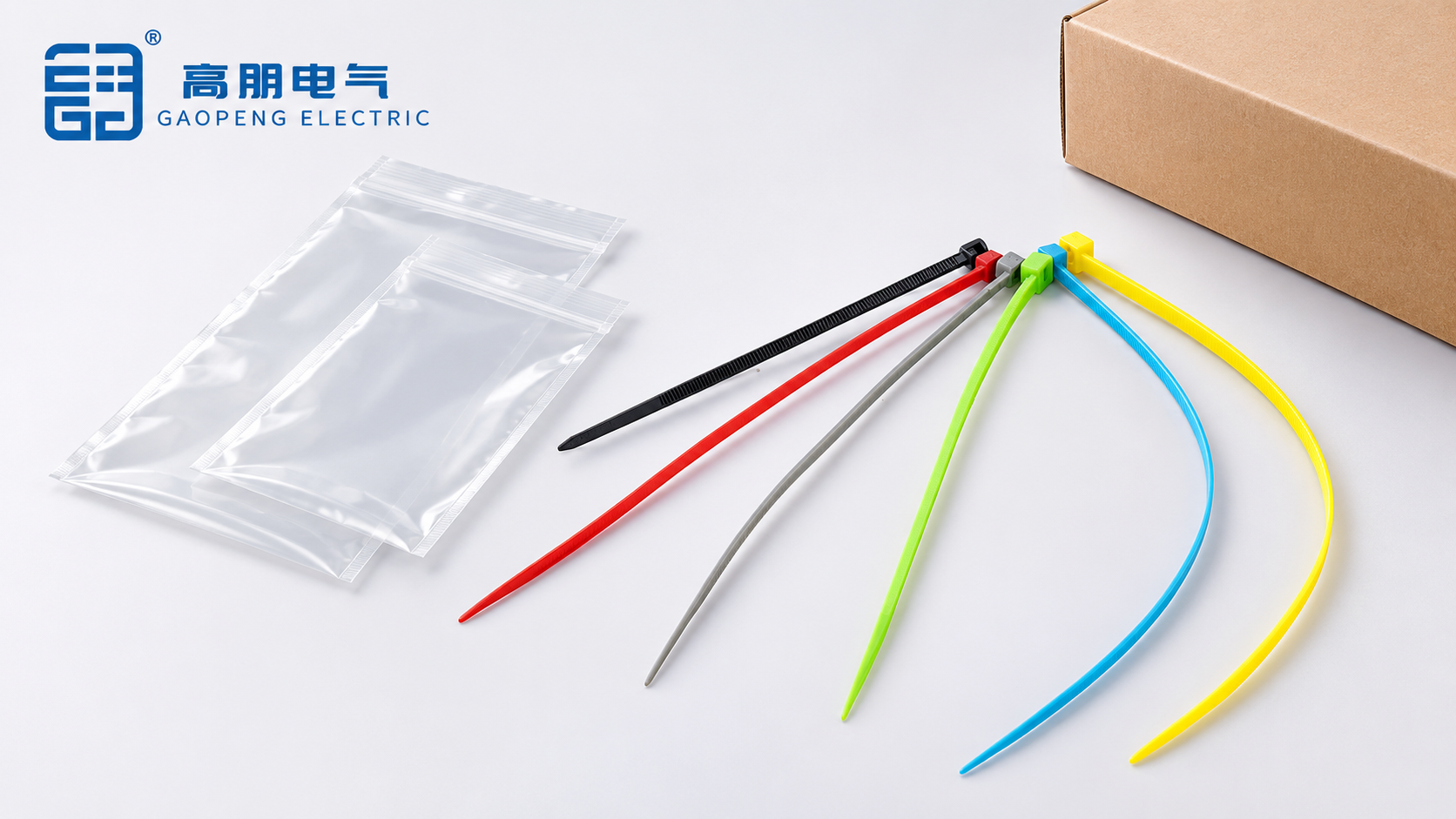
Compare bulk cable ties by the same material version, dimensions and piece count before comparing price. A low pack price can describe a different strap width, a different size mix or fewer ties. The quotation needs to make those differences visible.
Start with the intended bundle and environment. Gaopeng’s nylon self-locking cable-tie listing provides a product family to specify by length, width, bundle requirement, color and quantity. Confirm the exact offered version and its supporting information for the application.
Put the product version ahead of the pack price
“Nylon cable tie” does not identify every material or environmental property. Ask for the declared material version and the data applicable to the proposed reference. If the application needs UV resistance, a temperature range or another specified characteristic, state that requirement explicitly.
Black color alone does not establish a UV-resistant formulation. Similarly, an indoor tie and a version proposed for outdoor exposure should not be treated as equivalent without supporting information. Keep color as an identification or appearance requirement alongside the relevant material requirement.
For geometry, specify strap length and width and the required bundle range. Request the offered dimensions and any tolerances that affect the application. Total length alone does not settle usable bundle diameter or available clearance around the locking head.
Normalize bulk cable ties to one quantity basis
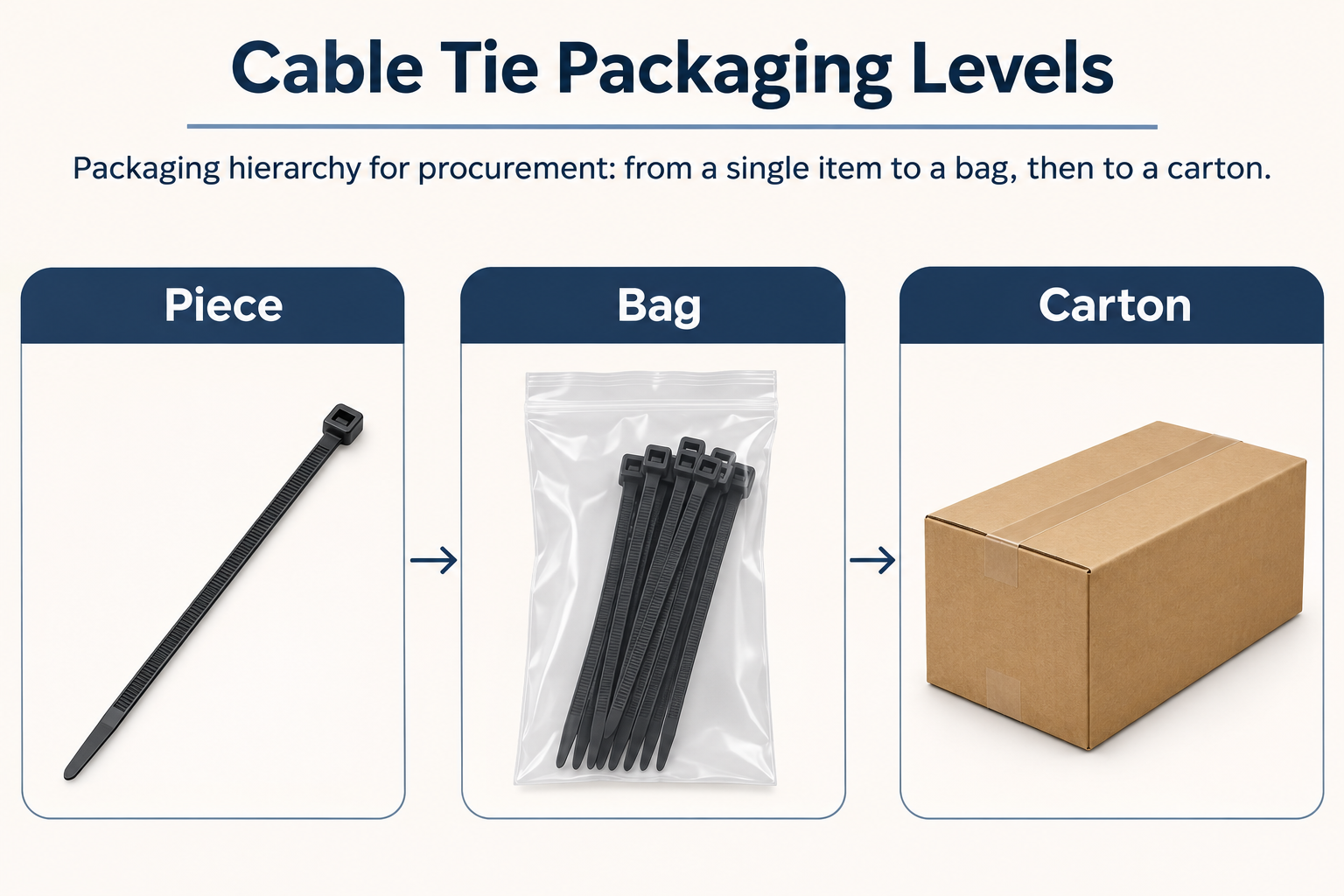
Ask each bidder to state whether its price is per piece, bag, kit or carton. Record the piece count at every relevant packing level. For an assortment, also record the count of each reference; the total quantity does not establish the same useful size mix.
To compare product price on a common basis, divide the quoted product amount by the confirmed number of pieces for the same reference. Keep freight, tax and other charges identifiable so the buyer can compare the required delivered-cost basis separately. No sample prices are needed to make this worksheet useful.
| Field | Information to record | Mismatch to resolve |
|---|---|---|
| Product identity | Full reference, material version and color | Similar appearance with a different specification |
| Dimensions | Length, width and required bundle range | Same nominal length with a different strap or head |
| Quantity | Pieces per bag, bags per carton and total pieces | Different pack counts behind similar prices |
| Assortment | Count of every included reference | Different size mix behind the same total |
| Commercial basis | Currency, unit basis and separately identified charges | Unit price confused with delivered cost |
Define what the incoming inspection will check
Agree the receiving criteria before placing the order. Product identification, dimensions, count, visible condition and packaging can be checked against the accepted specification. If a performance requirement is important, identify the applicable method and acceptance basis rather than relying on an unspecified “strong tie” description.
A published tensile figure needs its test conditions and scope. It is not automatically an allowable working load for every use, and it does not turn an ordinary cable tie into approved lifting equipment. Ask whether the evidence covers the exact offered product and the buyer’s required condition.
Use representative samples to check the intended bundle arrangement and assembly method. Retain the accepted reference or controlled sample record. Where the application requires additional testing or approval, resolve it with the responsible team before treating sample appearance as acceptance.
Keep packaging and storage instructions with the order
Polyamide behavior is affected by moisture conditions, so handling and storage should follow the instructions for the supplied product. Ask the supplier for the applicable guidance and keep it with the receiving record. Do not substitute another brand’s numerical storage conditions for the offered material.
Identify any packing requirements needed by the warehouse or assembly line, including resealing, labeling and separation of variants. Ask how the lot will be identified on the packs actually opened by staff. A batch reference printed only on a discarded outer carton may be difficult to recover later.
If packs arrive damaged or the labels do not match the order, record the discrepancy before combining the stock. This preserves the ability to link any investigation to the delivered lot and the accepted product version.
Reorder from the accepted specification
A useful inquiry includes quantity by full reference, length, width, bundle range, color, intended environment and packing format. Add the destination and required documents. Request confirmation of the exact material version, sample availability and any unresolved performance evidence.
Confirm minimum order quantity, price basis and delivery for the actual transaction. For repeat supply, cite the accepted specification and sample record, and require approval before substitutions to material, dimensions or packing counts.
That record lets purchasing compare a repeat order against a defined product. It also gives the supplier a clear way to propose an alternative without silently changing what the assembly line expects to receive.