
Copper Cable Lugs Procurement Guide: Barrel, Stud Hole, Tooling and Batch Records
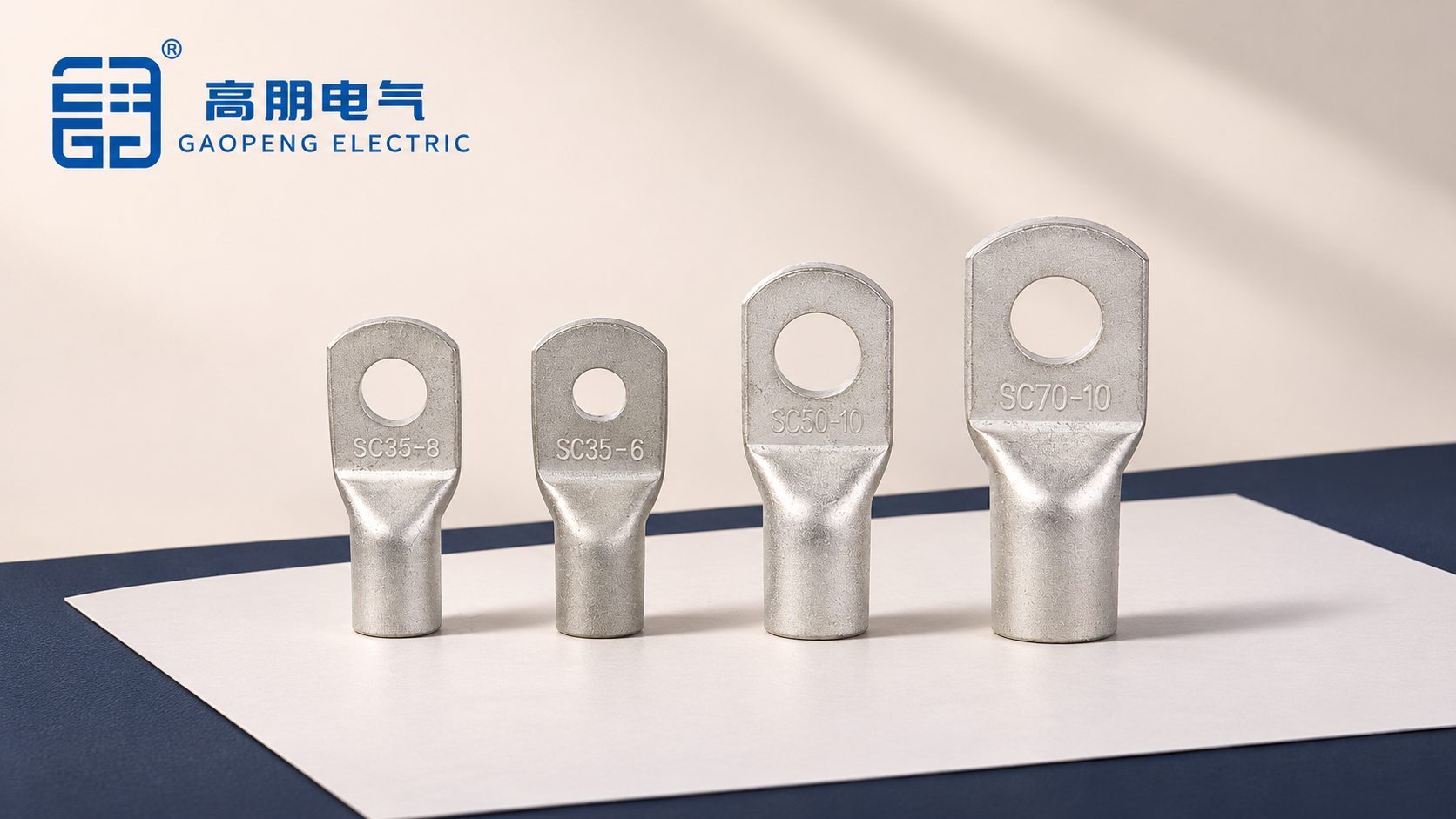
Order copper cable lugs by full reference, conductor fit and mounting dimensions. A cable cross-section identifies one side of the connection; the stud hole and palm geometry identify the other. The purchase also needs the applicable tooling and assembly information for the proposed lug.
A short description such as “16 mm² copper lug” can cover more than one mounting-hole option. If those options are combined into one ambiguous order line, receiving may get the intended conductor size with the wrong hole. The full reference and controlled dimensions prevent that mismatch.
Copper cable lugs with the same conductor designation can have different holes
Gaopeng’s SC copper cable-lug table lists variants separately. The following two entries share the table’s 16 mm² conductor designation, while their listed mounting-hole diameters differ.
| Full reference | Listed conductor designation | Listed mounting-hole diameter | Purchase implication |
|---|---|---|---|
| SC16-6 | 16 mm² | 6.5 mm | Keep this hole option on its own order line |
| SC16-8 | 16 mm² | 8.4 mm | Confirm the intended stud and mounting arrangement |
Use these figures as published catalog examples and verify the drawing for the part being offered. Do not infer every dimension from the code. Similarly, a catalog’s paired AWG and metric designations should be checked against its accepted wire range rather than treated as an exact mathematical conversion.
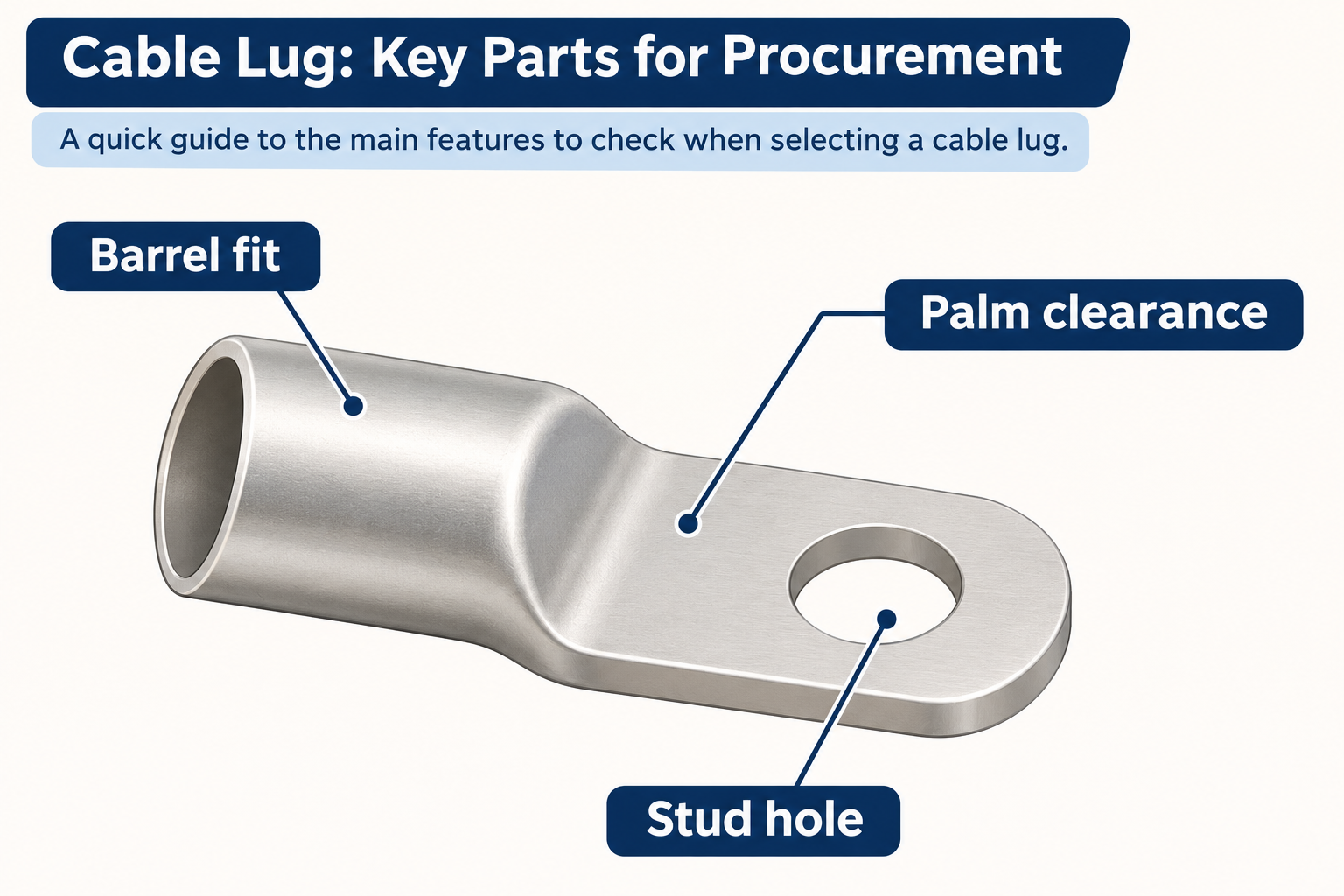
The mounting review also needs the palm width, available clearance and the equipment’s connection requirements. A hole that passes over the stud does not establish that the complete lug fits the mounting space or meets the equipment instructions.
Match the barrel to the actual conductor construction
Identify conductor metal, cross-section or AWG and strand construction. Ask the supplier to confirm the accepted wire for the exact lug reference. A conductor’s nominal size alone does not establish every aspect of barrel fit or crimp compatibility.
Keep the proposed lug material and surface finish explicit in the quotation. A silver-colored surface does not by itself identify the base metal or finish. Request the declared specification and any required supporting documentation rather than using the product photograph as material evidence.
Equipment compatibility remains a separate review. Check the equipment’s accepted conductor and terminal arrangements, temperature limitations and any specified terminal kit. A generic copper-lug listing does not approve a substitution for an equipment-specific connection, nor does it establish suitability for aluminum conductors.
Specify the tool and die as part of the assembly requirement
The purchase should identify the application instructions and approved crimping arrangement for the proposed lug and conductor. Ask for the tool and die reference or other applicable process information. Do not let the assembler infer these details from the lug’s outside appearance.
If the buyer already has tooling, send its relevant details for compatibility confirmation. If a supplier proposes different tooling or a different barrel design, assess the change before accepting the alternative. Mechanical fit in the die is not a substitute for the specified application basis.
Also keep the equipment’s mounting instructions separate from the crimping instructions. This guide does not assign a universal tightening torque, crimp count or die size. Those values must come from the applicable product and equipment documentation.
Approve a defined sample, then control the supplied lot
A sample review should identify the full reference, drawing revision, conductor and tooling used. Agree which dimensions and assembled-joint characteristics require inspection or testing. Where a measured criterion is needed, establish its method and acceptance limit before bulk supply.
The retained sample record should distinguish loose-lug approval from assembled-connection approval. A satisfactory loose part cannot demonstrate the performance of an untested wire, lug and tool combination. Photographs can record identity and features, but they do not replace required dimensional or joint evidence.
For delivery, request labels that keep different hole options and conductor sizes identifiable. Agree the required lot records and receiving checks. When similar variants share a carton, the inner-pack identification becomes particularly important: staff should not have to sort them by visual estimation.
Make the quotation easy to answer and compare
Send a line for each full lug reference, quantity, conductor specification and mounting requirement. Attach the relevant drawing or required dimensional envelope. Add material, finish, tooling information, packing, destination and documentation requirements where they affect acceptance.
Ask the supplier to identify any proposed deviation explicitly. Compare offers against the same drawing and assembly requirement before comparing unit price. Confirm commercial terms, including minimum quantity and delivery schedule, for the actual order.
For repeat purchasing, cite the accepted revision and sample record. Require approval before changes to the barrel, hole, palm, material or application process. This gives purchasing and assembly a shared description of the part they intend to receive.