
Solder Seal Wire Connectors: A Buyer’s Guide to Fit, Heating Process and Joint Evidence
Buy solder seal wire connectors against the actual wire pair and an agreed finished-joint requirement. A transparent sleeve that has shrunk around the wires does not, by itself, demonstrate satisfactory solder wetting or effective end seals. The purchasing specification should distinguish those outcomes.
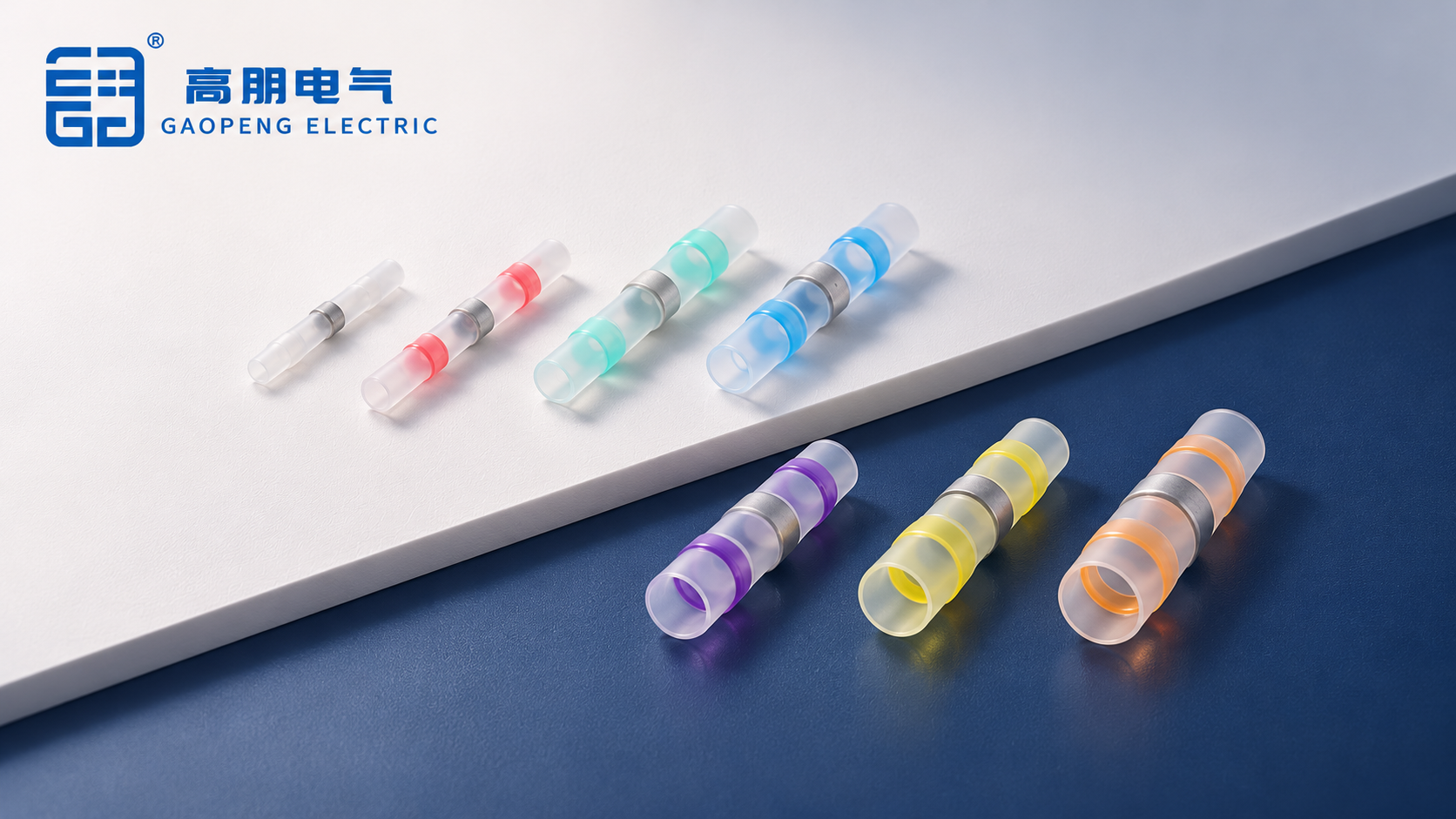
Gaopeng’s heat-shrink solder-seal connector listing identifies a solder ring within a PE heat-shrink sleeve. Use that listing to identify the product family, then ask for the exact proposed reference, dimensions and application information for the intended wires.
Specify the wire pair for solder seal wire connectors
Record the conductor material, size and strand construction at both ends. Include any conductor surface finish and the insulation material and outside diameter. These details give the supplier a defined wire combination to assess instead of an ambiguous request for a connector of a particular color.
The sleeve must accommodate the intended assembly, and the solder region must match the required conductor arrangement. Ask the supplier to identify the accepted wire range and relevant dimensions for the exact reference. A broad kit label does not settle every combination within the box.
If the two wires differ, submit both designations. Do not assume that one nominal connector range approves every unequal pair. Ask what additional information is needed to confirm the proposal, including the assembly environment and any customer-specific joint requirement.
Evaluate three outcomes instead of one appearance
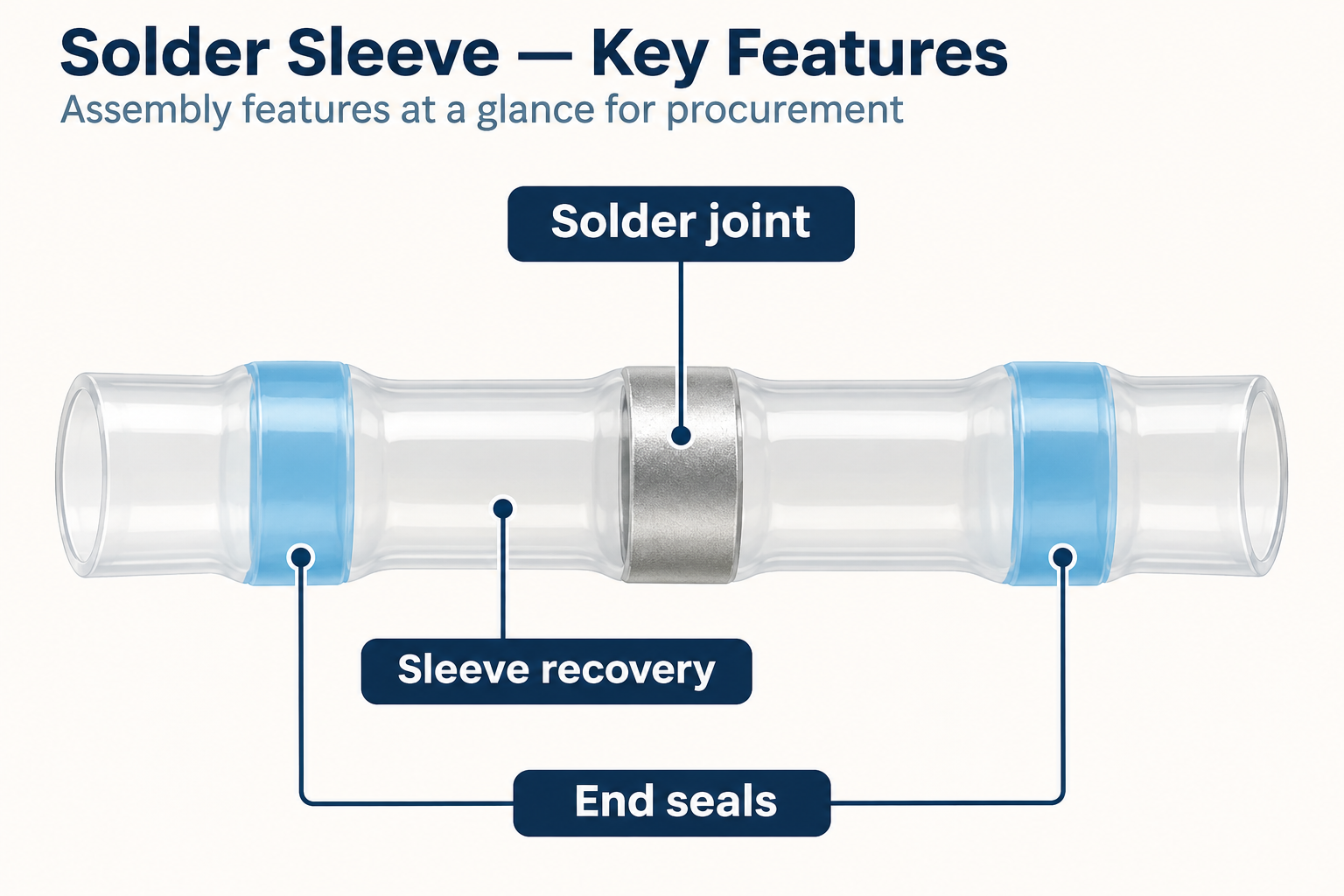
The soldered connection, sleeve recovery and end sealing are related, but they are not interchangeable acceptance observations. A sleeve can visibly change shape without proving that every finished-joint requirement has been met. Agree what evidence each requirement needs.
| Outcome | Question for the sample record | Evidence to agree before ordering |
|---|---|---|
| Soldered connection | Does the joint meet the specified conductor-connection criteria? | Applicable inspection and electrical or mechanical checks |
| Sleeve recovery | Is the sleeve’s final condition acceptable for the assembly? | Relevant dimensional and visual criteria |
| End sealing | Do both ends meet the required environmental condition? | Applicable sealing evaluation for the stated exposure |
| Product identity | Can the tested assembly be linked to the offered reference? | Connector, wire and process identification |
This worksheet proposes questions, not universal test limits. The responsible engineering team should select the methods and acceptance values for the application. A supplier’s marketing photograph is not a substitute for that agreed record.
Request the heating instructions for the selected reference
The application process needs product-specific instructions. Ask for the permitted heating equipment and the relevant process guidance for the proposed connector. A generic temperature or heating time from a different sleeve cannot establish the process for this part and wire pair.
The buyer should identify any production constraints that affect access or heat exposure. Send the assembly arrangement and neighboring material limitations for review where relevant. The supplier can then flag unresolved compatibility questions before samples are evaluated.
For the sample record, identify the wire pair, connector reference, equipment and instructions used. If production later changes one of those inputs, assess whether the accepted process still applies. A retained sample is most useful when its preparation conditions are traceable.
Treat approval and environmental claims as product-specific
Ask for the evidence behind any required waterproof, automotive or other application claim. Identify the exact reference, test conditions and assembly covered. A family description such as “solder seal” does not establish a specific ingress-protection rating or approval for a regulated application.
Published information about another manufacturer’s solder-sleeve technology helps explain the design concept. Its temperature ratings, approvals and application claims remain specific to that manufacturer’s identified products. They cannot be transferred to an offered connector because its appearance is similar.
Where supporting evidence is unavailable, record the unresolved requirement before placing the bulk order. The purchasing team can then request the missing information or revise the proposal with engineering input, instead of discovering the gap during customer acceptance.
Order the approved size mix with clear identification
For bulk supply, specify quantity by exact reference. For kits, state the count of each size and the required packing arrangement. Ask how the outer carton and inner packs will identify the product and lot, particularly when translucent sleeves make adjacent sizes difficult to distinguish.
Include the destination, documentation and labeling requirements in the inquiry. Confirm the price basis, minimum quantity, sample terms and delivery schedule in the actual quotation. None of these terms can be inferred from the connector’s sleeve color or nominal size.
A complete inquiry includes both wire descriptions, required finished-joint criteria, exposure conditions and quantity by size. Attach the applicable drawing or assembly information and request the proposed references and process documents. For repeats, cite the accepted sample record and require confirmation before product or process substitutions.