



Common Misconceptions About Terminal Blocks and Crimp Terminals: Separating Fact from Fiction
Misconception 1: "All Terminals Are Essentially the Same – Just Buy the Cheapest"
The Reality: Terminals vary dramatically in material quality, dimensional precision, plating consistency, and performance under real-world conditions.
A low-cost terminal may use thinner copper, inadequate plating, or imprecise dimensions. The result? Higher contact resistance, increased heat generation, premature corrosion, and higher failure rates. The few cents saved per terminal are quickly lost when a single field failure causes hours of downtime, technician travel, and equipment damage.
What to do instead: Evaluate terminals based on total cost of ownership, not just purchase price. Consider material specifications, certification, and supplier reputation.
Misconception 2: "A Screw-Clamp Terminal is Always Reliable if You Tighten It Enough"
The Reality: Over-tightening is as problematic as under-tightening – sometimes more so.
Excessive torque can:
-
Strip screw threads, making future tightening impossible
-
Crush and damage wire strands, reducing current-carrying capacity
-
Crack the terminal housing, compromising insulation
-
Create stress risers that lead to premature fatigue failure
What to do instead: Use calibrated torque tools and follow manufacturer specifications. For stranded wire, always use an Insulated Ferrule to protect strands from direct screw contact. Consider spring-clamp terminals for applications where consistent, maintenance-free clamping force is desired.
Misconception 3: "Ferrules Are Optional – Nice to Have but Not Necessary"
The Reality: For stranded wire in screw-clamp terminals, ferrules are essential for reliable, safe connections.
Without a ferrule:
-
Strands can splay, reducing contact area and increasing resistance
-
Individual strands may break under screw pressure
-
Loose strands can contact adjacent terminals, causing short circuits
-
Achieving proper torque without strand damage is nearly impossible
What to do instead: Make ferrules a standard requirement for all stranded wire terminations in screw-clamp terminals. The incremental cost is minimal compared to the risk of failure.
Misconception 4: "Spring-Clamp Terminals Are Less Secure Than Screw Terminals"
The Reality: Spring-clamp terminals often provide superior long-term reliability, especially in vibration-prone environments.
Spring-clamp technology applies constant, calibrated force that compensates for thermal cycling and conductor creep. Screw terminals, conversely, can loosen over time due to vibration or differential thermal expansion. Independent testing has shown that spring-clamp terminals maintain consistent contact resistance through thousands of thermal cycles, while screw connections may require periodic re-torquing.
What to do instead: Choose spring-clamp or push-in terminals for applications subject to vibration, frequent thermal cycling, or where maintenance access is difficult.
Misconception 5: "Any Crimp Tool Will Work as Long as It Squeezes Hard Enough"
The Reality: Crimping requires precise die geometry matched to the specific terminal type and size. Generic tools cannot replicate this precision.
A proper crimp creates a cold weld between the terminal barrel and wire strands through controlled deformation. The die shape determines the compression pattern – whether the barrel folds correctly, whether strands are uniformly compressed, and whether stress concentrations are avoided. Using pliers or the wrong die results in a mechanically weak, electrically poor connection that will eventually fail.
What to do instead: Use manufacturer-recommended Crimping Tools with dies specifically designed for your terminal family. Ratchet-type tools ensure complete crimp cycles.
Misconception 6: "If a Terminal Looks Fine, It Is Fine"
The Reality: Many terminal defects are not visible to the naked eye.
Internal cracks in the barrel, insufficient plating thickness, incomplete strand insertion, or improper crimp compression may not be apparent from external inspection. Yet these hidden defects can lead to premature failure under load, vibration, or thermal cycling.
What to do instead: For critical applications, implement sampling plans that include destructive testing (cross-section analysis, pull-out force measurement) and non-destructive testing (contact resistance, thermal imaging under load). Rely on suppliers with robust quality systems and traceability.
Misconception 7: "Higher Temperature Ratings Always Mean Better Quality"
The Reality: Temperature rating should match the application, not simply be as high as possible.
A terminal rated for 150°C may use materials that are less flexible or more expensive than necessary for a 105°C application. Moreover, using a high-temperature terminal does not compensate for inadequate wire insulation ratings or enclosure ventilation. The system is only as strong as its weakest component.
What to do instead: Select terminals with temperature ratings that meet or slightly exceed your maximum expected operating temperature, but do not over-specify unnecessarily. Focus on the entire system's thermal management.
Misconception 8: "CE Marking Means the Product Has Been Independently Tested"
The Reality: CE marking is a manufacturer's self-declaration of conformity, not a third-party certification.
Unlike UL, CSA, or VDE marks, which require independent testing and ongoing factory inspections, CE marking places the responsibility entirely on the manufacturer. While reputable manufacturers will have conducted proper testing and compiled technical files, less scrupulous suppliers may affix CE marks to non-compliant products without any verification.
What to do instead: For critical applications, look for independent third-party marks (UL, CSA, VDE, ENEC). If only CE is available, request the manufacturer's declaration of conformity and supporting test reports.
Misconception 9: "Stranded Wire Is Always Better Than Solid Wire"
The Reality: Stranded and solid wire each have appropriate applications. Solid wire is superior for screw-clamp terminals without ferrules, while stranded wire offers flexibility and vibration resistance.
Solid wire maintains its shape, does not splay under screw pressure, and is less prone to strand breakage. Stranded wire, properly terminated with ferrules, provides flexibility and fatigue resistance. The choice depends on the application.
What to do instead: Match wire type to termination method. Use solid wire or ferruled stranded wire in screw-clamp terminals. Use spring-clamp or push-in terminals designed for the specific wire type you select.
Misconception 10: "Once Installed, a Terminal Connection Never Needs Attention"
The Reality: Some connection types require periodic inspection and maintenance.
Screw-clamp terminals in applications subject to vibration or thermal cycling may loosen over time and require re-torquing. Corrosive environments may degrade connections even with proper plating. High-current connections may experience gradual relaxation.
What to do instead: Establish maintenance schedules appropriate to your application. For critical systems, include thermal imaging surveys and spot torque checks in preventive maintenance programs. For maintenance-free operation, specify spring-clamp or push-in terminals.
Misconception 11: "A Bigger Terminal Can Always Handle More Current"
The Reality: Current-carrying capacity is determined by the terminal's design, materials, and contact area – not simply its physical size.
A poorly designed large terminal may have inadequate contact pressure or poor heat dissipation, limiting its current rating. Conversely, a well-designed compact terminal using high-conductivity materials and optimized geometry may handle surprising current levels.
What to do instead: Always consult manufacturer current ratings based on actual testing. Do not rely on visual size comparisons. Apply appropriate safety margins.
Misconception 12: "All Copper Is the Same"
The Reality: Copper purity and temper significantly affect terminal performance.
High-purity electrolytic copper (99.9%+) offers maximum conductivity. Lower grades may contain impurities that increase resistance and reduce ductility. Temper (hardness) affects how the terminal deforms during crimping – too hard and it may crack; too soft and it may not provide adequate spring force.
What to do instead: Specify terminal material requirements in your procurement documents. Ask suppliers for material certifications. Reputable manufacturers like Gaopeng use certified high-purity copper with controlled temper.
Misconception 13: "Insulation Color Is Purely Aesthetic"
The Reality: Color coding is a critical safety and efficiency feature that follows international conventions.
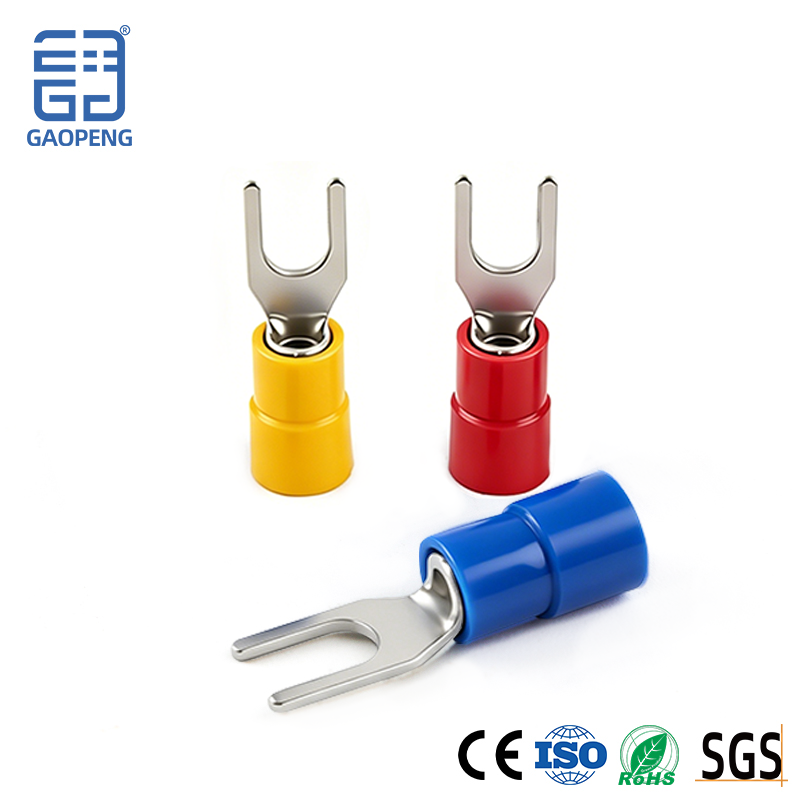
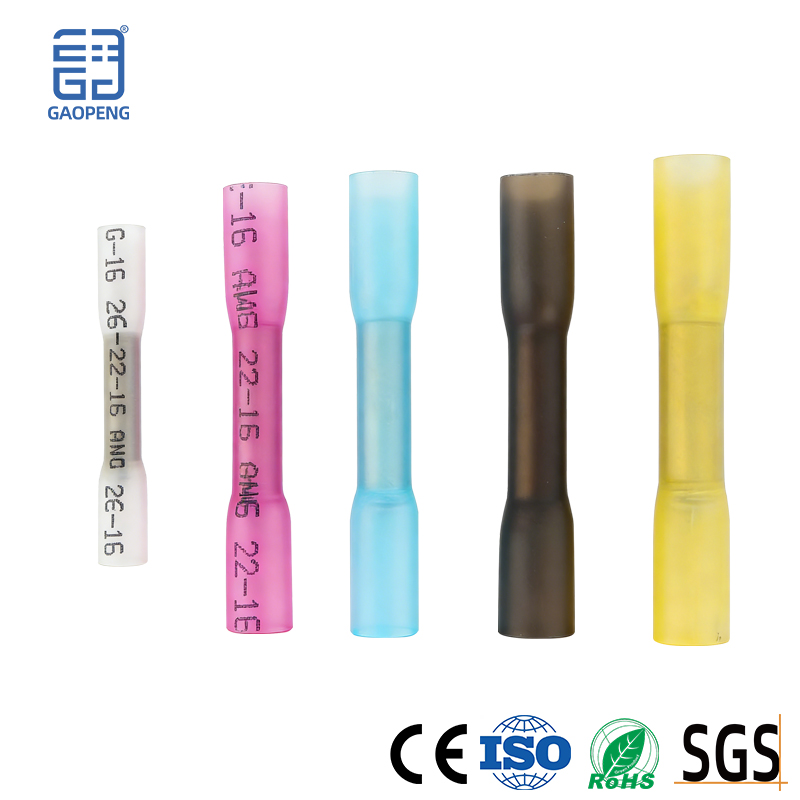
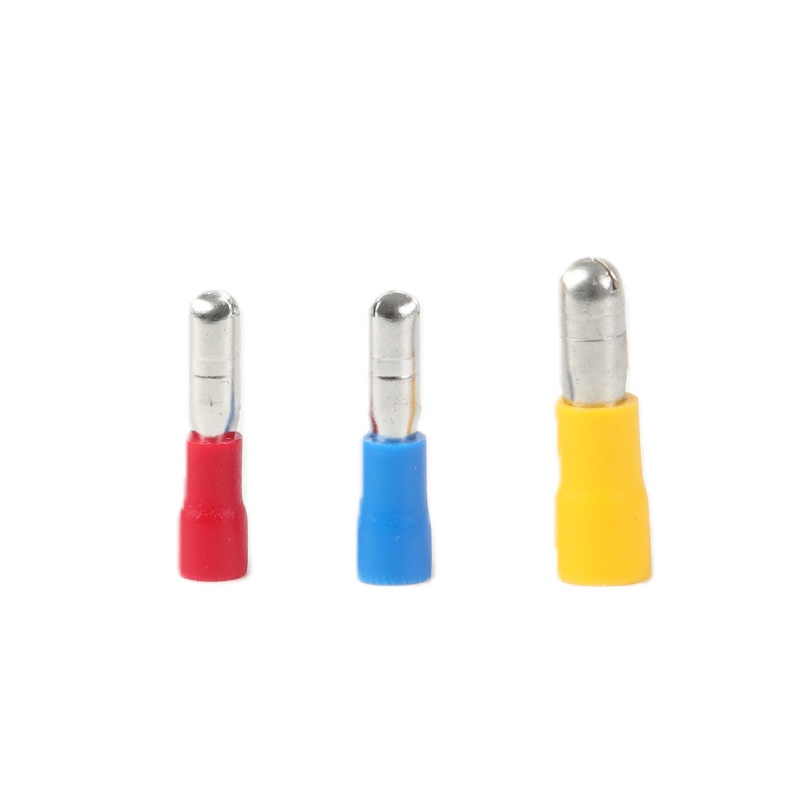
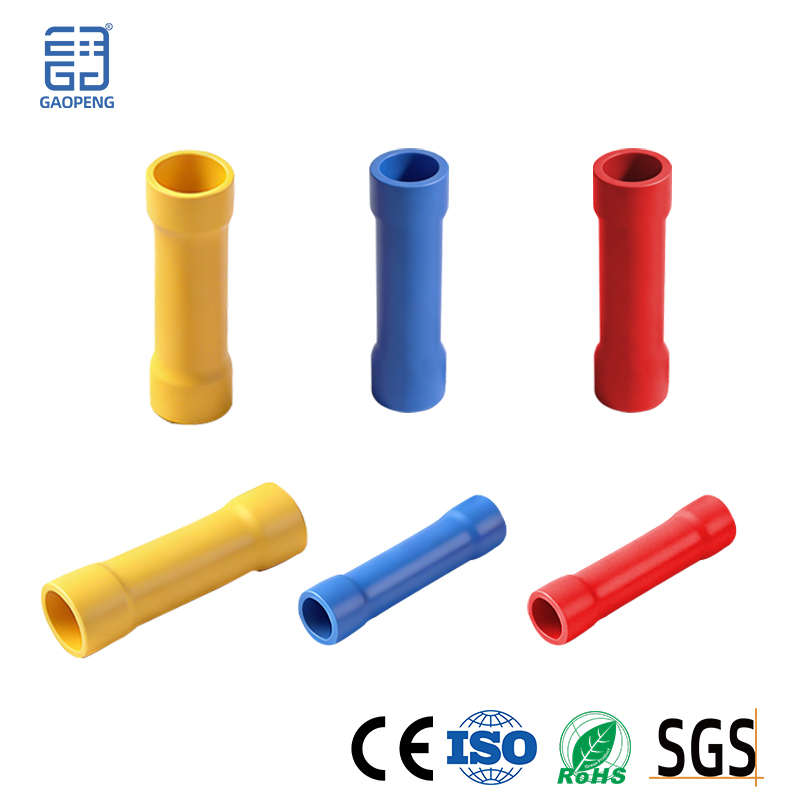
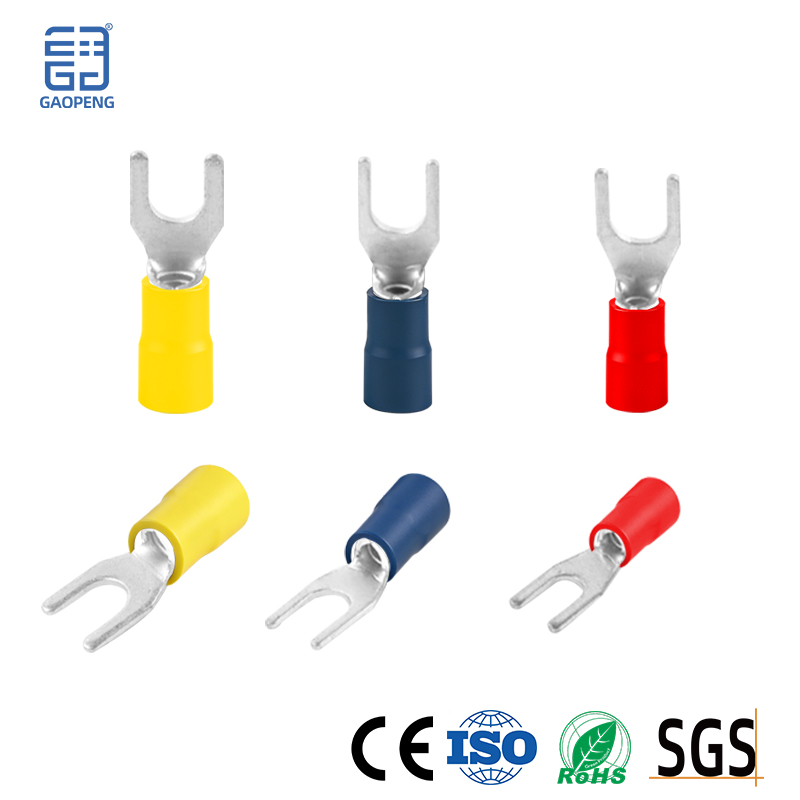
For insulated ferrules and Crimp Terminals:
-
Red: 0.25-1.5 mm² (22-16 AWG)
-
Blue: 1.5-2.5 mm² (16-14 AWG)
-
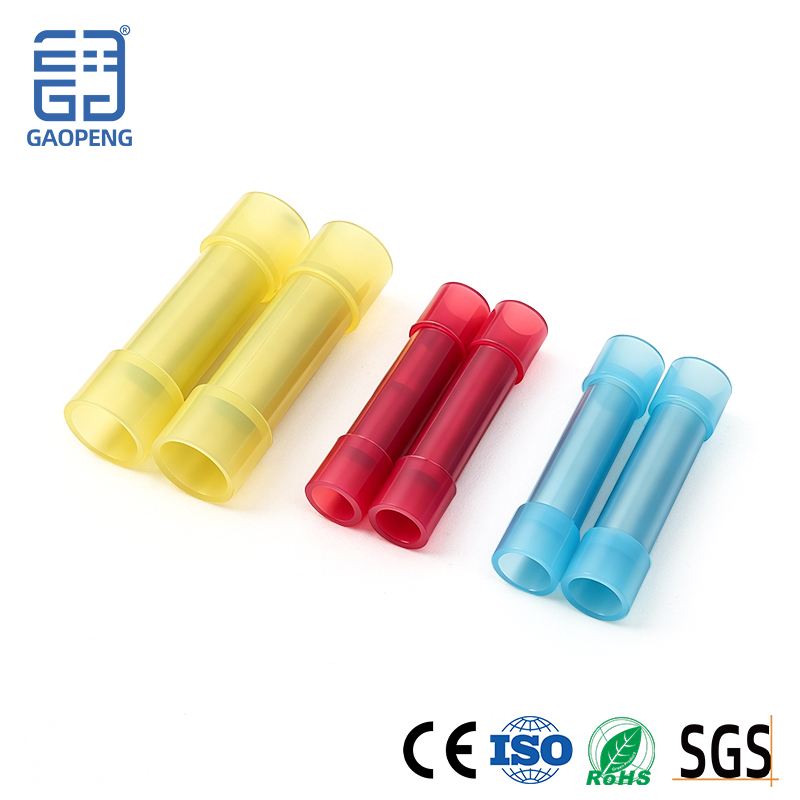
Yellow: 4-6 mm² (12-10 AWG)
Deviations from this standard create confusion, increase error risk, and compromise safety during installation and maintenance.
What to do instead: Specify terminals that follow standard color coding. For applications requiring custom colors, ensure clear documentation and training for all personnel.
Misconception 14: "Push-In Terminals Are Only for Solid Wire"
The Reality: Modern push-in terminals accept solid wire, ferruled stranded wire, and in some designs, fine-stranded wire with special preparation.
Early push-in designs were limited to solid wire. Today, most quality push-in terminals work reliably with ferruled stranded wire, and some accept fine-stranded wire directly. The key is matching the terminal design to the wire type.
What to do instead: Verify the manufacturer's specifications for wire type compatibility. When in doubt, use ferrules on stranded wire for push-in terminals as well.
Misconception 15: "If It Works at Installation, It Will Work Forever"
The Reality: Many failure mechanisms are latent, only manifesting after thermal cycles, vibration, corrosion, or load cycling.
A connection that tests perfectly at installation may degrade over time due to stress relaxation, oxidation, or mechanical fatigue. The initial performance is not a guarantee of long-term reliability.
What to do instead: Select terminals and connection methods with proven long-term stability. Spring-clamp technology, proper ferrules, and adequate plating thickness all contribute to sustained performance. Require suppliers to provide accelerated life test data (thermal cycling, vibration) as part of qualification.
Conclusion: Knowledge Is the Foundation of Reliable Connections
Misconceptions about terminal blocks and crimp terminals can lead to poor decisions, compromised safety, and costly failures. By understanding the realities behind these common myths, engineers, technicians, and buyers can make informed choices that enhance system reliability and longevity.
At Yueqing Gaopeng Electric Co., Ltd., we are committed to education as well as manufacturing. We encourage our customers to ask questions, challenge assumptions, and seek evidence-based answers. The best connection is one backed by knowledge.
Separate fact from fiction. Choose connections you can trust. Partner with Gaopeng.
Have a misconception we didn't address? Contact our technical team. We are happy to provide clarity based on decades of industry experience.