



How to Determine the Quality of Crimp Terminals? A Professional Guide for Engineers and Buyers
Part 1: Why Terminal Quality Matters – The Consequences of Inferior Products
Before diving into evaluation methods, it is essential to understand why terminal quality is so critical. A Crimp Terminal is not merely a piece of metal; it is an engineered interface that must:
-
Conduct electrical current with minimal resistance
-
Maintain mechanical integrity under vibration and thermal cycling
-
Resist corrosion over decades of service
-
Provide safe insulation and strain relief
-
Withstand environmental stresses including temperature extremes, moisture, and chemical exposure
When a terminal fails to meet these requirements, the consequences can be severe:
| Failure Mode | Consequence |
|---|---|
| High contact resistance | Overheating, energy loss, insulation degradation |
| Poor mechanical grip | Wire pull-out, intermittent connections, arcing |
| Corrosion | Increased resistance, eventual open circuit |
| Insulation breakdown | Short circuits, shock hazards, equipment damage |
| Strand damage | Reduced current capacity, premature failure |
The Cost of Failure: In industrial settings, a single failed connection can halt production lines, costing tens of thousands of dollars per hour in downtime. In critical infrastructure, the consequences can be even more severe.
Part 2: Material Quality – The Foundation of Performance
The quality of a crimp terminal begins with its materials. Premium terminals are manufactured from carefully selected materials that meet strict specifications.
Conductor Material: Copper Quality
The metal barrel must be made from high-conductivity copper. Look for:
-
Electrolytic Tough Pitch (ETP) Copper: The industry standard for electrical applications, offering excellent conductivity (approximately 100% IACS) and ductility.
-
High-Conductivity Copper Alloys: Some applications may require specific alloys for enhanced spring properties or strength.
Red Flags:
-
Terminals that feel unusually light or flimsy may indicate thin-walled construction or inferior base metals.
-
Copper that appears dull, discolored, or shows signs of oxidation before use suggests poor quality control.
Plating: The Corrosion Barrier
Plating protects the copper from oxidation and ensures long-term reliable contact. Common plating materials include:
| Plating Type | Characteristics | Best For |
|---|---|---|
| Tin | Excellent corrosion resistance, good solderability, cost-effective | General-purpose applications, indoor use |
| Silver | Superior conductivity, excellent for high temperatures | High-current, high-temperature, RF applications |
| Nickel | Outstanding heat and corrosion resistance | High-temperature environments, some industrial applications |
| Gold | Exceptional corrosion resistance, stable contact resistance | Mission-critical, low-voltage, high-reliability applications |
Quality Indicators:
-
Uniform plating coverage with no bare spots, pinholes, or flaking
-
Consistent color and finish across all terminals in a batch
-
Adequate plating thickness (premium manufacturers specify minimum plating thickness in their datasheets)
Insulation Material
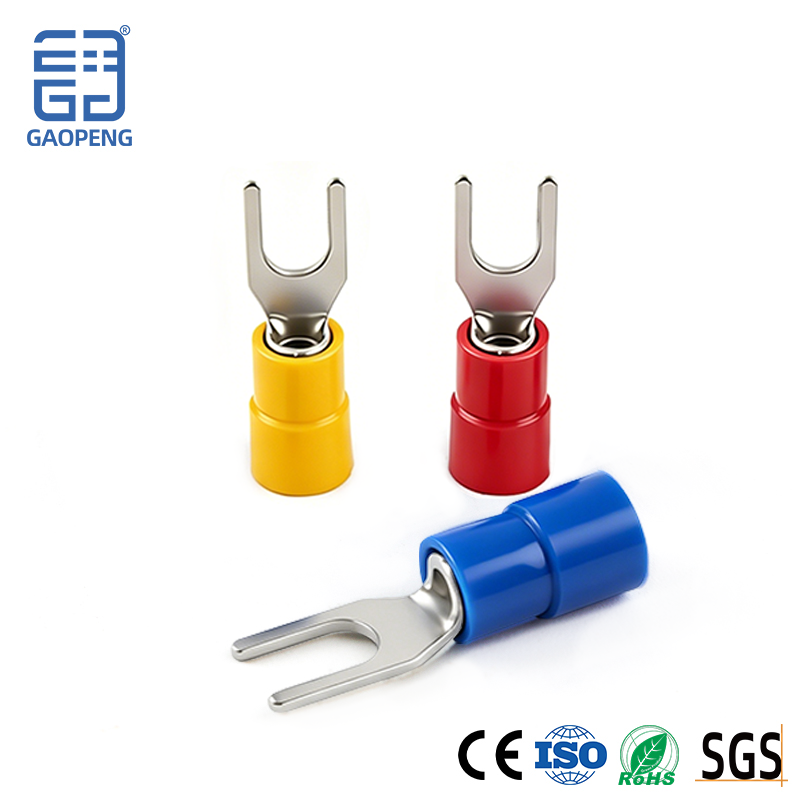
For Insulated Terminals, the sleeve material is equally important:
-
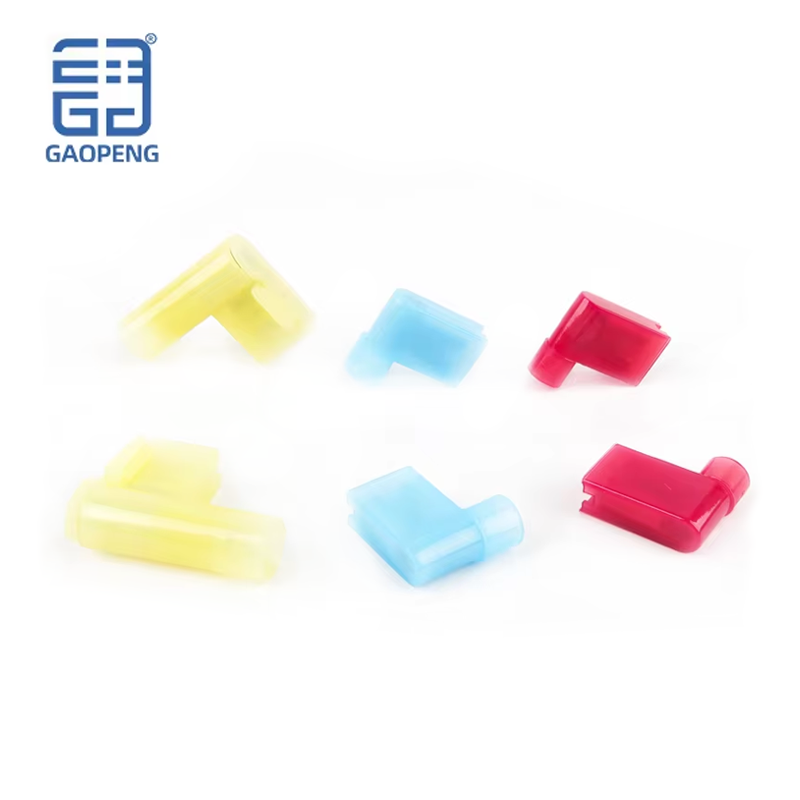
Nylon (Polyamide): Offers excellent abrasion resistance, flexibility, and a wide temperature range (-40°C to +105°C or higher). Premium grades are flame-retardant (UL94 V-2 or V-0).
-
PVC: Good general-purpose insulation, more rigid than nylon, also available in flame-retardant grades.
-
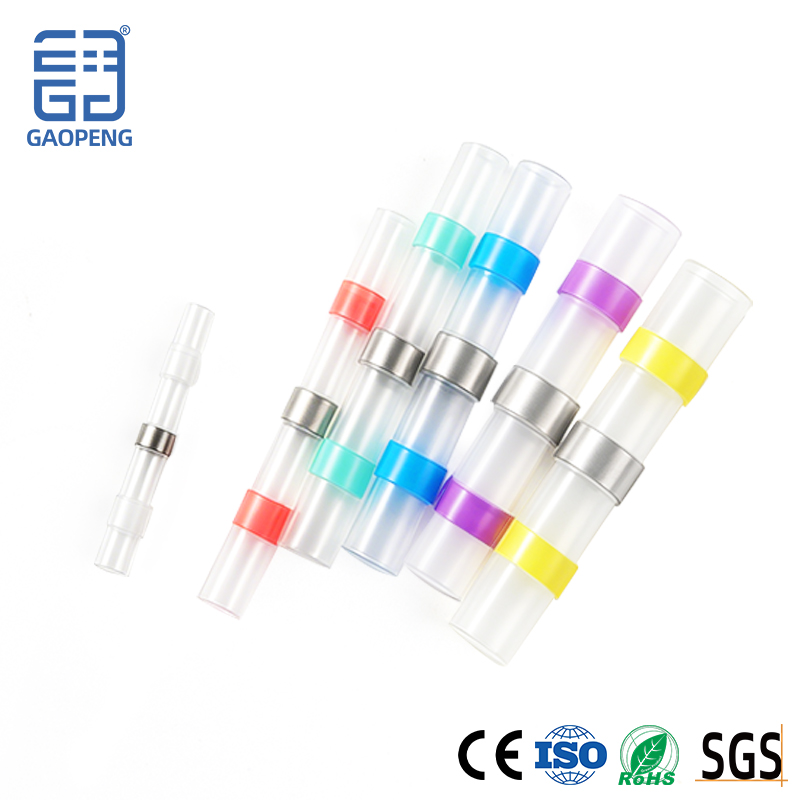
Heat-Shrinkable Materials: Specialized terminals with sleeves that shrink when heated, creating waterproof, environmentally sealed connections.
Quality Indicators:
-
Smooth, consistent surface without bubbles, cracks, or deformities
-
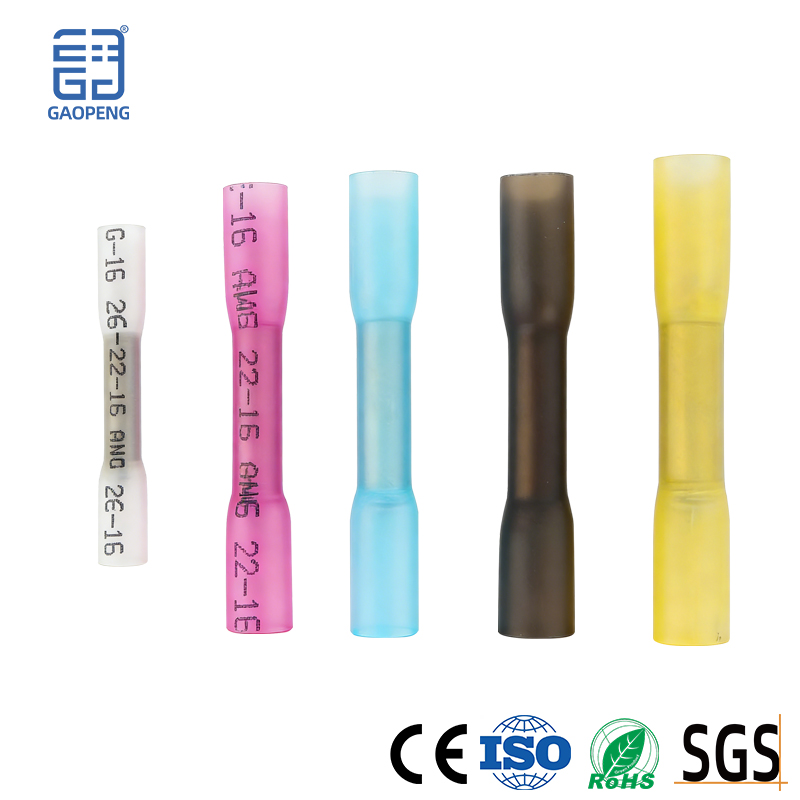
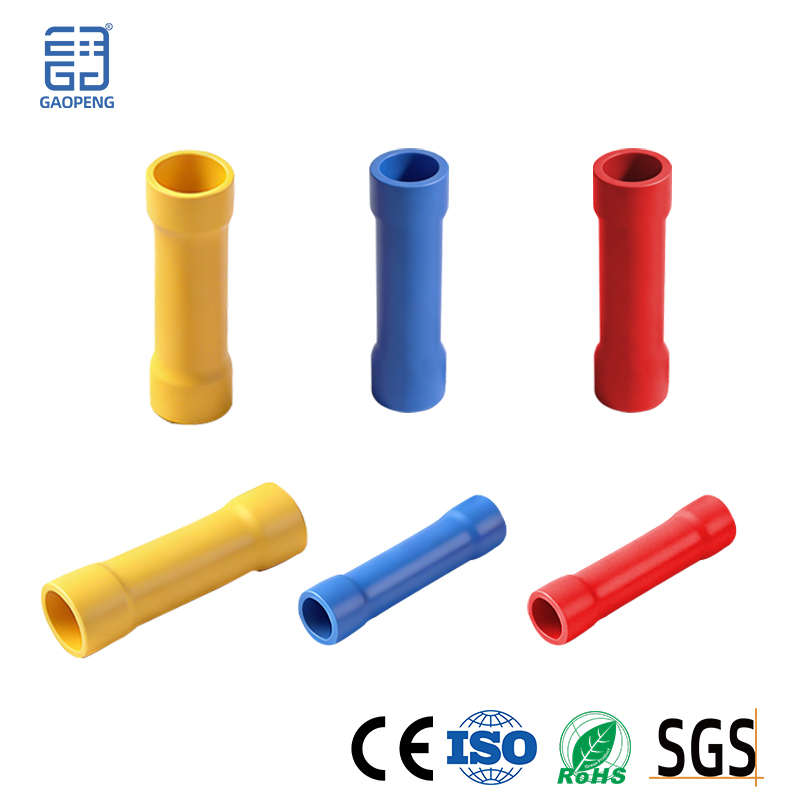
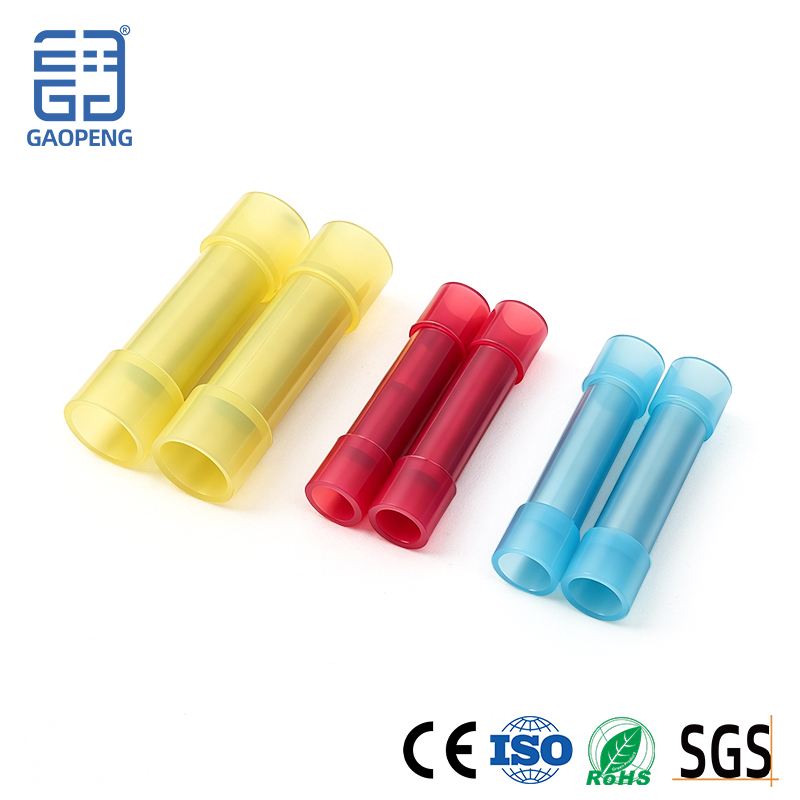
Accurate color-coding (red=22-16 AWG, blue=16-14 AWG, yellow=12-10 AWG)
-
Secure attachment to the metal barrel (should not slide off easily)
-
Flame-retardant certification (UL94 rating)
Part 3: Dimensional Precision – The Hallmark of Quality Manufacturing
Precision manufacturing ensures that every terminal meets specifications and performs consistently.
Critical Dimensions to Evaluate
| Dimension | What It Affects | Quality Indicator |
|---|---|---|
| Barrel Inner Diameter | Must precisely match wire gauge for proper crimp | Consistent across all samples; matches specifications |
| Barrel Wall Thickness | Determines mechanical strength and current capacity | Uniform; adequate for rated current |
| Connection Tongue Dimensions | Must fit mating hardware correctly | Consistent hole/stud sizes; no deformation |
| Overall Length | Affects fit in applications and automated feeding | Consistent within tight tolerances |
| Insulation Sleeve Dimensions | Must accommodate wire insulation properly | Proper internal diameter; correct length |
How to Assess Dimensional Quality
-
Visual Comparison: Compare terminals from different manufacturers side-by-side. Look for consistency and finish.
-
Micrometer Measurement: For critical applications, use precision measuring tools to verify key dimensions against manufacturer datasheets.
-
Sample Crimping: Crimp terminals onto appropriate wire gauges and evaluate the results. A quality terminal will produce consistent, repeatable crimps.
-
Automated Feeding Test: For high-volume applications, test how consistently terminals feed in automated crimping machines. Dimensional variations cause jams and production delays.
Part 4: Surface Finish and Workmanship – What the Eye Can See
A premium terminal exhibits excellent surface finish and workmanship. These visual indicators are often the first sign of quality.
What to Look For
| Feature | Quality Terminal | Inferior Terminal |
|---|---|---|
| Surface Smoothness | Smooth, clean surfaces without burrs | Rough edges, burrs, or sharp protrusions |
| Plating Uniformity | Even coverage, consistent color | Bare spots, discoloration, flaking |
| Seam Quality | Clean, tight seam (for seam-type barrels) | Gaps, misalignment, rough seam |
| Insulation Sleeve | Smooth, properly formed, securely attached | Rough surface, loose fit, deformation |
| Markings | Clear, legible size markings if present | Illegible or missing markings |
| Packaging | Clean, organized, properly labeled | Mixed sizes, dirty, damaged packaging |
The "Burr Test"
Run a fingertip gently across all edges of the terminal. Quality terminals should have no sharp burrs that could cut wire strands during insertion or injure installers. Burrs are a sign of poor tooling and quality control.
Part 5: Certification and Compliance – The Language of Quality Assurance
Reputable manufacturers submit their products to independent testing and certification to verify performance and safety.
Key Certifications to Look For
| Certification | Region | What It Verifies |
|---|---|---|
| UL (Underwriters Laboratories) | North America | Safety and performance to UL 486 standards |
| CSA (Canadian Standards Association) | Canada | Compliance with Canadian electrical standards |
| VDE (Verband Deutscher Elektrotechniker) | Germany/Europe | Stringent safety and quality requirements |
| IEC (International Electrotechnical Commission) | International | Compliance with global performance standards |
| CE | European Union | Conformity with EU safety, health, environmental requirements |
| RoHS | European Union | Restriction of hazardous substances |
| REACH | European Union | Registration, Evaluation, Authorization of Chemicals |
What to Verify
-
Current Certification: Ensure certifications are current and valid (check manufacturer documentation).
-
Applicable Standards: The terminal should be certified to the relevant standard for your application (e.g., UL 486 for wire connectors).
-
Marking on Product: Many certified terminals bear the certification mark on the product or packaging.
-
Traceability: Premium manufacturers provide full traceability from raw materials to finished product.
Red Flag: A manufacturer that cannot provide clear certification documentation upon request should raise immediate concerns.
Part 6: The Ultimate Test – Crimp Performance Evaluation
While visual inspection and certification provide important information, the ultimate test of terminal quality is how it performs when crimped.
Required Tools for Testing
-
Calibrated ratchet crimp tool with manufacturer-recommended dies
-
Wire samples of appropriate gauge (both solid and stranded)
-
Pull tester (for quantitative measurement)
-
Micro-ohmmeter (for contact resistance measurement)
-
Microscope or magnifying glass for visual inspection
Test 1: Visual Inspection of the Crimp
A proper crimp on a quality terminal should exhibit:
| Feature | Quality Indicator |
|---|---|
| Symmetry | Crimp indentations centered and symmetrical |
| Bell-Mouth | Gentle flare at barrel entry for strain relief |
| Wire Position | Insulation flush with barrel; all strands inside |
| No Strand Damage | No cut, crushed, or missing strands |
| No Insulation Trapped | Insulation not caught in conductor crimp |
| No Barrel Cracks | No cracks or splits in crimped area |
Test 2: Pull-Out Force Test
This measures the mechanical strength of the crimp. A quality terminal will withstand significant pull force before failure.
-
Method: Use a calibrated pull tester. Secure the terminal and apply increasing axial force until failure.
-
Acceptance Criteria: The wire should break before the crimp fails. Minimum pull forces are specified in standards like UL 486.
-
What It Reveals: Low pull-out force indicates poor crimp quality or terminal defects.
Test 3: Contact Resistance Measurement
This measures the electrical quality of the crimp. High resistance indicates poor contact.
-
Method: Use a micro-ohmmeter (4-wire Kelvin method) to measure resistance across the crimped connection. Compare to a reference length of wire.
-
Acceptance Criteria: The crimp resistance should be negligible compared to the wire itself. Significant increase indicates a poor crimp.
-
What It Reveals: High resistance leads to heating and energy loss.
Test 4: Salt Spray Test (Corrosion Resistance)
For applications in harsh environments, evaluate corrosion resistance.
-
Method: Expose crimped samples to salt spray according to ASTM B117 or similar standard for specified duration.
-
Acceptance Criteria: Minimal corrosion after test; contact resistance remains within limits.
-
What It Reveals: Poor plating will show rapid corrosion, leading to eventual failure.
Test 5: Thermal Cycling
Simulate real-world temperature variations.
-
Method: Cycle crimped samples between temperature extremes (e.g., -40°C to +125°C) for hundreds of cycles. Monitor resistance periodically.
-
Acceptance Criteria: Resistance remains stable throughout cycling.
-
What It Reveals: Poor terminal design or materials will show increasing resistance as connections loosen or oxidize.
Part 7: Practical Field Tests for Quick Evaluation
While laboratory testing provides definitive data, field engineers and technicians often need quick methods to assess terminal quality.
The "Tug Test"
After crimping, apply firm axial pull to the wire. A properly crimped terminal on a quality component will hold securely with absolutely no movement. If the wire pulls out or moves within the barrel, either the crimp is defective or the terminal is substandard.
The "Visual Flashlight Test"
Shine a bright light into the crimped barrel opening. You should see all wire strands fully inserted and the barrel uniformly compressed around them. Gaps or voids indicate poor compression.
The "Comparison Test"
Obtain samples from multiple suppliers. Crimp identical wires using the same tool and settings. Compare:
-
Ease of wire insertion
-
Visual appearance of crimps
-
Results of tug tests
-
Consistency across multiple samples
The "Insulation Sleeve Test"
For insulated terminals, attempt to move the insulation sleeve relative to the metal barrel. Quality terminals have sleeves that are securely attached and will not slide off easily.
Part 8: What to Demand from Your Terminal Supplier
Based on the evaluation criteria above, here is what you should expect and demand from a reputable terminal manufacturer:
| Requirement | What to Ask |
|---|---|
| Material Specifications | What copper alloy? What plating material and thickness? What insulation material and UL rating? |
| Certifications | Can you provide current UL, CSA, VDE, or other certification documents? |
| Dimensional Tolerances | What are your manufacturing tolerances? Can you provide dimensional data? |
| Traceability | Do you have batch traceability from raw material to finished product? |
| Quality Control | What QC processes do you use? Do you have ISO 9001 certification? |
| Testing Data | Can you provide test reports for pull-out force, contact resistance, corrosion resistance? |
| Sample Availability | Can you provide samples for evaluation before bulk purchase? |
| Technical Support | Do you offer application engineering support and crimping recommendations? |
Part 9: Common Red Flags – When to Walk Away
Be alert for these warning signs that indicate a supplier may be offering substandard terminals:
-
Vague or Missing Certifications: Cannot provide clear certification documentation.
-
Extremely Low Prices: Significantly below market rates—quality materials cost money.
-
Inconsistent Appearance: Terminals vary in color, finish, or dimensions within the same batch.
-
Poor Packaging: Terminals arrive mixed together, dirty, or in damaged packaging.
-
No Technical Data: Cannot provide datasheets, specifications, or application information.
-
Reluctance to Provide Samples: Unwilling to supply samples for evaluation.
-
Unprofessional Communication: Vague answers, lack of technical knowledge, unwillingness to answer questions.
-
No Traceability: Cannot trace batches or provide material certifications.
Part 10: The Gaopeng Standard – Quality You Can Trust
At Yueqing Gaopeng Electric Co., Ltd., quality is not an accident—it is engineered into every product we manufacture. Our commitment to excellence is reflected in:
-
Premium Materials: We use high-conductivity electrolytic copper with precise plating thickness specifications.
-
Precision Manufacturing: Our production facilities maintain tight dimensional tolerances and rigorous quality control.
-
Comprehensive Certifications: Our terminals carry UL, CSA, VDE, and other relevant certifications.
-
Full Traceability: Every batch is traceable from raw material through finished product.
-
Technical Support: Our engineering team provides application guidance and crimping recommendations.
-
Consistent Quality: ISO 9001 certified processes ensure every terminal meets our standards.
When you choose Gaopeng, you are not just purchasing terminals—you are investing in the reliability and safety of your electrical systems.
Conclusion: Quality is Visible to the Informed Eye
Determining the quality of crimp terminals is a skill that combines visual inspection, material knowledge, dimensional verification, certification review, and performance testing. While substandard terminals may look acceptable at first glance, the informed evaluator knows what to look for—and what to demand from suppliers.
The cost difference between premium and inferior terminals is negligible compared to the potential cost of field failures. Investing in quality terminals is investing in system reliability, safety, and long-term value.
Remember these key principles:
-
Start with material quality—copper, plating, and insulation matter.
-
Verify dimensional precision—consistency is the hallmark of quality manufacturing.
-
Demand certifications—they provide independent verification of performance.
-
Test crimp performance—the ultimate proof is in the connection.
-
Choose reputable suppliers—partnership with a quality manufacturer ensures consistent results.
At Gaopeng, we are committed to being that partner—providing terminals that meet the highest standards and supporting our customers with the technical expertise they need to use them correctly.
Build with Confidence. Specify Quality. Choose Gaopeng.
Contact our technical team for detailed specifications, certification documentation, and sample requests. Let us help you ensure every connection in your system meets the highest standards of quality and reliability.