
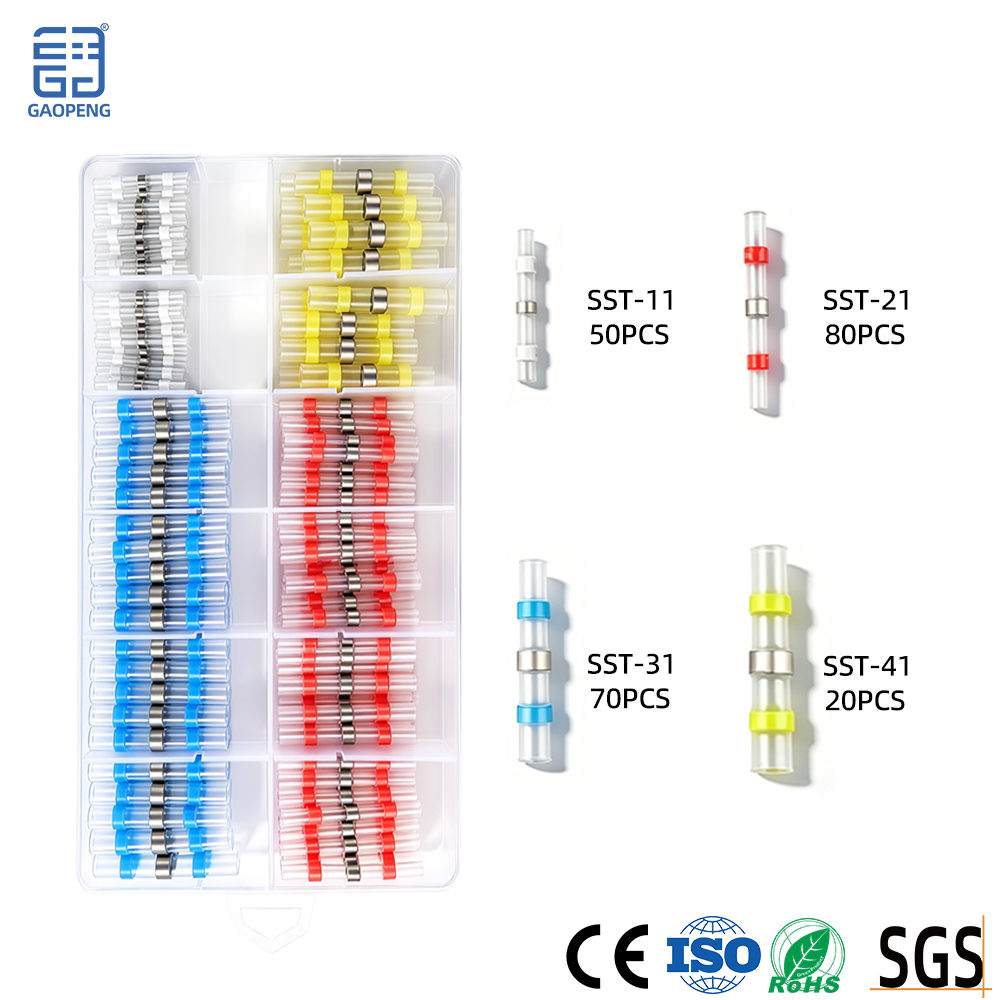
The part is right, the size is right, the crimp holds, and the red looks different from the red that was on the last lot. That is the finding that comes back from a receiving dock more often than any dimensional miss, and it is the one that is hardest to settle, because nobody wrote the tolerance down before the first lot arrived. The color on a sleeve is a molded surface, and a molded surface moves a little with every production run, the way a metal surface moves with every plating bath. The difference between a drift that is normal and a drift that is a defect is a number or a sample that was agreed before the first piece shipped, and this article is how to set that agreement and how to run the check that enforces it, on the buyer side and on ours.
Why the same color drifts between lots
The sleeve is a molded part, and we make it on our own molds, so the color is set in the resin before it ever sees the terminal. The resin batch moves a little, the pigment load moves a little, the molding temperature moves a little, and the surface that comes out of the press is a shade away from the surface of the last run. None of those moves is a failure, each one is inside the process, and together they make two lots that both meet the spec still look different when they sit next to each other on the bench. The metal side has the same story in a smaller dose: a tin plating bath runs a tone over the length of a run, and a lot that starts bright ends a half-step warmer. The lesson on both sides is the same: color is a process output, and a process output has a spread, and the spread is the thing to specify.
What within tolerance should mean on the PO
A PO that says red is a PO that starts an argument. The color line on the PO should name the standard, either a standard color code or an approved sample that both sides hold, and then the tolerance should be written as shade to match the approved sample within the agreed limit, which is the language that turns a color into a measurable check. The light source belongs in the same line, because a sleeve compared under a shop lamp and a sleeve compared under a window are two different checks, and the agreement should fix the light, a standard light box at the receiving dock. The fail action belongs on the PO too, quarantine and re-supply, not a discount negotiation, because a color that is out of tolerance is a lot that does not meet the order, and the remedy is the order, not the price. When the four lines are written, the color check becomes a pass-fail check instead of a conversation.
|
Line on the PO |
What it says |
Check at receiving |
Fail action |
|
Color standard |
named code or approved sample |
side-by-side under the fixed light |
quarantine the lot |
|
Tolerance |
shade to match the approved sample |
judged at normal viewing distance |
sample sent to the supplier |
|
Light source |
standard light box at the dock |
compared under it only |
re-check under the light box |
|
Record |
lot number plus photo |
photo of the lot beside the sample |
filed for the claim |
Running the color check at receiving
The check itself is the simplest one on the dock and the most argument-prone, because it is the one done by eye. Run it under the fixed light, the lot laid beside the approved sample, and make the judgment at a normal working distance, the distance an assembler reads the color, not the distance a camera finds every difference. Photograph the lot next to the sample with the lot number in the frame, because the photograph is what the next lot is compared against and what the supplier sees when the lot is questioned. The drift that shows only on a phone screen is not a fail, the standard is the physical sample under the fixed light, and the photograph documents the check, it does not replace it. When a lot drifts past the agreed limit, the action is the one written on the PO: quarantine, sample, and the lot number travels with the claim, which is what makes the supplier able to answer it.
When the color is the product
There is a case where the tolerance stops being a cosmetic line and becomes a functional one: when the color carries the code. In color-coded wiring the red, blue, and yellow sleeves are the phase and polarity marks that the assembler reads at speed, and a drift that makes two codes hard to tell apart is not a shade complaint, it is an identification defect, because the whole point of the code is that the eye resolves it in a glance. The rule we apply is that when the color carries information the tolerance is tight and the check is done at the working distance the assembler uses, and when the color is a brand color for a private label order the tolerance is set in the conversation before the first sample, not after the first lot. Either way the master sample is the object both sides hold, and we keep the master for every color we run, so the sample on our bench is the sample on yours.
- Name the color standard on the PO, a code or an approved sample.
- Approve the first sample and keep it at the receiving dock.
- Write the tolerance line as shade to match the approved sample.
- Fix the light source, a standard light box at the dock.
- Photograph each lot beside the sample with the lot number in frame.
- Send a drift past the limit to the supplier with the lot number and the photo.
We are Yueqing Gaopeng Electric, a terminal manufacturer in Yueqing since 2016, and the sleeve colors are made on our own molds, so the master sample for each standard color lives on our bench and travels with the certificate on the lot. Send us your color codes and the lots you want matched, and we will come back with the master samples and the tolerance line for the PO.