



Terminals in Extreme Environments: Reliability Strategies for Harsh Applications
Part 1: The Spectrum of Extreme Environments
Terminals face a wide range of environmental stresses, often in combination:
| Environment | Key Stressors | Typical Applications |
|---|---|---|
| High temperature | Sustained heat + thermal cycling | Engine compartments, industrial ovens, desert solar |
| Low temperature | Brittleness, condensation, ice | Arctic wind, cold storage, high‑altitude |
| High humidity / wet | Moisture ingress, electrolytic corrosion | Outdoor enclosures, washdown areas, tropical climates |
| Salt spray / marine | Galvanic corrosion, chloride attack | Offshore wind, shipboard, coastal infrastructure |
| Vibration / shock | Mechanical loosening, fretting | Rail, mining, heavy machinery, aerospace |
| Dust / particulate | Contamination, insulation breakdown | Cement plants, mines, desert installations |
| Chemical / oil | Material degradation | Petrochemical plants, refineries, manufacturing |
Each stressor demands specific countermeasures in terminal material, design, and installation.
Part 2: High‑Temperature Environments – Managing Heat and Thermal Cycling
The Challenge
High temperatures accelerate oxidation, soften insulation materials, and increase the rate of stress relaxation in clamping mechanisms. Thermal cycling (repeated expansion and contraction) can loosen screw terminals and fatigue wire strands.
Temperature Classifications
| Temperature class | Maximum operating temperature | Typical terminal materials |
|---|---|---|
| General purpose | 85°C – 105°C | Standard PA66, tin plating |
| High temperature | 125°C – 150°C | High‑temp PA66, nickel or silver plating |
| Very high temperature | 180°C+ | Ceramic housings, nickel‑plated copper, stainless steel |
Gaopeng Solutions
-
High‑temperature polyamide (PA66 HT): Maintains mechanical strength and dielectric properties up to 150°C.
-
Nickel or silver plating: Resists oxidation at elevated temperatures far better than tin.
-
Spring‑clamp technology: Maintains constant contact force despite thermal cycling; screws can loosen over time.
-
Thermal derating: We provide current rating tables that account for ambient temperature, so engineers can select appropriately.
Installation Tips
-
Allow adequate spacing between terminals for heat dissipation.
-
Use higher‑rated terminals than the nominal current suggests when ambient temperatures exceed 40°C.
-
Avoid routing power and signal wires through the same hot zones.
Part 3: Low‑Temperature and Cryogenic Environments – Preserving Ductility
The Challenge
At low temperatures, plastics become brittle and can crack under impact or vibration. Copper remains ductile, but insulation shrinkage may expose conductors.
Key Considerations
-
Select polyamide grades rated for -40°C or lower. Standard PA66 is typically rated to -40°C; special grades extend to -60°C.
-
Avoid PVC insulation in extreme cold; it stiffens and cracks.
-
Use ferrules on stranded wire to consolidate strands and prevent ice wicking into the barrel.
Gaopeng Solutions
-
Low‑temperature‑tested terminals: Validated to -40°C functional operation.
-
Ferrules with flexible nylon sleeves: Maintain grip and protect strands even when cold.
Part 4: High Humidity and Wet Locations – Fighting Corrosion and Creepage
The Challenge
Moisture promotes galvanic corrosion, reduces surface insulation resistance (leading to tracking), and can wick into stranded wires. In condensing environments, water droplets can create conductive paths between terminals.
Protection Levels (IEC 60529)
| IP rating | Protection | Suitable for |
|---|---|---|
| IP20 | Finger‑safe, no water protection | Indoor, dry panels |
| IP54 | Dust‑protected, splashing water | Indoor with occasional moisture |
| IP66 | Dust‑tight, powerful water jets | Outdoor, washdown |
| IP67 | Dust‑tight, temporary immersion | Outdoor, flooded areas |
| IP68 | Dust‑tight, continuous immersion | Subsea, manholes |
Gaopeng Solutions
-
Sealed Terminal Blocks: Fully potted housings achieve IP66, IP67, or IP68.
-
Corrosion‑resistant plating: Gold or nickel plating on critical contact surfaces.
-
Stainless steel hardware: For screw‑clamp terminals in wet environments.
-
Ferrules with sealed ends: Prevent moisture wicking into stranded conductors.
Creepage and Clearance
In humid conditions, pollution degree increases. Engineers must specify terminals with higher rated insulation voltage and greater creepage distances. Gaopeng terminals are clearly marked with their pollution degree rating.
Part 5: Salt Spray and Marine Environments – The Corrosion War
The Challenge
Salt spray is highly corrosive, attacking both copper and steel components. Galvanic corrosion between dissimilar metals is accelerated.
Material Selection for Marine
| Component | Recommended material | Why |
|---|---|---|
| Terminal barrel | Nickel‑plated copper | Superior salt corrosion resistance over tin |
| Screws / hardware | Stainless steel (A4 grade) or silicon bronze | Resists pitting and crevice corrosion |
| Insulation housing | UV‑stabilized polyamide | Resists degradation from sun and salt |
Gaopeng Solutions
-
Marine‑grade terminals: Nickel‑plated barrels and stainless steel hardware, tested to 1,000+ hours salt spray (ASTM B117).
-
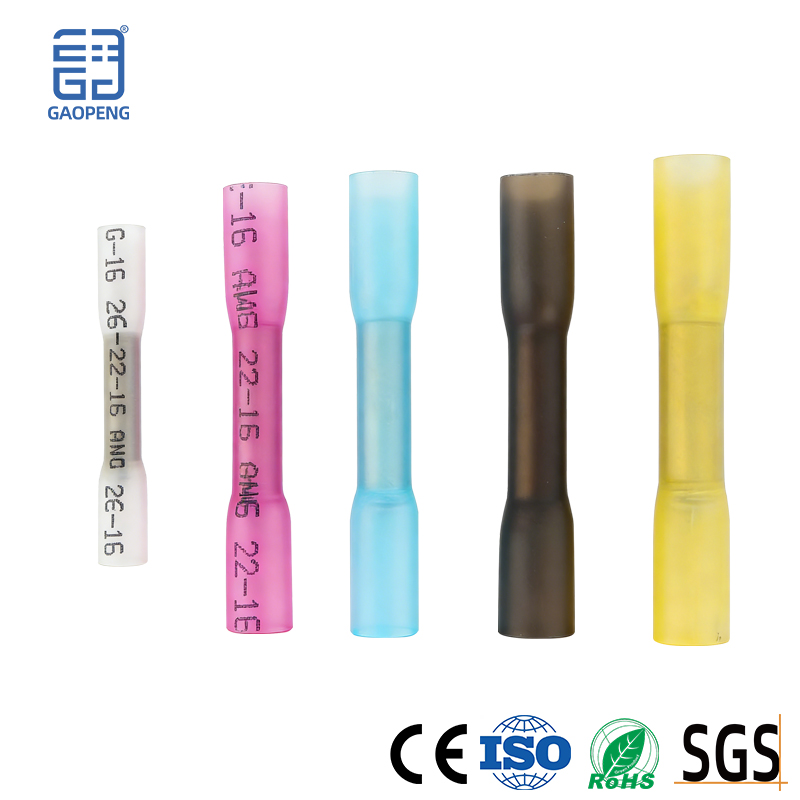
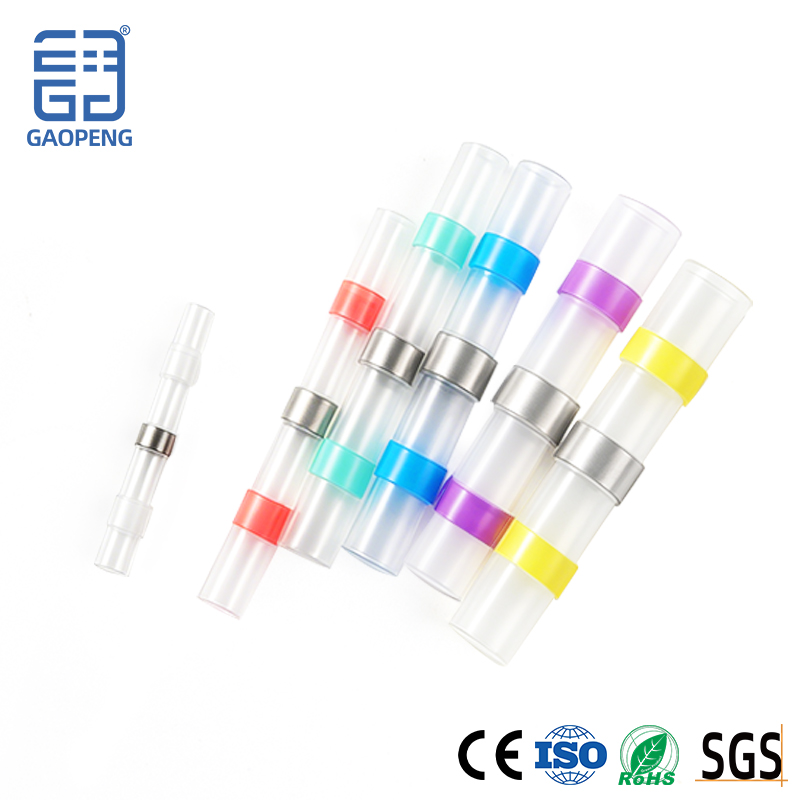
Sealed connectors with gel‑filled or heat‑shrink boots: For cable entries.
-
Bi‑metallic terminals: When connecting aluminum to copper, use transition terminals to prevent galvanic corrosion.
Part 6: Vibration and Shock – Preventing Mechanical Loosening
The Challenge
Vibration causes screw terminals to back off over time, and can fatigue wire strands at the termination point. Fretting corrosion occurs when micro‑movements wear through plating.
Vibration‑Resistant Technologies
| Technology | Mechanism | Best for |
|---|---|---|
| Spring‑clamp | Constant spring force; no screw to loosen | Moderate to high vibration |
| Push‑in | Similar spring retention | Moderate vibration |
| Screw with locking washer | Increased friction; can loosen over time | Low vibration only |
| Screw with thread‑locking adhesive | Prevents screw rotation | Field repairs; not for repeated access |
Gaopeng Solutions
-
Spring‑clamp terminal blocks: Preferred for rail, mining, and heavy machinery.
-
Crimped Ring Terminals with serrated washers: For stud connections.
-
Strain relief features: Integrated wire supports to prevent flexing at the termination point.
Best Practices
-
Use ferrules on stranded wire even with spring‑clamp terminals – they protect strands and improve vibration life.
-
Route wires to minimize cantilever vibration.
-
Use cable ties and ducting to immobilize wire bundles.
Part 7: Dust and Contamination – Maintaining Insulation Integrity
The Challenge
Dust, especially conductive dust (carbon, metal particles), can create tracking paths between terminals, leading to insulation failure and short circuits.
Mitigation Strategies
-
High IP rating enclosures (IP5X, IP6X): Keep dust out of the panel.
-
Fully sealed terminal blocks: Potting prevents dust ingress.
-
Increased creepage distance: Even if dust settles, longer paths reduce tracking risk.
Gaopeng Solutions
-
Terminal blocks with raised barriers: Prevent dust bridges between poles.
-
Self‑cleaning contacts: Spring‑clamp and push‑in designs wipe contacts during wire insertion.
Part 8: Chemical and Oil Exposure – Resisting Attack
The Challenge
Industrial chemicals, oils, solvents, and cleaning agents can swell, crack, or dissolve plastic housings. They can also attack metal plating.
Chemical Resistance of Common Materials
| Material | Resistance to | Vulnerable to |
|---|---|---|
| PA66 (standard) | Oils, fuels, weak acids | Strong acids, some solvents |
| PBT | Excellent chemical resistance | Hot water, strong bases |
| Phenolic | Good for oils, weak chemicals | Limited color / marking |
| Ceramic | Excellent for almost all chemicals | Brittle, expensive |
Gaopeng Solutions
-
PBT terminal blocks: For chemical plant and refinery applications.
-
Sealed stainless steel terminals: For the most aggressive environments.
Part 9: Testing and Certification for Extreme Environments
Before specifying terminals for harsh conditions, demand proof of performance. Gaopeng terminals are tested to:
| Test | Standard | Duration / severity |
|---|---|---|
| Damp heat, cyclic | IEC 60068‑2‑30 | 55°C / 95% RH, 6 cycles |
| Salt spray | ASTM B117 | 96–1000+ hours |
| Thermal shock | IEC 60068‑2‑14 | -40°C to +125°C, 100 cycles |
| Vibration (sinusoidal) | IEC 60068‑2‑6 | 5–500 Hz, 2g or higher |
| Vibration (random) | IEC 60068‑2‑64 | Custom profiles for rail/marine |
| Mixed flowing gas | IEC 60068‑2‑60 | Corrosive atmospheres (H₂S, SO₂) |
We provide test reports upon request, giving you confidence that our terminals will survive your environment.
Part 10: Application‑Specific Recommendations
| Application | Recommended Gaopeng solution |
|---|---|
| Desert solar farm (high temp, dust, UV) | 1500V DC spring‑clamp terminal block, UV‑stabilized PA66, tin‑plated |
| Offshore wind (salt, vibration, cold) | Nickel‑plated ring terminals, stainless steel hardware, heat‑shrink sealing |
| Mining truck (vibration, dust, moisture) | Spring‑clamp terminals with sealing gasket, IP66 enclosure |
| Chemical plant (corrosive vapors) | PBT housing, gold‑plated contacts, fully potted |
| Cold storage warehouse (-25°C) | Low‑temp PA66, ferrules on all stranded wire |
| Engine compartment (125°C, oil) | High‑temp PA66, nickel‑plated barrel, thread‑locking screws |
Conclusion: Reliability in Extreme Conditions is No Accident
Terminals deployed in harsh environments face a perfect storm of stressors: heat, cold, moisture, salt, vibration, dust, and chemicals. Off‑the‑shelf indoor terminals will fail prematurely. Achieving long‑term reliability requires purpose‑engineered materials, rigorous testing, and careful installation.
At Yueqing Gaopeng Electric Co., Ltd., we design and test our terminals for the real world—not just the laboratory. From high‑temperature polyamide to nickel‑plated copper and sealed IP67 housings, we offer a full range of products for the most demanding applications. We also provide the technical documentation and support to help you select and install them correctly.
Don’t let your environment dictate your reliability. Choose Gaopeng terminals engineered to endure.
Need terminals for an extreme application? Contact our engineering team with your environmental specs. We will recommend the optimal solution and provide test data to back it up.