




The Critical Role of Terminal Marking and Identification in Modern Electrical Systems
Part 1: Why Marking Matters – Safety, Maintenance, and Compliance
Clear, durable identification of Terminal Blocks and associated wiring serves three essential purposes:
| Purpose | Why It Matters |
|---|---|
| Safety | Prevents mis‑wiring during installation, commissioning, and later modifications. Reduces risk of short circuits, electric shock, and arc flash. |
| Maintainability | Enables technicians to quickly locate specific circuits, troubleshoot faults, and perform upgrades without tracing wires through bundles. |
| Compliance | Many electrical codes (NEC, IEC 61439, etc.) require clear identification of terminals and conductors. Poor marking can lead to failed inspections. |
A well‑marked panel reduces errors, cuts troubleshooting time by more than half, and supports the digital documentation required for Industry 4.0.
Part 2: What Needs to Be Marked – A Complete Identification System
Effective identification goes beyond simply writing a number on a terminal block. A complete system includes:
| Component | What to Mark | Why |
|---|---|---|
| Terminal block (each level) | Unique reference (e.g., TB1‑1, TB1‑2) | Locates connection points on schematics |
| Wire / conductor | Circuit or destination identifier | Tracks wire from source to load |
| Jumper / cross‑connection | Function or phase (L1, L2, L3, common) | Prevents incorrect bridging |
| End covers and partitions | Voltage or safety warnings | Protects against accidental contact |
| Group or section | Function block (e.g., “24VDC Power”, “Sensors”, “Motor Control”) | Organises the panel visually |
Gaopeng’s marking system addresses all these needs with compatible products.
Part 3: Marking Methods – From Simple to Sophisticated
3.1 Snap‑On Marker Strips
The most common method: plastic strips that clip onto the terminal block. Available as:
-
Blank strips for hand‑writing or dot‑matrix printing.
-
Pre‑printed strips with sequential numbers or letters.
-
Self‑laminate strips for protection against solvents and abrasion.
3.2 Direct Laser or Inkjet Marking on Housings
For high‑volume or permanent identification, Gaopeng can engrave or print markings directly onto the terminal housing. Benefits:
-
Cannot be lost or dislodged.
-
Machine‑readable (QR codes, Data Matrix) for digital integration.
-
Withstands harsh environments.
3.3 Wire Marking Collars and Sleeves
For wires, options include:
-
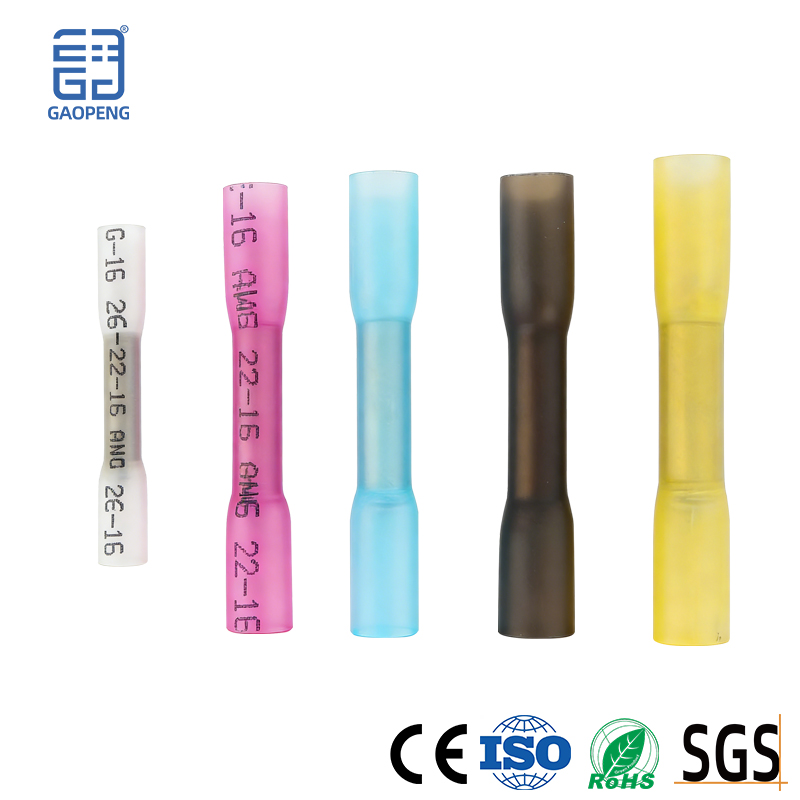
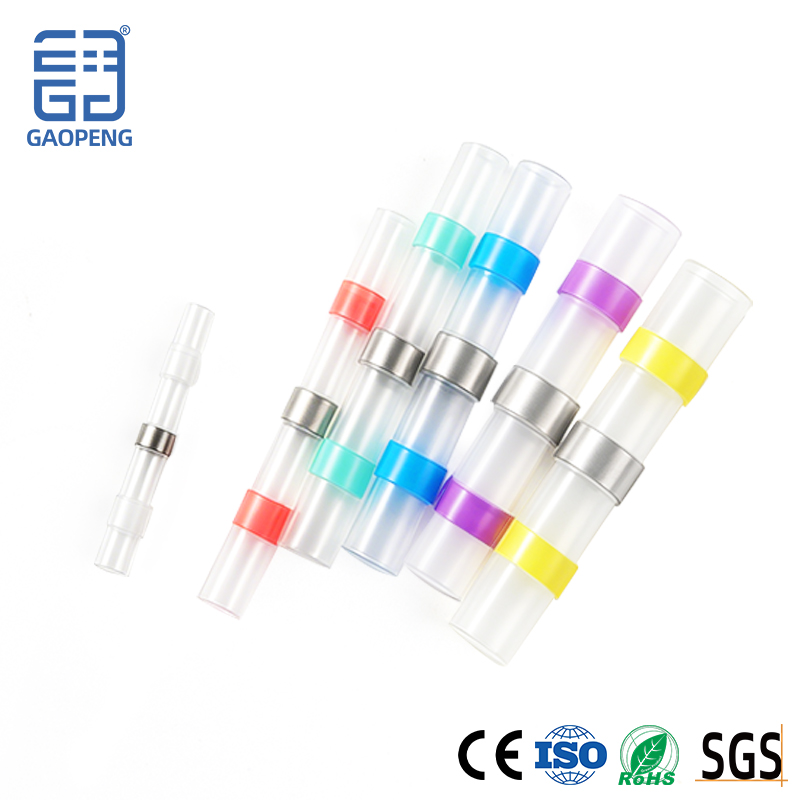
Heat‑shrink sleeves – printed with wire numbers, shrunk onto the wire after termination.
-
Clip‑on markers – reusable, movable.
-
Flexible label wraps – for field use.
3.4 LED and Electronic Marking
For smart terminals, high‑brightness LEDs provide instant visual status (power present, active signal, fault). Some systems integrate e‑paper displays for dynamic labeling.
Part 4: Standards and Best Practices for Terminal Marking
Several standards guide proper identification.
| Standard | Requirement / Recommendation |
|---|---|
| IEC 61439 (low‑voltage switchgear assemblies) | All terminals shall be clearly identified, and identification shall be durable. |
| NFPA 79 (Industrial Machinery) | Terminal markings shall be legible and located near the terminal. |
| IEC 60757 (colour coding) | Defines colours for AC and DC phases, e.g., L1 = brown, L2 = black, L3 = grey; DC + = brown, DC – = blue. |
Best practice guidelines:
-
Use a consistent numbering scheme (e.g., TB1‑1, TB1‑2 matches schematic page and reference).
-
Mark both the terminal block and the wire (redundant identification).
-
Leave space for test points and future additions.
-
Protect markings from oil, moisture, and UV.
Part 5: Common Marking Mistakes and How to Avoid Them
| Mistake | Consequence | Prevention |
|---|---|---|
| Hand‑writing with permanent marker | Fades, smears, or is misread | Use printed markers or professional labelling |
| Marking only one side of the panel | Impossible to trace when wire looms cover one side | Mark both sides or use wire numbers |
| Skipping jumper / bridge marking | Future technician might remove wrong jumper | Label jumpers with function (e.g., “L1 Link”) |
| Using cryptic, inconsistent codes | Requires constant referral to schematics | Use intuitive scheme; provide legend |
| Marking after wires are terminated | Hard to reach, risk of damaging wires | Plan marking before termination |
Part 6: Gaopeng’s Comprehensive Marking Solutions
We offer a full range of marking products designed to integrate seamlessly with our terminal blocks.
6.1 Snap‑On Marker Carriers
-
Standard strip carriers – accept 5 mm, 6 mm, 8 mm, 10 mm wide markers.
-
Double‑level carriers – separate marking for each level of multi‑level blocks.
-
Angled carriers – readable even in tight spaces above the terminal.
6.2 Marking Materials
| Material | Durability | Suitable for |
|---|---|---|
| Polyester (PET) | Excellent (chemical, UV, abrasion resistant) | Harsh industrial, outdoor |
| Polyamide (PA) | Good, with high temperature rating | General indoor |
| Vinyl / PVC | Moderate, economical | Temporary or light duty |
6.3 Printing Compatibility
Our markers are compatible with:
-
Thermal transfer printers (easy to print in‑house).
-
Dot matrix printers (older systems).
-
Laser marking (for direct housing marking by Gaopeng).
6.4 Pre‑Printed and Custom Options
-
Numbered strips (1‑10, 11‑20, etc.) off the shelf.
-
Custom strips with your logo, panel ID, or QR codes – low minimum order.
6.5 Integrated Wire Numbering Systems
We offer matching wire numbering sleeves (heat‑shrink or clip‑on) that use the same numbering scheme as our terminal markers, eliminating confusion.
Part 7: Digital Integration – Marking for Industry 4.0
Modern panels are not just physical; they are part of a digital twin. Gaopeng’s marking system supports this transition:
-
QR code markers – scan to retrieve schematic, data sheet, or maintenance log.
-
RFID‑ready carriers – add RFID tags for automated inventory and asset tracking.
-
Cloud‑linked marking software – print markers directly from your CAD electrical design (EPLAN, AutoCAD Electrical).
Engineers can now design a panel, and the marking data flows automatically to a printer, generating perfectly matched terminal and wire labels with zero manual entry errors.
Part 8: A Practical Step‑by‑Step Marking Workflow
For a new panel build, follow this process for efficient and error‑free marking:
-
Design stage – assign terminal numbers in the schematic.
-
Print markers – using Gaopeng software, print all terminal markers and wire sleeves at once.
-
Pre‑mount marker strips – snap carriers onto empty terminal blocks before wiring.
-
Terminate wires – as each wire is connected, slide the corresponding marker sleeve onto the wire.
-
Final check – verify marker numbers match the schematic; fix any errors before energising.
This workflow eliminates 99% of mis‑marking errors and reduces assembly time by 20–30% because technicians never have to stop and manually write numbers.
Part 9: Case Example – Marking Saves a Factory
A food processing plant experienced repeated downtime due to mis‑wiring during maintenance. Each time a sensor was replaced, technicians had to trace wires back through unmarked bundles, often reconnecting incorrectly.
The plant retrofitted all control panels with Gaopeng terminal markers and matching wire sleeves, following a clear colour‑coded scheme (blue for 24VDC, red for 120VAC, yellow for alarms). They also added QR code markers linking to online schematics.
Results:
-
Post‑retrofit, wiring errors dropped by 95%
-
Average troubleshooting time per fault fell from 90 minutes to 15 minutes
-
The plant saved over $200,000 annually in avoided downtime
A modest investment in proper marking delivered enormous returns.
Part 10: Gaopeng’s Commitment – Marking That Lasts
Not all markers are created equal. Some fade, peel, or become illegible after a few years. Gaopeng’s markers are engineered for the life of your equipment:
-
High‑adhesion polyester – resists oil, solvents, and UV.
-
Tested to 20+ years of industrial use (accelerated aging).
-
High temperature rating – up to 125°C for engine compartments.
-
Low temperature rating – down to -40°C without cracking.
We also provide marker reordering kits so you can easily replenish missing or damaged markers without reordering entire blocks.
Conclusion: Marking Is Not Optional – It Is Critical
Terminal marking has long been undervalued, treated as a clerical task rather than an engineering discipline. That mindset is outdated and dangerous. In modern electrical systems, where complexity is ever‑increasing and maintenance windows are shrinking, clear, durable, and consistent identification is essential for safety, efficiency, and compliance.
At Yueqing Gaopeng Electric Co., Ltd., we treat marking as a first‑class feature of our terminal blocks—not an afterthought. Our comprehensive marking solutions, from snap‑on strips to QR code carriers and integrated printing workflows, give panel builders and end users the tools to create panels that are as intelligent as they are reliable.
Mark clearly. Maintain easily. Operate safely. Choose Gaopeng for terminal identification that works as hard as you do.
Explore our full marking system catalog, download marker printing software, or request custom‑printed marker strips. Contact our identification specialists to optimize your panel labeling workflow.