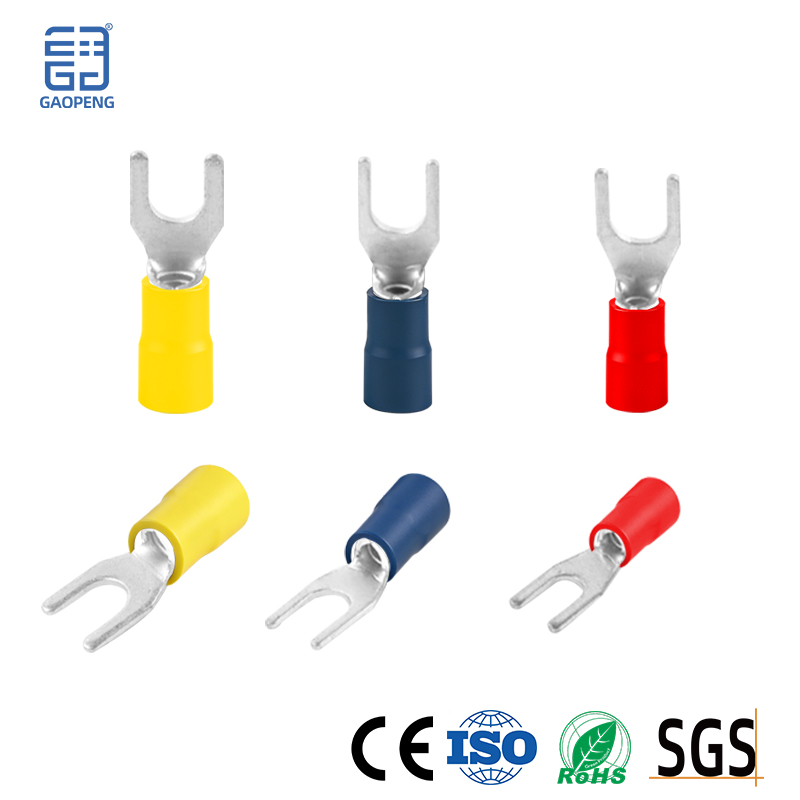
Why do cold-pressed terminals sometimes have poor insulation?
The phenomenon of poor insulation in cold-pressed terminals is mainly due to factors related to materials, processes, usage environment, and human operation.
1. Material Factors
Insulation material defects: The insulation sleeves on terminals are usually made of PVC, nylon, or similar materials. If the material itself contains impurities, pores, or improper formulation (such as plasticizer migration), it can lead to reduced insulation performance.
Material aging: Long-term exposure to high temperatures, ultraviolet light, or chemical corrosive environments may cause the insulation material to become brittle, crack, and lose its insulating ability.
Corrosion of metal parts: If the metal core of the terminal has a poor plating layer or impure material, oxidation or rust may shorten the insulation distance or even cause leakage.
2. Process and Manufacturing Issues
Injection molding defects: If the insulation sleeve is not tightly pressed against the metal core, it may create micro-voids or gaps, forming a tracking path.
Uncontrolled dimensional tolerance: Uneven or overly thin insulation sleeve thickness may result in inadequate local insulation strength.
Contamination residues: During production, grease, metal shavings, or other contaminants may adhere to the insulation surface, reducing surface resistance.
3. Improper Crimping Operation
Mismatched Crimping Tools: Using the wrong crimping die or incorrect pressure can cause the insulation sleeve to crack under pressure or the metal core to pierce the insulation layer.
Improper cable stripping: Excessive removal of the conductor insulation exposes too much metal, which may come into contact with the external environment.
Misaligned crimping position: If the metal core does not fully wrap the conductor, burrs may pierce the insulation sleeve after crimping, creating discharge points.
4. Environmental and Usage Conditions
Moisture and condensation: In humid environments, water can seep into insulation gaps, lowering insulation resistance and potentially causing arcing or short circuits.
High-temperature environments: Continuous high temperatures not only accelerate material aging but may also soften and deform the insulation material, exposing metal parts.
Mechanical stress: Frequent vibration or pulling after installation may cause the insulation sleeve to crack or the terminal to deform, compromising insulation integrity.