A 60 amp wire size is often 6 AWG copper where the wiring method, equipment and both terminations permit the 75°C ampacity column. That is not a universal answer. In the reference chart below, 6 AWG copper is rated 55 A in the 60°C column and 65 A in the 75°C column. Cable type, terminal markings, load calculations and installation conditions decide which value can be used.
This distinction explains why one recommendation says “6 gauge” while another says “4 gauge.” Before buying cable or lugs, identify the complete conductor and termination arrangement. A larger wire can solve an ampacity constraint while creating a different problem at a terminal that cannot accept it.
60 amp wire size: compare the permitted column first
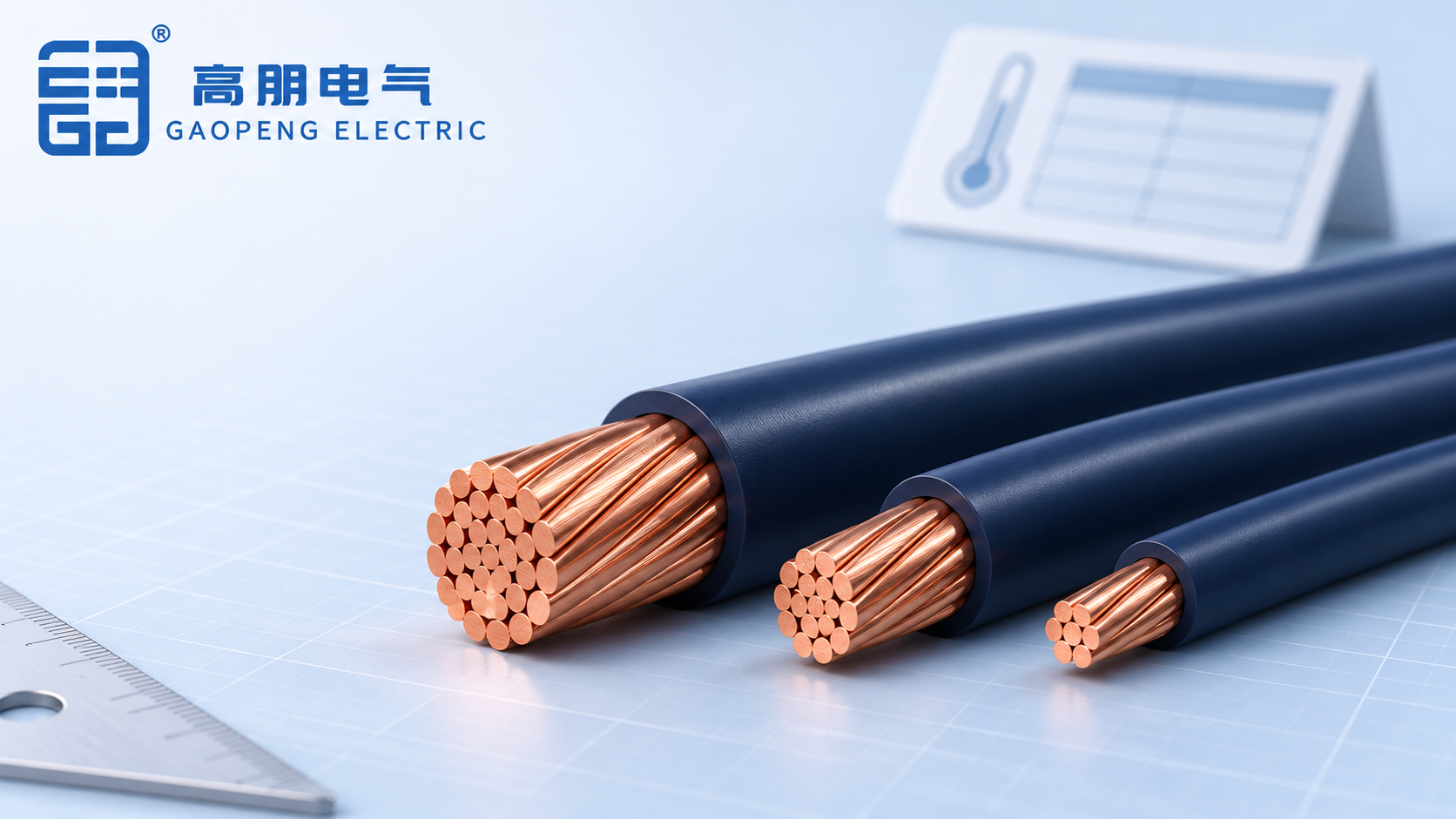
The following values are selected entries from the cable manufacturer’s published ampacity chart. That chart states a 2017 NEC basis and excludes temperature corrections and ampacity adjustments. These are reference values, not confirmation that a particular circuit complies with the edition adopted in its location.
| Conductor | 60°C column | 75°C column | 90°C column | Decision for a 60 A requirement |
|---|---|---|---|---|
| 6 AWG copper | 55 | 65 | 75 | The 75°C value may support the requirement when every applicable condition allows it. |
| 4 AWG copper | 70 | 85 | 95 | Provides a higher reference ampacity; terminal acceptance still needs checking. |
| 4 AWG aluminum | Not given in this reference | 65 | 75 | Requires the appropriate wiring method and aluminum-compatible terminations. |
Read across one material and size. Do not take the highest number in the row simply because the insulation carries a higher temperature marking.
Why 6 AWG NM-B needs a different assessment
The reference chart places NM-B and UF-B in its 60°C reference column. For 6 AWG copper, that column gives 55 A. The same conductor size therefore cannot be described as having 65 A usable ampacity merely by copying the adjacent 75°C value.
Whether a 55 A conductor may be protected by a next-standard-size 60 A device is a separate code question. Any applicable exception has conditions; it does not turn 55 A into 60 A or authorize an excessive calculated load. That determination belongs to the project design and locally applicable rules.
When the required conductor ampacity exceeds what the permitted 60°C column provides, the designer must resolve that requirement through an appropriate conductor size or wiring arrangement. Substituting a terminal, cable type or breaker independently can change the original design conditions.
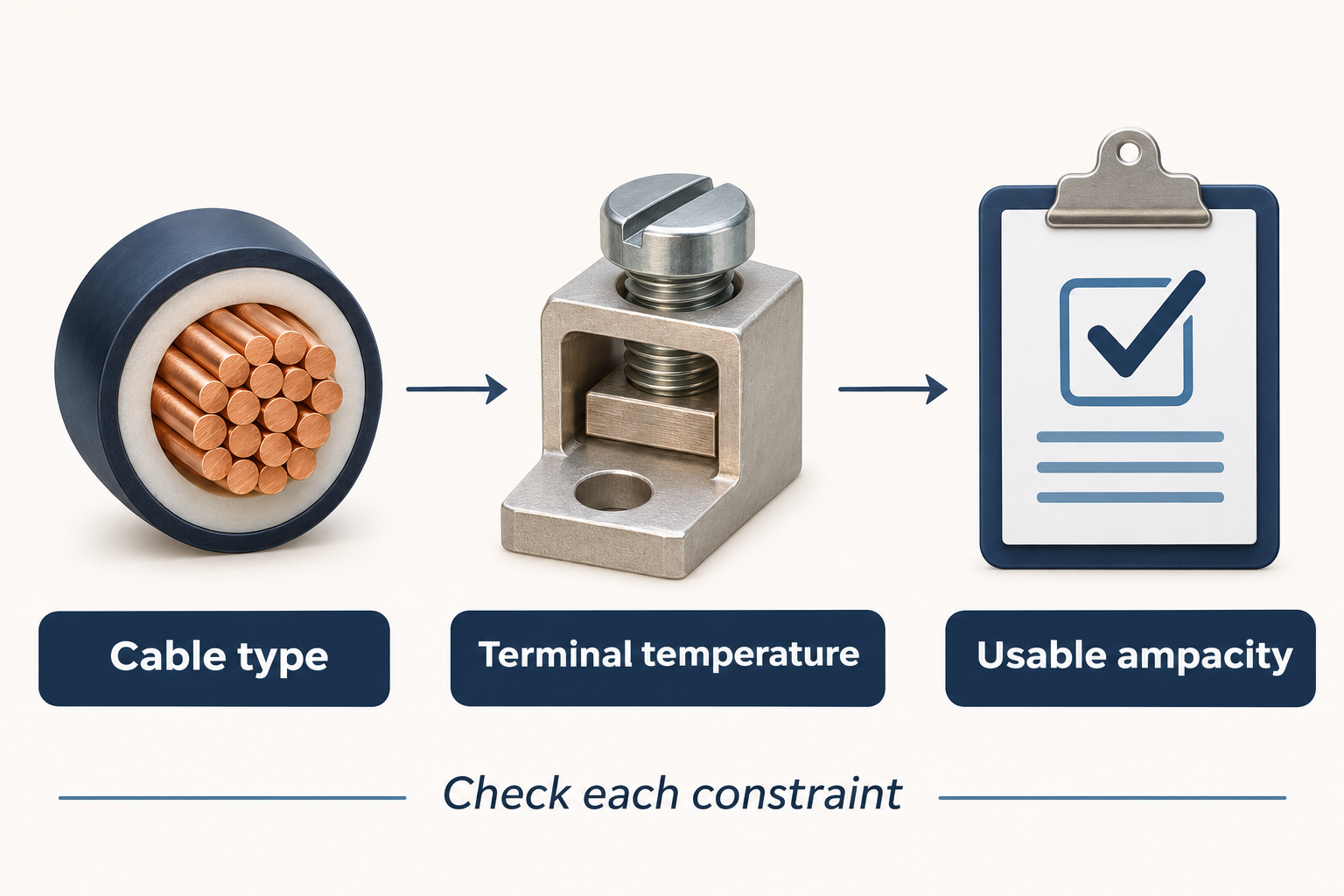
A 90°C insulation mark does not upgrade a 75°C terminal
The insulation temperature rating and the equipment termination rating describe different limits. The circuit-breaker marking guide explains that higher-temperature insulation can be used while the conductor size remains based on the temperature rating marked on the breaker.
A conductor marked for 90°C is therefore not permission to use the 90°C ampacity at an otherwise limiting terminal. Check the breaker connection and the connection at the other end, as well as the cable or wiring-method restrictions.
Material acceptance is another independent check. The panelboard application guide distinguishes copper-only terminations from those evaluated for aluminum as well. A physically fitting aluminum conductor is not an approved substitute in a copper-only connection.
Check the load and cable route before ordering
Determine what “60 amps” refers to: the protective-device rating, the equipment input requirement or the intended operating load. Those numbers need not create the same sizing task. The design review should identify any continuous-load provision, equipment-specific instruction and required ampacity adjustment.
Route conditions matter too. Ambient temperature and conductor grouping can alter the usable ampacity, while a long run can create a voltage-drop requirement. Upsizing for voltage drop also changes the conductor dimensions presented to the terminal. Preserve that change in the bill of materials instead of leaving the original lug selection untouched.
The useful handoff is an approved conductor designation and installation basis, not an instruction to purchase any cable advertised as “60 amp wire.” This keeps the installer, purchasing team and termination supplier working from the same requirements.
Match the termination after the conductor is selected
For a stud-mounted copper termination, conductor fit and mounting-hole fit are separate dimensions. Gaopeng’s SC copper cable lugs provide a product range to compare once those requirements are known. The catalog does not, by itself, establish a 60 A equipment approval.
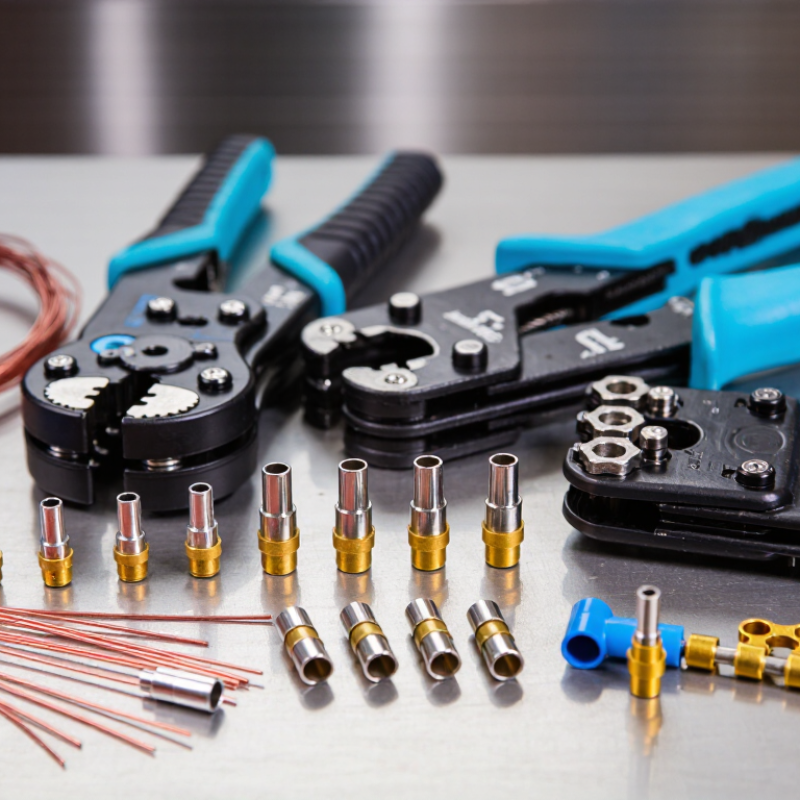
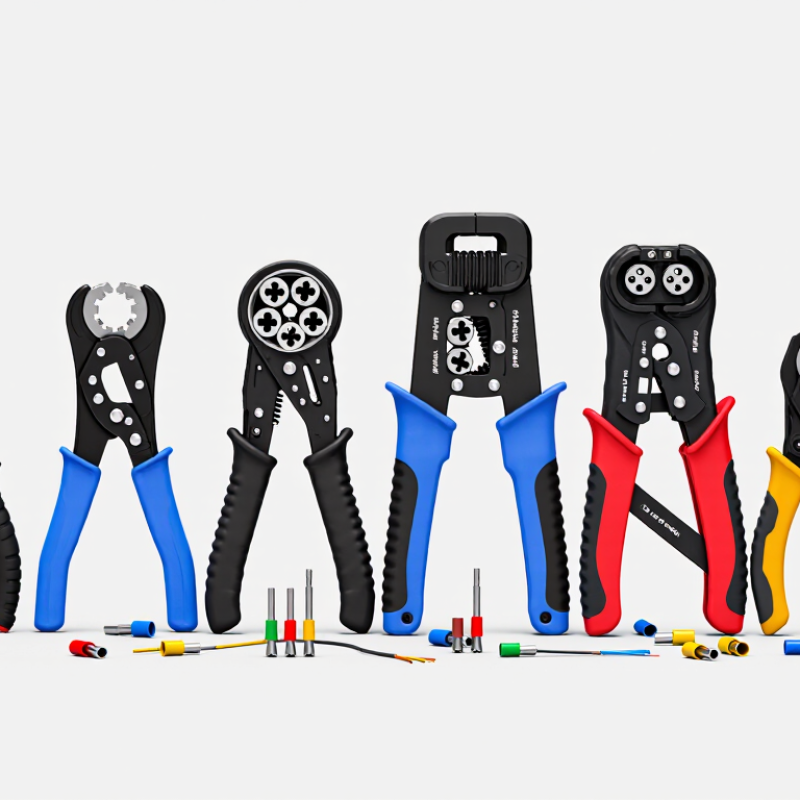
Send the conductor material, AWG or cross-section, strand construction, equipment connection details and required terminal temperature information. Add the stud diameter, available clearance and complete lug reference. Ask for the specified crimp-tool and die requirements rather than assuming a tool is suitable because its handles or jaws look similar.
For purchasing, keep each conductor-and-stud combination on its own order line, with its quantity and required documentation. A correctly sized barrel with the wrong mounting hole is still the wrong part; a lug that fits both dimensions still needs the application-specific electrical and mechanical checks.