AWG means American Wire Gauge, a system for describing electrical conductor size. Lower AWG numbers indicate larger conductors. For terminal selection, the key AWG wire meaning is the size of the conductive metal—not the outside diameter of the insulation and not an automatic current rating for the finished connection.
Read the gauge together with the wire’s material and construction. Then check the terminal’s accepted conductor range and the required tooling. A matching number is a starting point for selection, not proof that every wire, terminal and die combination will work.
AWG wire meaning: read the scale in the right direction
American Wire Gauge is a conductor-size designation. EXFO’s glossary describes the direction of the scale: as the AWG number decreases, wire diameter increases. This differs from a simple numbered product series in which a larger number might suggest a larger item.
A wire specification may also give a cross-sectional area in square millimeters. Keep the manufacturer’s stated designation and construction in the selection record. Do not turn a rounded metric equivalent into a substitute product specification without checking the actual wire and connector requirements.
Conductor size is separate from insulation diameter
The conductor is the metal carrying current. Insulation surrounds that metal, adding to the wire’s outside dimensions. A stranded conductor also has a construction description identifying the strands; the gauge alone does not describe every physical detail.
Southwire’s SPEC 10000 illustrates this distinction in its manufacturer data. It gives separate columns for conductor size, strand count, diameter over conductor, insulation thickness and approximate outside diameter. Those fields describe different features of that cable, rather than interchangeable ways to measure it.
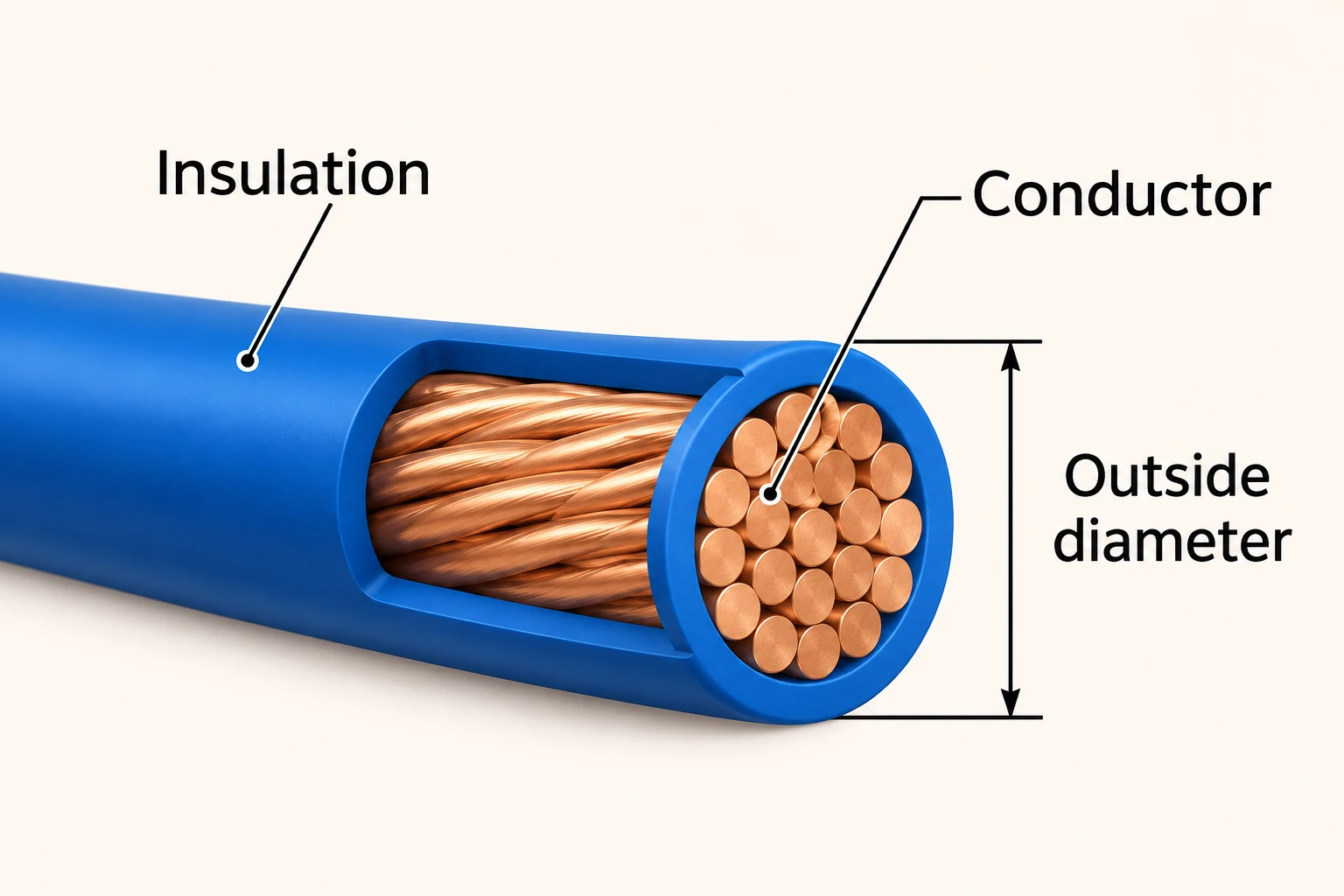
This distinction matters when choosing a terminal with an insulation sleeve or another feature that must accommodate the insulated wire. Record the actual insulation diameter from the wire specification; measuring the outside of an insulated wire does not directly establish its AWG conductor designation.
Carry the right wire details into terminal selection
A useful handoff identifies both the wire and the connection being made. Instead of sending only a gauge number, provide the following information as separate fields:
- Wire reference: manufacturer part number, conductor material, stated AWG or metric area, and solid or stranded construction.
- Insulation information: material and outside diameter where they affect the selected terminal.
- Terminal reference: the exact part or drawing, its accepted conductor construction and size, and its preparation requirements.
- Tooling information: the specified tool and die profile for that terminal and wire combination.
These fields also make a substitution easier to assess. If a proposed replacement keeps the gauge but changes the construction or insulation diameter, mark those differences for confirmation. Do not carry the original combination’s acceptance across simply because the AWG number is unchanged.
Apply the range without assuming compatibility
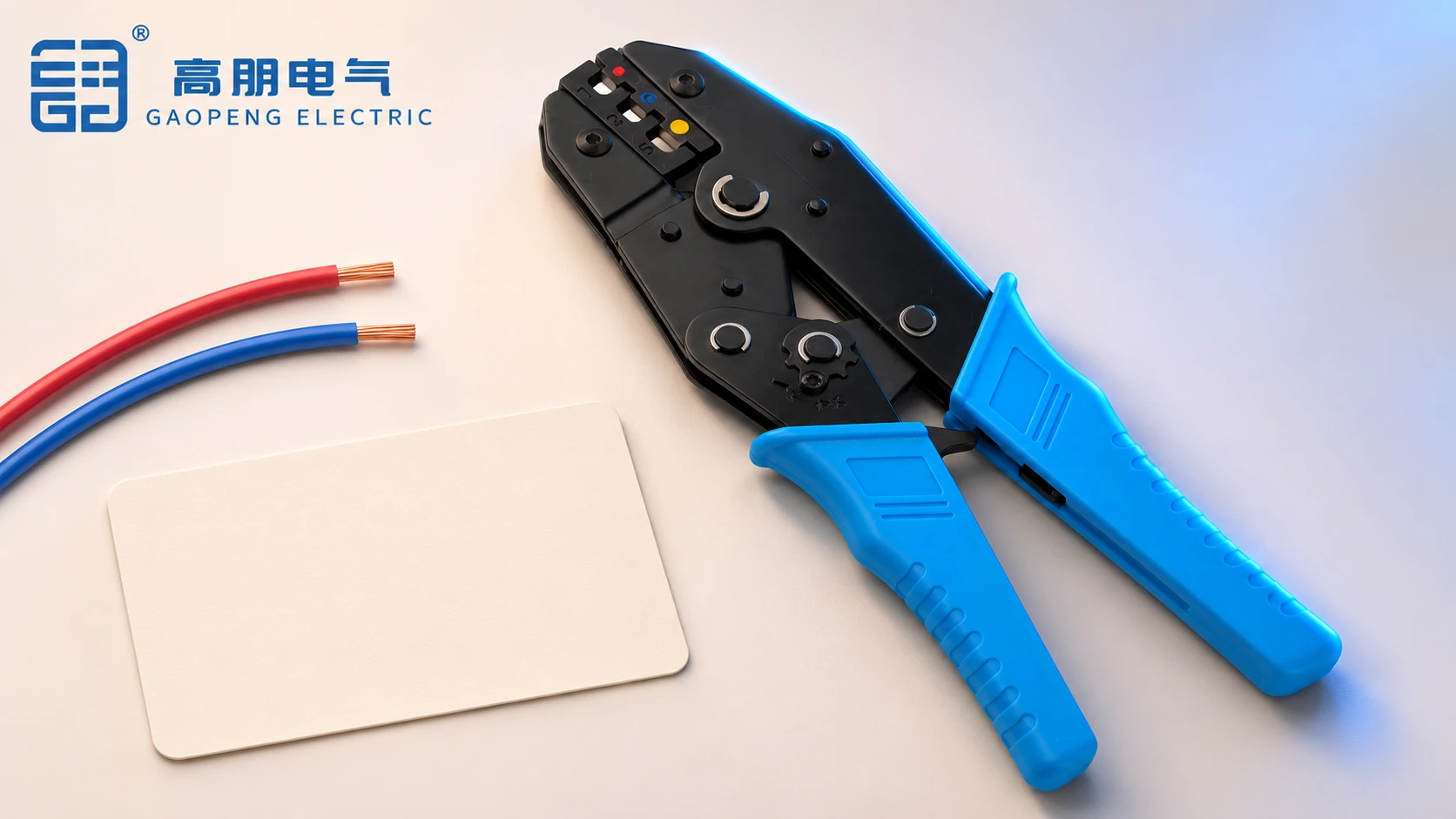
Gaopeng lists its GP-30J heat-shrink terminal crimping tool with a ratcheting mechanism and a published range of 0.5–6 mm² / AWG 22–10. That is the listed working range for this tool; it is not a universal AWG-to-metric conversion table or an approval for every terminal in that range.
For an illustrative enquiry involving an 18 AWG wire, the gauge falls between the published AWG endpoints. The next question is still which terminal is being crimped. Provide its reference, the actual wire construction and the required die profile, then ask for confirmation of the combination and applicable working instructions.
If the wire’s gauge is known but the terminal reference is missing, the enquiry is incomplete. If the tool range matches but the required die profile is not confirmed, the range check has not resolved tooling selection. This is where keeping the original wire and terminal records together prevents a nominal size match from becoming an unsupported recommendation.
Use AWG to identify conductor size, insulation data to identify the surrounding geometry, and the terminal and tool instructions to establish the connection requirements. Each answers a different selection question.
References
Analog Devices — AWG glossary
EXFO — American Wire Gauge
Southwire — SPEC 10000 dimensional fields