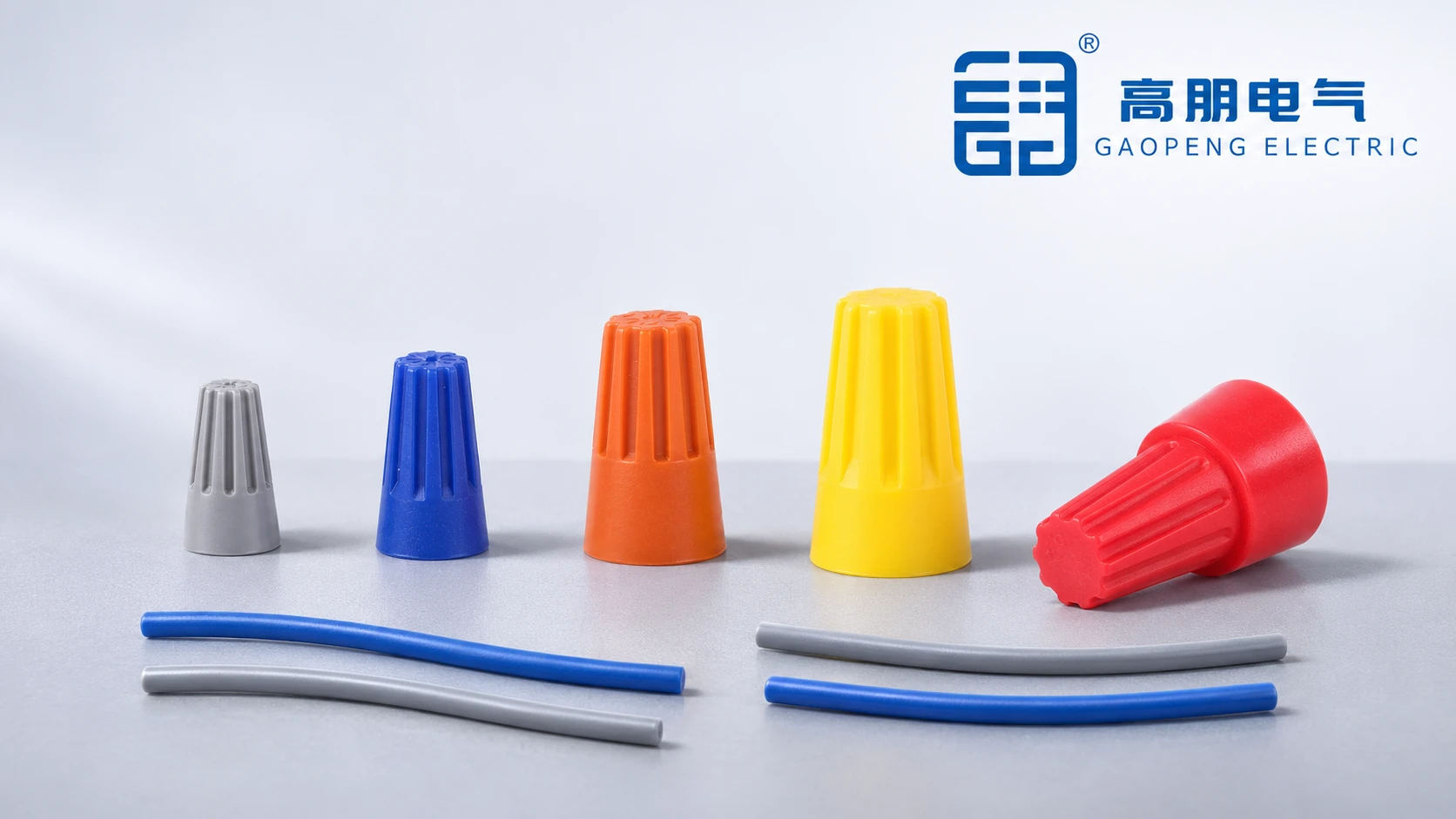
Use the selected wire nut’s instructions to match the complete wire combination, prepare the conductors and engage the cap on a verified deenergized circuit. Finish with the checks required for that connector and installation. The cap’s color alone cannot define the preparation or prove that the finished connection is acceptable.
An explanation of how to use wire nuts needs a model boundary. The preparation examples below come from a named manufacturer’s instructions for copper-to-copper connections in dry locations. They are not universal instructions for every twist-on cap or an approval for a particular installation.
Establish the deenergized working condition first
Electrical work can cause shock, fire or serious injury. A connector-selection guide does not establish that a circuit is safe to touch. Isolation and verification belong to the applicable electrical work procedure and qualified personnel.
For US workplaces, OSHA’s deenergized-work provisions address disconnection from energy sources, lockout or tagging, and qualified-person verification using test equipment. A control switch alone is not the isolation method described there. This article does not cover energized work, the detailed isolation sequence or exceptions to those provisions.
Where the circuit condition, required qualifications or local installation requirements are uncertain, the person responsible for the work should resolve them before conductor preparation begins. The connector manufacturer’s instructions and the applicable workplace procedure address different parts of the job; both matter.
Select the cap for the complete conductor combination
The selection record should identify the connector manufacturer and full model, plus the number, size, material and construction of every conductor entering that cap. It should also identify the installation conditions that the selected product must address.
A wire-range headline is insufficient for a mixed bundle. The named product’s combination listing needs to cover the actual arrangement. Minimum and maximum examples do not establish every possible combination between them, and a cap that physically accepts the wires is not evidence of compatibility.
Keep this record with the installation document. If the supplied cap, conductor construction or bundle changes, the relevant compatibility and preparation requirements need confirmation again. That check is especially useful when procurement substitutes a product whose color resembles the original.
How to use wire nuts with model-specific preparation
The current manufacturer-linked IDEAL Wire-Nut instruction sheet covers models 71B, 72B, 73B, 74B, 76B and 59B. Its table varies the preparation by model and conductor details. Within 71B alone, it gives these two strip lengths:
| Named example | Printed strip length |
|---|---|
| IDEAL 71B, solid wire | 1/4 in. (6 mm) |
| IDEAL 71B, stranded wire | 5/16 in. (8 mm) |
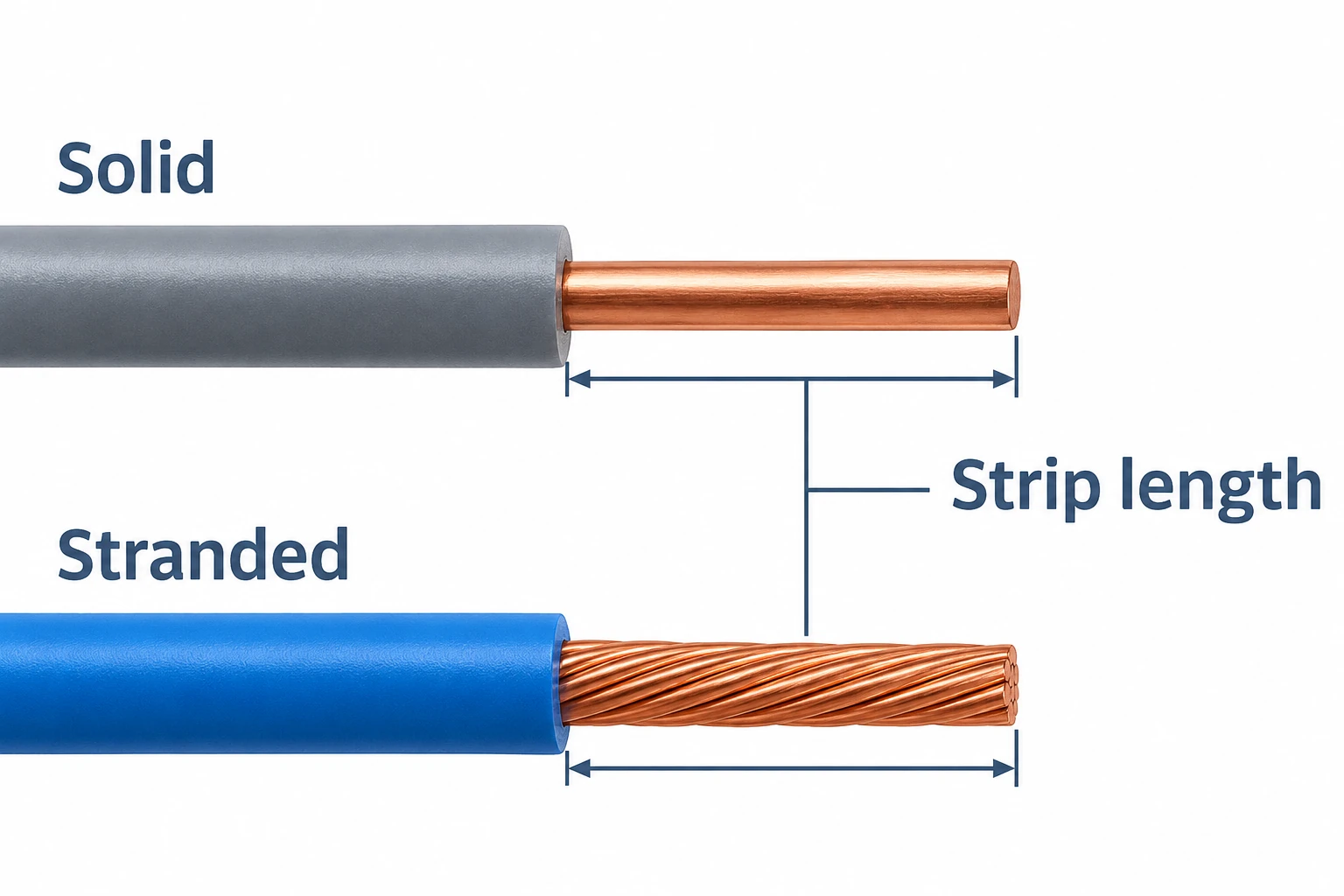
These figures are model-specific examples, not a Gaopeng setting or evidence that any solid-and-stranded bundle is permitted. The instruction table and compatible combination must both match the actual work. The illustration only shows where a strip-length measurement begins and ends.
The same IDEAL sheet calls for straightening wires and aligning frayed strands and conductor ends, with stranded ends slightly ahead of solid ends. It permits pre-twisting without requiring it for that named family. A different connector’s instructions may differ, so “always pre-twist” is not a rule established here.
Engage the cap according to its own instruction sheet
For the named IDEAL family, the sheet directs insertion of the prepared bundle and clockwise twisting until tight. It limits use to copper-to-copper connections in dry locations. It does not supply a universal turn count or a rule to apply to an unidentified cap.
The worker needs the actual selected-part instruction beside the preparation record. If the cap cannot be installed as documented, the next action is to identify the mismatch or damaged component. Adding an improvised preparation length or tightening method does not resolve a compatibility gap.
Inspect against the documented requirements
An inspection should compare the installed connector and conductors with the approved combination and preparation record. Questions include whether the correct cap was supplied, whether every conductor matches the listed construction and whether the documented preparation and engagement steps were followed.
Visible loose strands, damaged insulation or a damaged cap require attention before service. These observations identify reasons to stop; their absence does not certify the electrical connection. Any retention check, test method or additional acceptance criterion must come from the selected product and installation requirements. This guide does not invent a pull force or treat a quick visual check as a complete acceptance test.
Confirm the missing preparation details for an SP order
Gaopeng’s SP twist-on wire connector nuts page lists several cap references and asks for conductor count, cross-section, construction, available space and environmental requirements. It also directs buyers to the preparation method for the selected cap.
The page does not publish a strip length or complete installation instruction for each SP reference. Its conductor strings do not explicitly label their unit. Buyers should request the exact combination confirmation and preparation document rather than borrow either from the external example above.
A useful assembly record therefore ties three items together: the supplied cap reference, the complete conductor combination and the applicable instruction. That record gives purchasing, assembly and inspection teams the same defined connection to review.
Source information checked November 3, 2026.