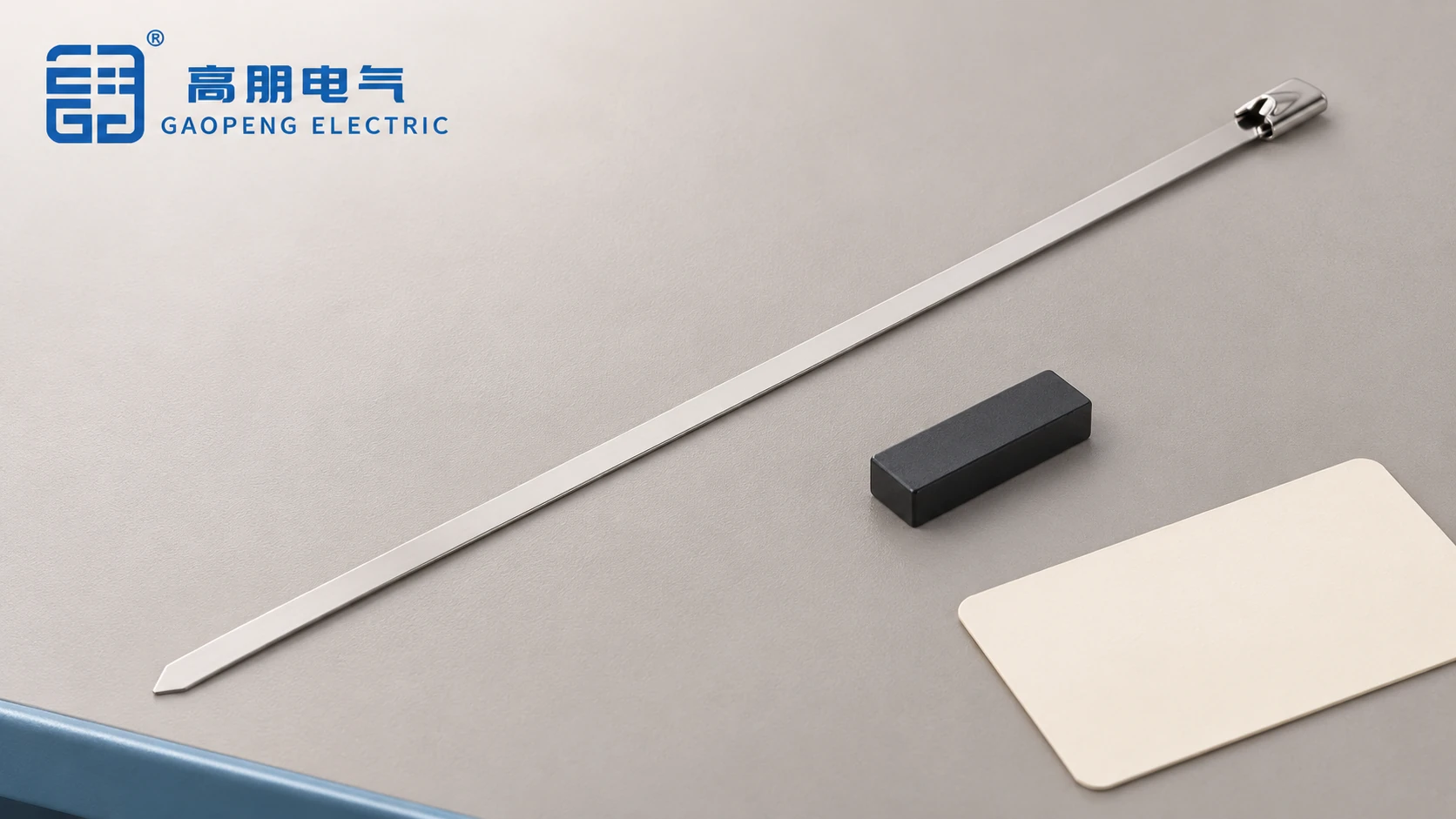
Is 304 stainless steel magnetic? In its annealed, wrought condition, it is generally not significantly attracted to a magnet. It can become magnetic after cold working. A magnetic response therefore does not, by itself, prove that a cable tie is the wrong grade—and a lack of attraction does not prove that it is 304.
For a receiving inspection, record the response as an observation. Establish the ordered grade through the relevant material documentation and, where necessary, an appropriate identification method.
Is 304 stainless steel magnetic after forming?
It can be. ASSDA explains that cold-work deformation can change some of an austenitic stainless steel’s structure into martensite, a phase that responds to a magnet. Annealed material and cold-worked material can therefore behave differently even when they share a grade designation.
This explains why a simple rule such as “stainless steel should never stick to a magnet” is unreliable. The material’s condition matters alongside its composition. It does not establish how a particular Gaopeng tie was manufactured; that requires information for the actual product.
Do not try to remove an unexpected response by heating or modifying a supplied tie. The receiving task is to resolve the material question while preserving the sample, not to alter its properties.
Is 316 stainless steel magnetic too?
316 is also generally regarded as non-magnetic in the annealed, wrought condition. Atlas Steels notes that 316 products usually develop only a slight response after cold working, while magnetic response can vary between heats of the same grade.
That is a general metallurgical comparison, not a reliable hand-magnet method for separating 304 from 316. A buyer should not relabel a tie as 316 because it attracts less strongly than another sample. Nor should magnetic behavior be converted into a corrosion-resistance or finished-tie capacity rating.
What a magnet observation can—and cannot—tell you
The observation can identify a question worth investigating. It cannot answer every material or acceptance question. Keep those decisions separate in the inspection record.
| Observation | Supported interpretation | Next decision |
|---|---|---|
| A tie attracts a hand magnet | A magnetic response is present under the observation conditions | Check the ordered grade, available documents and whether further verification is needed |
| A tie shows little or no attraction | No significant response was noticed in that check | Do not treat it as proof of 304, 316 or another exact grade |
| Samples respond differently | The observations differ; the cause has not been established | Keep sample identities separate and investigate the difference |
| A project specifies low magnetic response | There is an additional acceptance requirement | Agree the applicable method and acceptance criteria rather than substituting an informal magnet check |
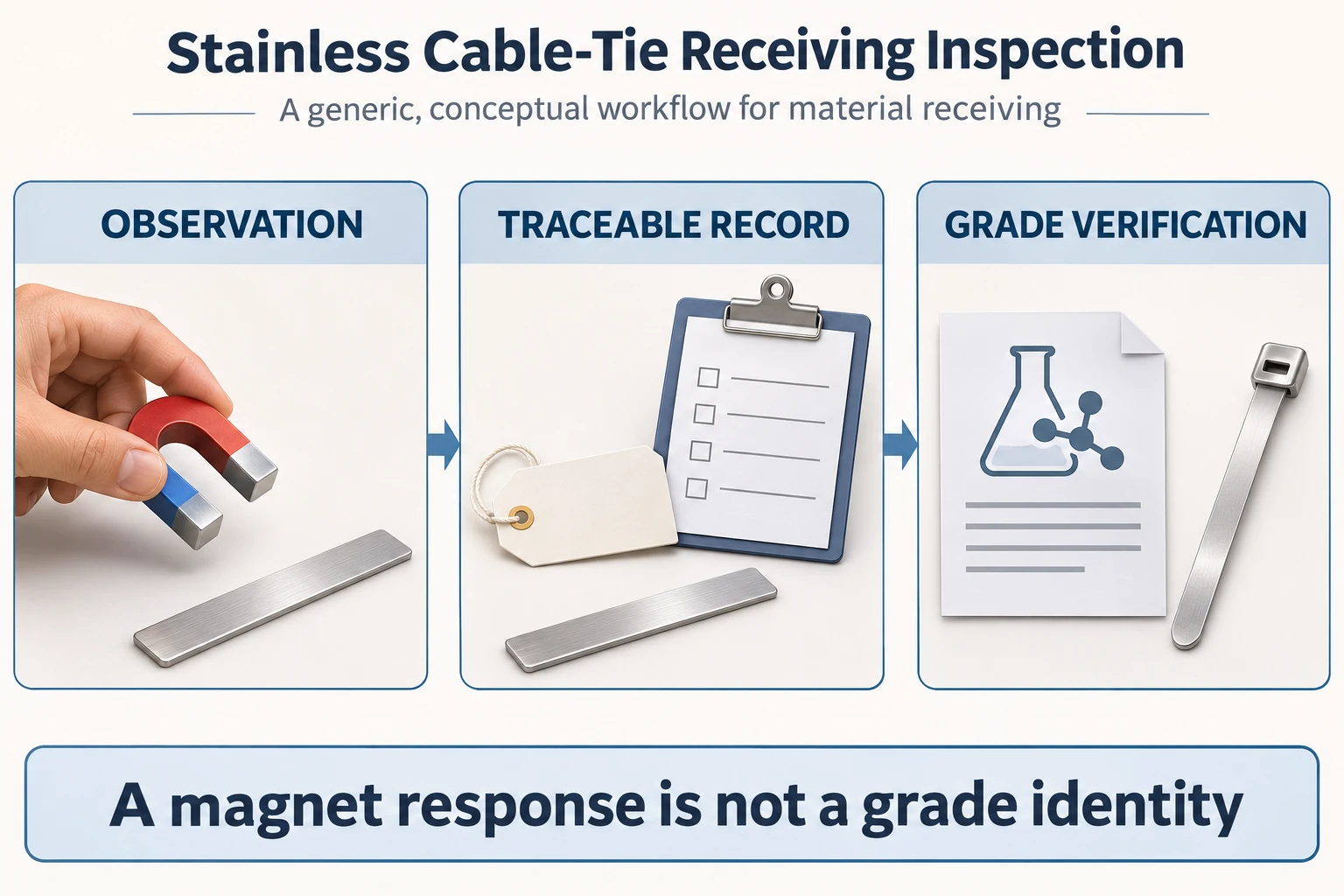
Build a receiving record that can resolve the question
Start with the exact purchase reference. Gaopeng’s 304/316 self-locking stainless steel cable-tie listing includes both material options, so “stainless cable tie” alone does not identify which version was ordered.
A useful record keeps the purchase order, requested grade, strap reference, package or lot identification if present, and the particular sample together. Add a photograph and a plain description of the response. If the package has no traceable identification, record that absence rather than creating a lot number.
For example, suppose a package ordered as 304 contains a sample that attracts a magnet. The record should say “sample from this package attracted the inspection magnet,” not “sample failed 304 test.” Ask the supplier which material records relate to that reference and package. If documentation leaves a material question unresolved, agree a suitable grade-confirmation method with a competent testing provider.
ASSDA distinguishes qualitative checks, which establish the presence of a property or element, from quantitative analysis. The appropriate approach depends on the question and the consequences of a wrong identification. The existence of a test method does not mean Gaopeng has supplied that test or document for this order.
Close the enquiry with a documented disposition against the actual purchase requirements. Grade identity, finished-tie performance and any specified magnetic behavior should each have their own basis for acceptance.
References
ASSDA — Magnetic Effects of Stainless Steels
Atlas Steels — Tech Note 11: Magnetic Response of Stainless Steels
ASSDA — Testing for Grade Confirmation