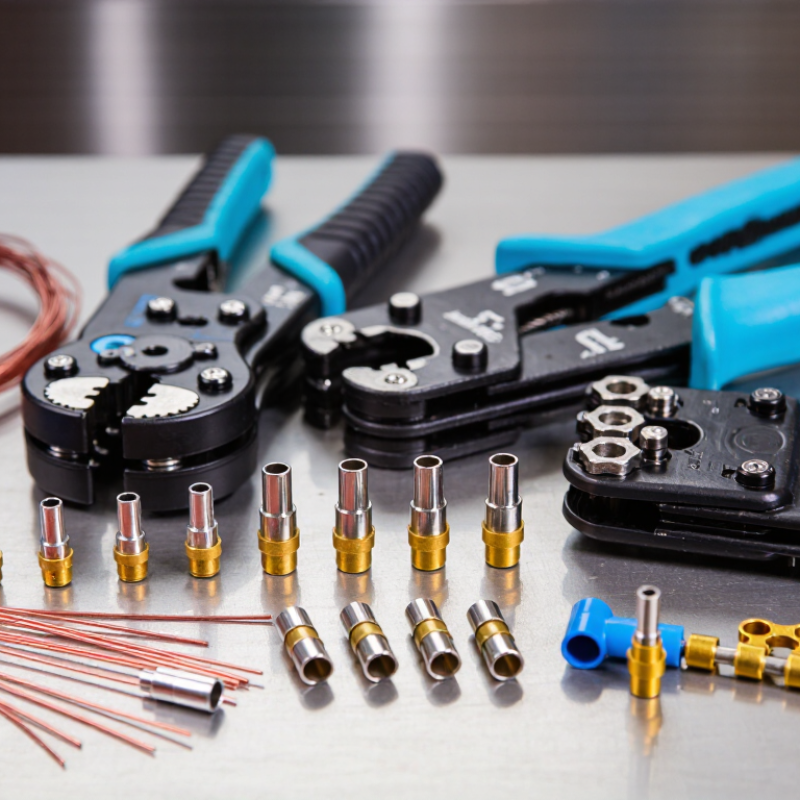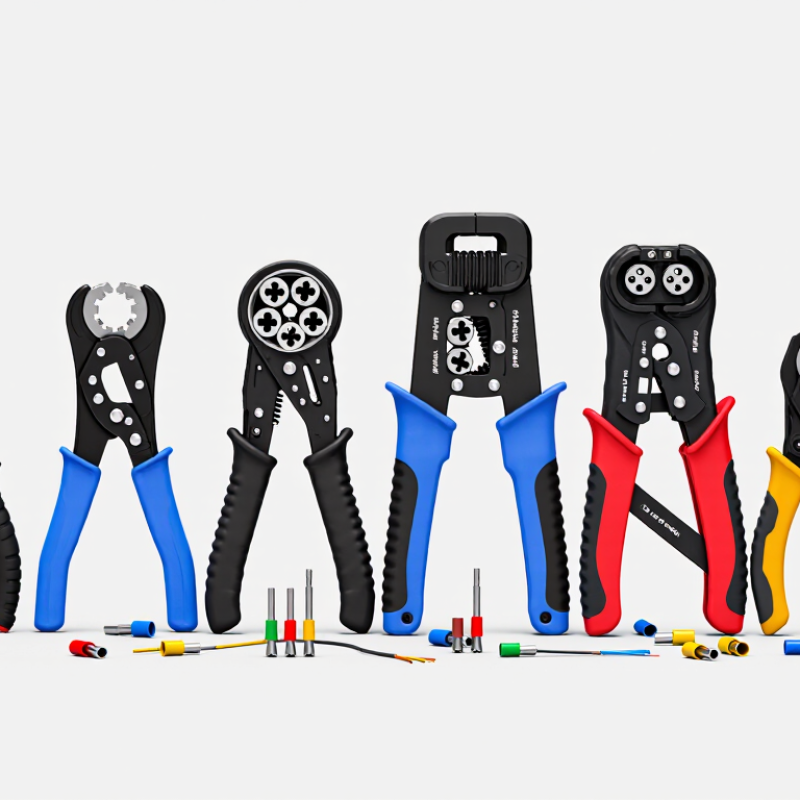
A crimping tool forms an electrical connection by compressing a terminal barrel around a conductor. Its jaws or dies shape the barrel as the tool closes. The practical question is which terminal, wire and die the tool is designed to work with: a tool that fits a connector physically may still be unsuitable for that connection.
For buyers comparing types of crimping tools, the terminal reference is the best starting point. Choose the connector family first, confirm the conductor and crimp profile, then identify the appropriate tool and working instructions.
How a crimping tool forms the joint
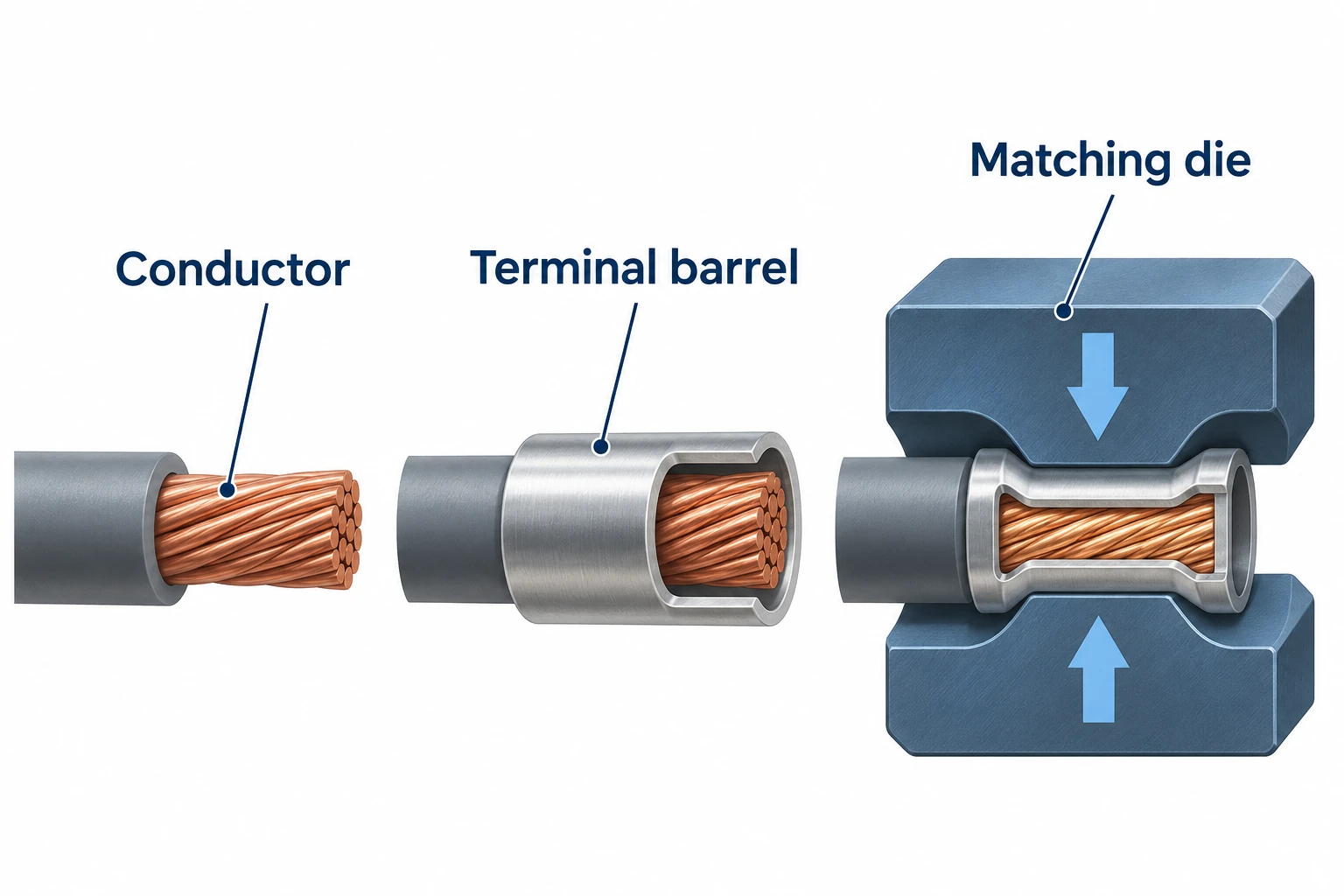
The exposed conductor enters the metal barrel of a compatible terminal. A matching die then deforms that barrel around the conductor. The barrel, conductor and die therefore form one selection problem; choosing a tool by handle style or nominal wire range leaves essential information missing.
A ratchet mechanism controls the tool’s closing cycle, but that feature alone does not establish that a particular terminal and wire combination is approved. The connector and tooling documentation must identify the intended combination. Finished-joint checks also belong to that documented process, rather than to a general promise that every squeeze produces an acceptable connection.
Match the tool family to the terminal
Electrical terminals have different barrel constructions and connection functions. An insulated ring terminal, a cord-end ferrule and a copper cable lug should not be treated as interchangeable tooling jobs. Even within one family, the specific terminal reference matters.
| Connection family | What the buyer must match | What a broad tool label leaves unresolved |
|---|---|---|
| Insulated terminals, including ring, spade and butt forms | Terminal barrel, insulation construction, conductor range and specified die | Whether the tool supports that exact terminal construction |
| Cord-end ferrules | Ferrule size and construction, conductor details and required crimp profile | Whether a different terminal crimper produces the intended ferrule profile |
| Copper cable lugs | Lug reference, conductor and the specified tooling system | Whether a tool’s stated capacity covers the complete combination |
Manual, powered and bench tools describe ways of applying force. They do not replace the connector-specific compatibility check. A purchasing specification should therefore name the terminal and die requirements alongside the preferred operating format, rather than asking only for a hand crimper or hydraulic crimper.
A useful order for choosing a terminal crimper
Begin with the terminal part number or drawing. A description such as “blue ring terminal” is too broad to define the barrel geometry or tooling requirement. Record the terminal material and insulation construction where they affect the manufacturer’s selection instructions.
Next, record the conductor cross-section, material and construction. A nominal size is one input; it does not describe every physical detail of a wire. Keep the conductor information together with the terminal reference when requesting tooling confirmation.
Then identify the specified die or crimp profile and the tool that accepts it. If the supplier offers a fixed-die tool, ask which terminal references its jaws support. If dies are interchangeable, include the die reference in the order instead of assuming it accompanies the tool.
Finally, obtain the applicable work instructions and finished-crimp checks. This sequence turns a broad product enquiry into a compatibility question that the terminal or tooling supplier can answer. If a required detail is missing, resolve it before buying the tool.
Crimping and stripping are separate jobs
A wire stripper removes insulation to expose the conductor. A terminal crimper forms the connection around that conductor. Some hand tools combine functions, but a stripping range does not establish a crimping range or identify compatible terminals.
When comparing a multifunction tool, examine each function separately. The relevant crimping information is the supported terminal construction, conductor range and die profile. Treat a large range printed on the packaging as an invitation to check the details, rather than as evidence that every connector within that range will work.
Where the GP-30J fits
Gaopeng’s GP-30J heat shrink terminal crimping tool is a ratcheting tool with a published working range of 0.5–6 mm² / AWG 22–10. It provides a concrete example of a tool specified for a particular terminal application.
That range should be read together with the intended heat shrink terminal construction and die requirements. It does not establish compatibility with every insulated terminal, ferrule or cable lug in the same size range. For an enquiry, send the terminal reference or drawing and the conductor details so the proposed combination can be checked against the tool’s intended application.
Keep a record of the complete combination
A useful tooling record contains the terminal reference, conductor specification, tool model, die reference, applicable work instructions and required finished-crimp checks. Procurement and production teams can use that same record when ordering or checking a replacement tool.