The question “how much weight can a zip tie hold?” needs an identified part and an intended use. There is no single weight for every tie. The relevant starting value is the selected part’s declared loop tensile strength, but that value is not automatically a permitted hanging weight. The fixing device and intended application need their own evidence before a buyer can interpret the complete arrangement.
A useful answer therefore identifies the exact tie, the meaning of its published strength and the proposed use. A generic weight chart organized only by length or color leaves those questions unresolved. This guide explains the specification; it does not assign a lifting capacity or approve a load-bearing installation.
What loop tensile strength measures
Loop tensile strength describes a tie with its locking mechanism engaged around a loop. In the manufacturer’s published test explanation, a tie surrounds a split mandrel. The fixture opens at a defined speed, and the force at failure is recorded. Specimen conditioning and the fixture are part of the stated test conditions.
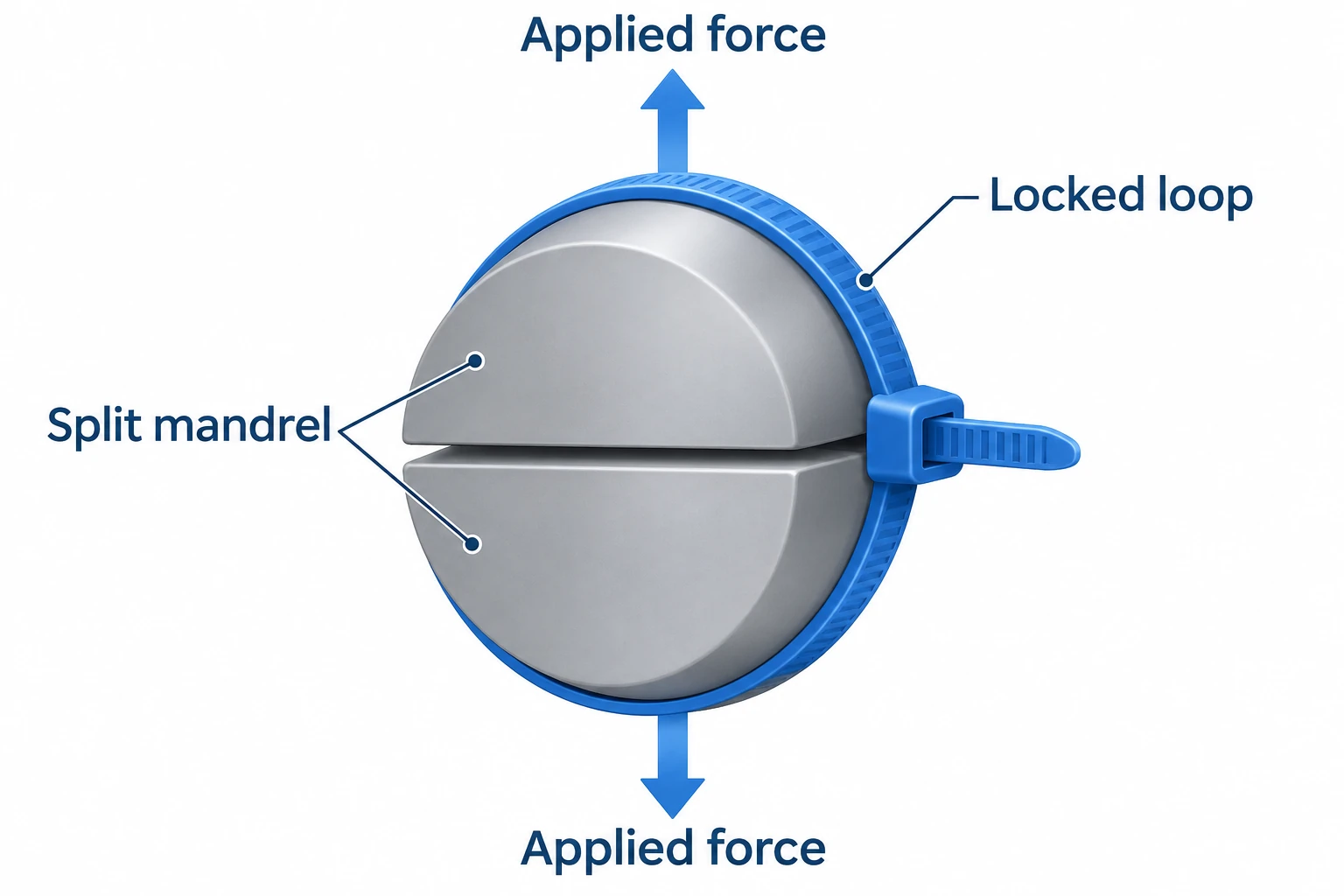
The measurement concerns the locked loop, not merely a strip of plastic pulled straight. The measurement also differs from a statement that an installed assembly may carry a particular object indefinitely. The NEMA mechanical-properties guide hosted by Advanced Cable Ties explicitly distinguishes loop tensile strength from an implied static load rating.
That distinction should remain visible in purchasing records. A column headed “strength” is ambiguous; “declared minimum loop tensile strength” records which characteristic the supplier has actually provided.
An exact model makes a strength number meaningful
As an external example, HellermannTyton article 111-05007, T50R-PA11-BK, publishes a minimum tensile strength of 225 N. This is a declaration for that identified product, not a value for every T50R variant, every black tie or every tie with similar dimensions.
The number illustrates how to record a specification: manufacturer, article number, material version, named characteristic and unit. It supplies no numerical strength claim for Gaopeng products. Buyers comparing alternatives should request the corresponding declaration for each candidate rather than carry the example’s value across to a substitute.
Converting a force unit into an equivalent mass under gravity changes the presentation of a number. It does not add a permitted service load, mounting qualification or application approval.
How much weight can a zip tie hold in an installed arrangement?
A tie used only to gather cables presents a different purchasing question from a tie used with a fixing device to support them. For a supported arrangement, the mechanical guide calls for considering fixing-device strength alongside tie strength. Impact characteristics may require additional manufacturer information.
For procurement, keep three records together: the tie’s declaration, the fixing device’s declaration and a description of the intended arrangement. The application record should state what the assembly will do, where it will be installed and which conditions need confirmation. It gives the supplier a concrete question to answer instead of an unexplained request for a “strong tie.”
Adding ties also changes the proposed arrangement. A buyer should not multiply an individual declaration by the number of ties and label the result an approved assembly capacity. That arithmetic supplies no evidence about the actual installation. Any required service allowance or design margin belongs to the application assessment, not to a universal percentage invented for a blog table.
What the published Gaopeng information supports
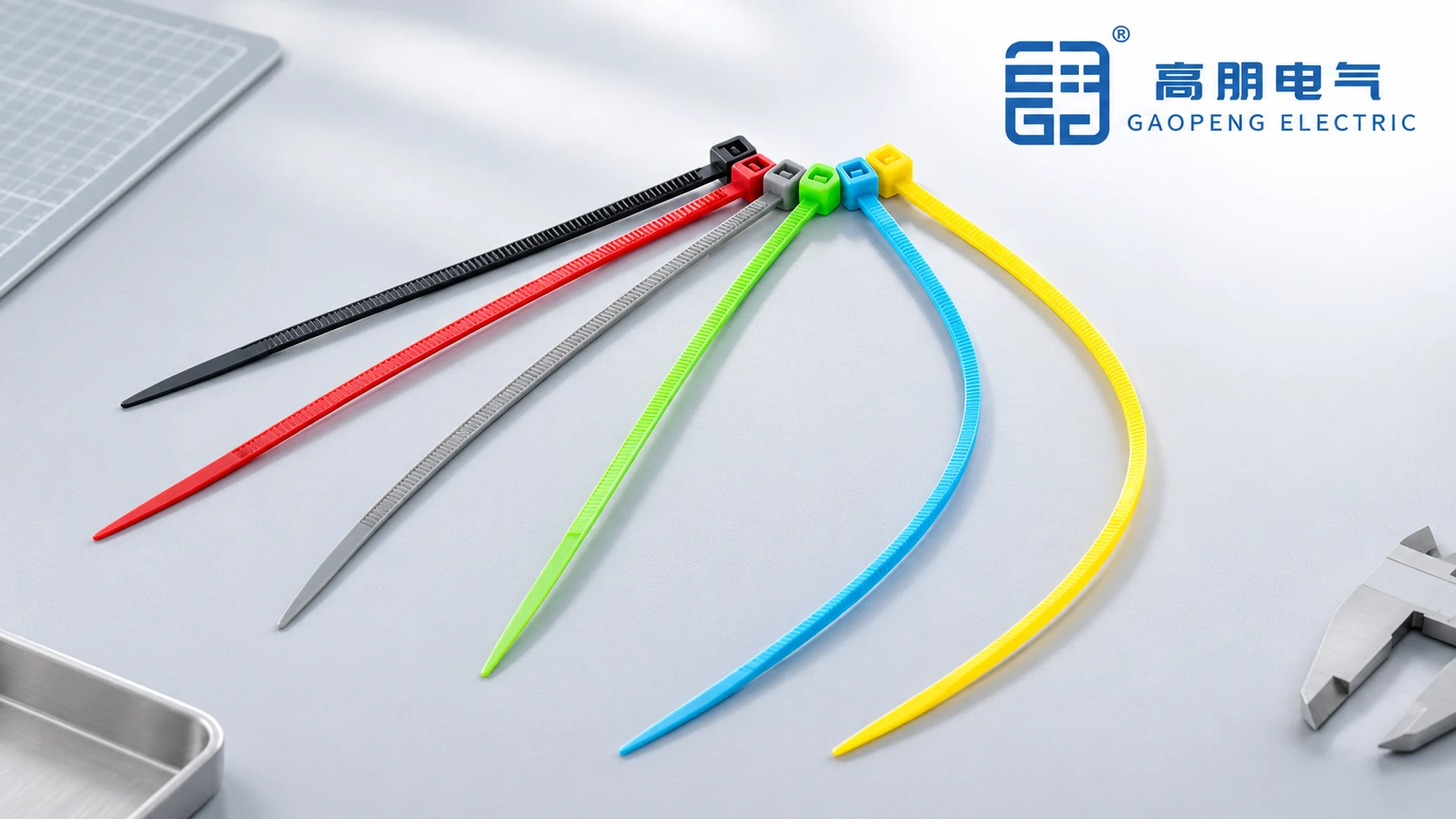
Gaopeng’s nylon self-locking cable tie page identifies nylon construction, self-locking operation and cable-bundling use. It requests strap width, length, bundle diameter, material version and environmental exposure to confirm the selected version.
The page does not publish a numeric loop tensile strength for a specified part. It therefore cannot support a weight allowance in pounds or kilograms. Buyers needing strength data should request a part-specific declaration and the applicable supporting document.
The same boundary applies to environmental performance. The supplier needs the required exposure conditions; a color or the general word “nylon” does not establish the selected variant’s temperature or UV specification.
Two requests that lead to different answers
Request A: “How much weight can this bag of zip ties hold?” The bag description lacks an identified part and says nothing about the intended arrangement. A responsible capacity answer cannot come from a photograph or an assumed size category. The next useful step is identifying the supplied version and obtaining its actual declaration.
Request B: “Please confirm the selected tie for this cable-management arrangement.” The buyer attaches the part reference, bundle dimensions, proposed fixing device and application conditions. The supplier can identify which data apply and which questions require further assessment. This does not make the arrangement approved, but it creates a reviewable specification request.
For an alternative supplier, that same record preserves the requirement while the candidate changes. It also makes missing information visible: a tie declaration cannot silently stand in for a fixing-device document, and neither document alone answers the full application question. The outcome should be an identified product and a documented decision, rather than a generic promise about hanging weight.