Two questions come into our sales inbox almost every week. Can you make the sleeves in our blue? And can you put our logo on the box? The short answer to both is usually yes, and we run these orders for wire harness builders and distributors in several regions. The long answer is a checklist, because a custom order that is specced loosely comes back wrong, and re-doing a color run is expensive for everyone involved. Here is how we run OEM and ODM terminal orders, step by step.
Why do buyers want custom colors in the first place?
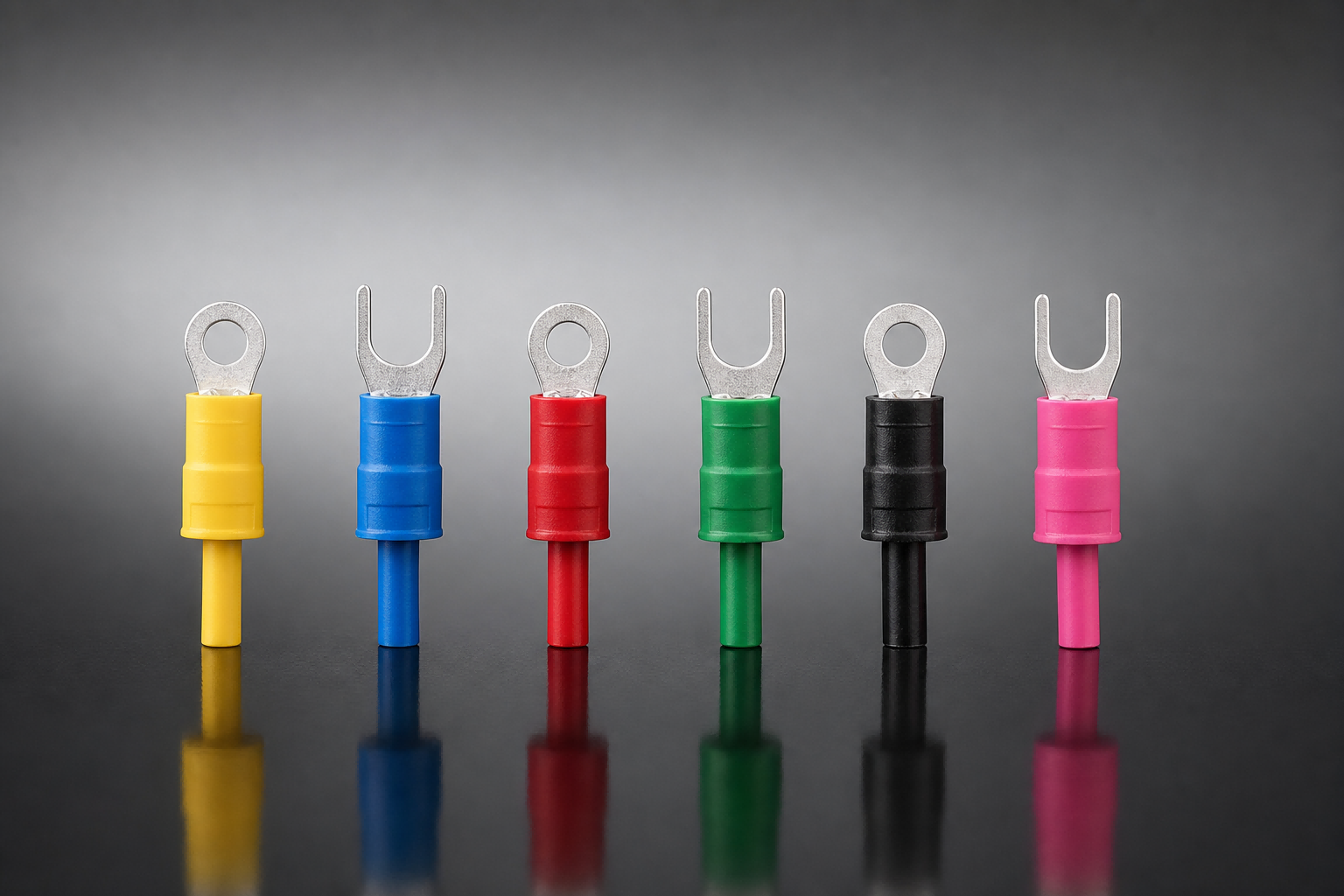
It is not about looks. In a harness shop, color is information. Teams use it to separate circuits, to Flag high-current runs, and to match the equipment maker’s own color standard, so that a red wire and a red terminal on the same board look like they belong together. For a distributor, consistent color and a clean box is the difference between looking like a brand and looking like a reseller of someone else’s product. And for both, there is a practical benefit underneath: when color and function line up, pick errors drop and inspection goes faster.
What can be customized, and what cannot?
Here is what we can change, usually with little friction:
- Sleeve or insulation color, within the standard palette or as a custom match
- Box and kit design, labels, and your brand on the packaging
- The size mix inside a kit: which sizes, and how many of each
- Inner trays, dividers, and packing format
- Packaging language and marking layout
What cannot change, and what you should not push on: the crimp profile, the conductor size range, the material grade, and the electrical ratings. Re-coloring a terminal is a cosmetic change to an approved part. Changing the barrel shape or the metal is a new part, and it needs its own development and its own testing. Keep those two conversations separate and the order stays cheap and fast.
What happens to MOQ and lead time on a custom run?
Stock items ship from the warehouse, usually within days. A custom color run is different: insulation is produced in color batches, and there is a practical minimum for setting one up. That is why custom runs generally carry a higher minimum than a stock pick, and why the calendar picks up a few extra weeks for color setup and packaging production. The good news on our side is that we design and make our own molds in-house, so a change in geometry or a new shape does not always mean the long external tooling schedule you have heard about from other suppliers. Two rules from experience: get the MOQ and lead time per line item in writing, and ask what it costs to add a second color later. A good factory will price that scenario with you before you order, not after.
How to spec a custom order so it comes back right
- Send the color as a physical sample or a Pantone reference. A photo taken on a phone under shop lighting will not match what we produce under factory lighting, and color mismatch is the single most common dispute on these orders.
- Send brand artwork as a vector file, not a screenshot. We set the label to the final box size, and raster files stretch and blur.
- List exactly which SKUs, sizes, and colors go into the order, with quantities per size. Mixed as usual is where custom orders go wrong.
- Ask for a pre-production sample or a digital box mockup, and approve it in writing before bulk.
- Agree the marking: your brand on the front label, and factory information where regulations or your market require it.
- Keep the approved sample. You will need it to check the bulk order against, and it settles any argument later.
Does custom color cost much more than stock?
Usually less than buyers expect, and the cost lives in the setup, not the pieces. A color run on an existing mold adds a modest per-piece difference plus the batch minimum. A new shape on a new mold is where the real money goes, and that is tooling, not color. Ask for the quote broken into those two lines. It tells you exactly what you are paying for, and it makes your second custom order cheaper, because the expensive part is already done.
When the bulk order arrives, check it against the approved sample the same day: sleeve color, label layout, size markings, and the count per tray. If anything is off, photograph it in the original packaging and send it back before you open the rest of the carton. A color run that is wrong by two shades is a whole batch, and the only people who can fix it quickly are the ones who made it.
OEM and ODM work is a core part of what Yueqing Gaopeng Electric does. We have been making terminals since 2016, we run our own mold shop, and the lines are set up to ISO 9001 with CE and RoHS product compliance. If you are planning a custom color or private label program, send us your color references and your size list. We will come back with a real quote, not a form.