Short answer: a Cable lug is matched by three numbers — the wire cross-section (mm² or AWG), the stud hole size (M4 to M22), and the material (almost always copper for serious work). Get those three right, crimp it with the correct die, and the connection will outlive the machine it’s in. Get one of them wrong and you’ll be back in six months with a burnt terminal.
That’s the short version. Here’s how to get all three right, from our factory floor in Yueqing, China, where we’ve pressed SC Copper Lugs since 2016.
Q1: What exactly is a cable lug?
A cable lug is the metal fitting that connects a power cable to a device — a breaker, a busbar, a motor terminal, a battery post. One end is a hollow barrel that the stripped cable slides into and gets crimped; the other end is a flat palm with a bolt hole. When someone says “cable terminal,” “copper lug,” or “tube lug,” they usually mean the same thing.
You’ll find lugs wherever big currents flow: distribution panels, transformers, generators, battery banks, solar combiner boxes, switchgear. The job is simple, but a bad lug isn’t — a loose or undersized connection heats up, and heat starts panel fires.
Q2: How do I know which lug size my cable needs?
Match the barrel to the conductor, not the other way around. A lug’s model number usually tells you the cross-section: for example, an SC35-8 lug is made for a 35 mm² cable with an 8 mm stud hole, and SC70-10 is a 70 mm² lug with a 10 mm hole. Our SC range covers 0.5 mm² all the way up to 630 mm² (roughly 20 AWG to 1250 kcmil in old money).
Two quick rules:
- The barrel must fit the stripped conductor snugly.If the wire is loose inside the barrel, the crimp won’t hold and contact resistance climbs. If you have to force it, the strands will cut and some will be crushed.
- When in doubt, size up the cable, not the lug.A lug rated for the same cross-section as your cable is correct — don’t use a smaller lug “because it’s cheaper.” The difference in cost is cents; the cost of a hot joint is not.
For flexible (stranded) cable, strip back just enough to fill the barrel completely, and make sure no insulation gets trapped inside the crimp zone.
Q3: What does the stud size mean, and how do I pick it?
The stud size is the diameter of the bolt the lug slides onto — M6, M8, M10, M12, and so on. It’s the second number in the model: SC35-8 means the palm hole fits an M8 bolt.
Pick the stud size from the equipment’s terminal, not from the cable. A 50 mm² cable connected to a busbar with M10 studs needs an SC50-10, even if the cable alone could take a smaller palm. If the hole is too big, the washer and nut don’t clamp the palm properly; if it’s too small, you’re filing metal off a connection point, which is never a good idea.
One practical tip from the shop floor: keep the standard stud sizes (M6/M8/M10/M12) in stock, because those cover 90% of panel and distribution work. Our lugs are laser-etched with the size, so a technician can read the rating off the part without a caliper.
Q4: Copper or aluminum? And what about tin plating?
For anything that carries current continuously, use copper. Aluminum lugs are lighter and cheaper, and they work — but they need proper joint compound, correct torque, and they don’t forgive sloppy installation. Copper gives lower resistance, better thermal behavior, and far fewer callbacks.
On plating: tin-plated copper is the standard for most industrial and export work, and for good reason. Tin keeps the surface from oxidizing — bare copper develops oxide that raises resistance over time — and it plays nicely with dissimilar metals in the connection. Our SC lugs are forged from C11000 copper at 99.9% purity with a hot-dip tin layer of about 20 microns. In salt spray testing, that plating survives 1,000 hours without the base metal being attacked. If you’re supplying marine, coastal, or high-humidity environments, don’t buy the cheapest unplated lug — that’s false economy.
Q5: How should a cable lug be crimped?
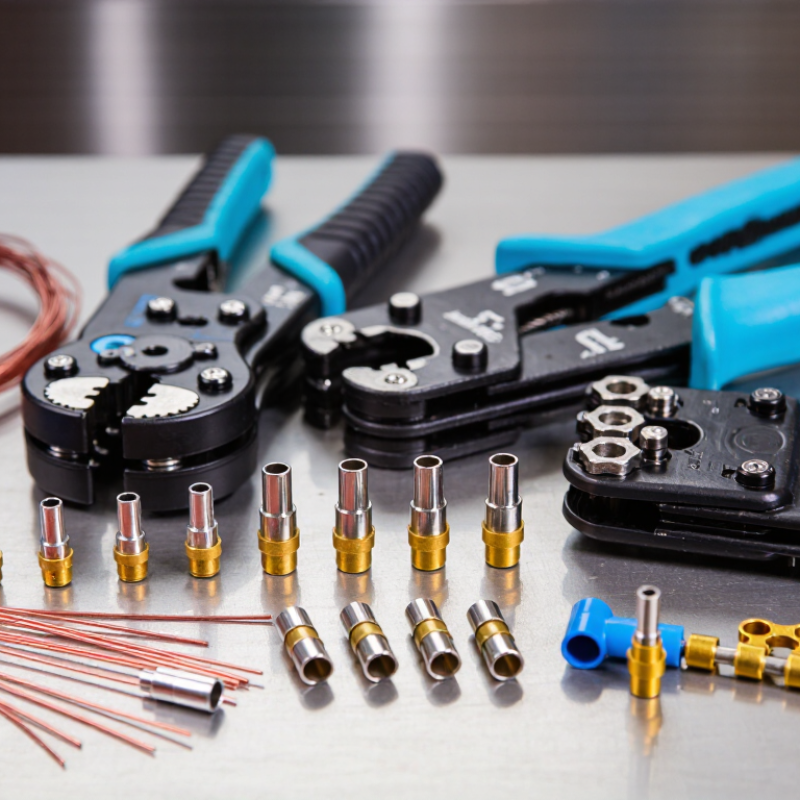
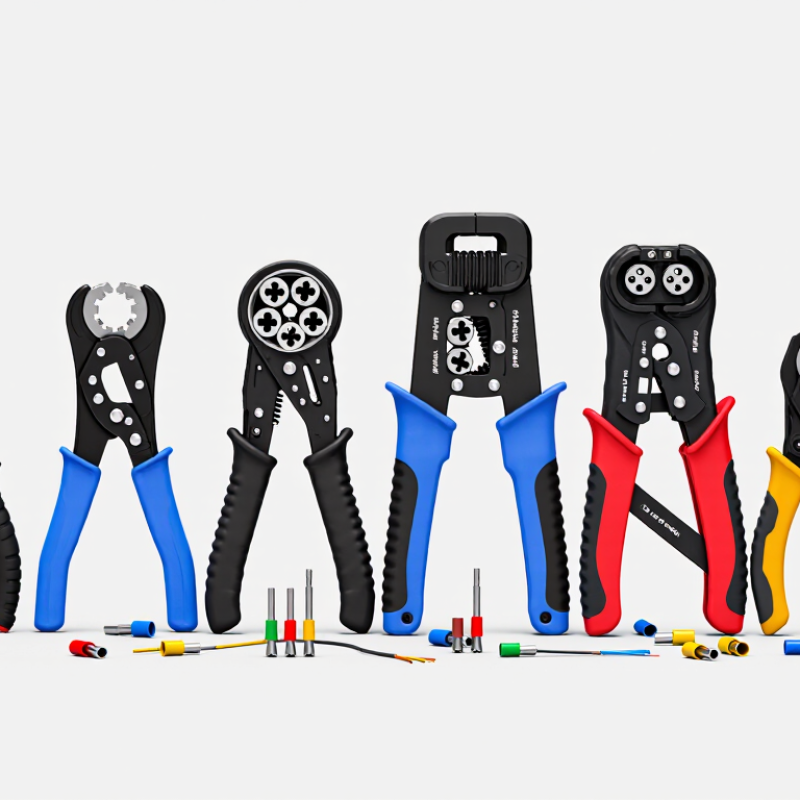
With the correct die, using a proper crimping tool — usually a hydraulic or heavy-duty ratchet crimper for lugs this size. Two things matter:
- Die shape and size must match the barrel.A hex or indent die of the right size gives a uniform, gas-tight crimp. Using a random die “close enough” produces a crimp that looks fine and fails later.
- Crimp in the right position.The barrel has a marked crimp zone; keep the crimp inside it, not on the transition to the palm where the metal is already stressed.
A good crimp is measurable: contact resistance should be tiny. Our SC lugs measure under 0.05 mΩ at 200 A — about 40% lower than stamped lugs — because forging gives denser metal. If your supplier can’t tell you their resistance or pull-force numbers, ask why not.
Q6: What are the most common sizing mistakes buyers make?
From the returns and questions we get, the top three are:
- Mixing up cable size and stud size.Ordering SC35-8 when the panel actually uses M10 studs.
- Buying by looks, not by spec.“This looks like the one I used last time” is not a specification. Read the etched size.
- Ignoring the environment.Indoor panel work can get away with bare or lightly plated lugs; outdoor, marine, and battery rooms need the full tin layer and proper insulation where required.
Q7: Where should I buy cable lugs in bulk?
If you’re a distributor, panel builder, or OEM sourcing lugs, look for a manufacturer that can show you three things: the material certificate (we use C11000 copper), the plating thickness, and test data — pull force, resistance, salt spray. Ask about their size range (a full range from 0.5 to 630 mm² means one supplier for all your jobs), and whether they can laser-mark sizes for traceability. That’s what we do at Yueqing Gaopeng Electric: forged copper lugs, tin-plated, laser-etched, tested, and ready for OEM/ODM orders with your branding and packaging.
Have a specific cable size or stud in mind? Send us the details and we’ll point you to the exact lug — no guesswork.