



How to Choose the Right SC Cable Lug Size for High-Current Connections
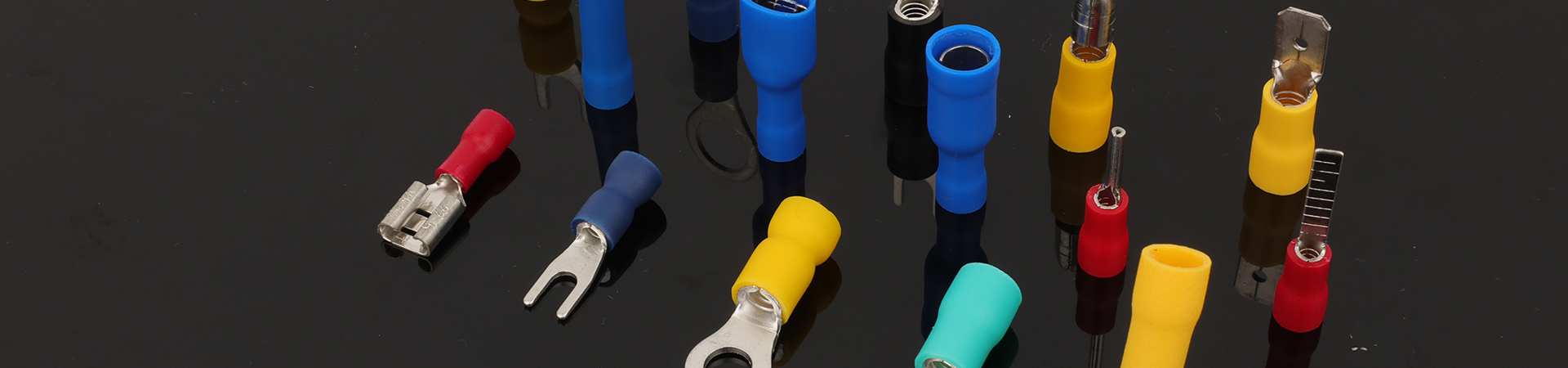
Tin-plated SC copper Cable Lugs in graduated sizes, ready for high-current battery and power-distribution connections.
Pick the wrong cable lug and the symptoms show up fast: a connection that runs hot, a bolt that will not seat flat, or a crimp that pulls loose after a few months of vibration. For anyone wiring batteries, inverters, switchgear, or motor circuits, getting the SC lug size right the first time saves a lot of return shipments and warranty headaches. Here is how buyers and installers actually make that decision.
What does the "SC" rating on a copper lug mean?
An SC cable lug is a tubular copper terminal with a ring tongue, crimped onto stranded cable to create a bolt-down connection. The naming follows a simple logic: the number after "SC" is the conductor cross-section in square millimetres, and the number after the dash is the stud hole diameter in millimetres. An SC25-8 lug, for example, fits a 25 mm2 conductor and an M8 bolt. Once you read the code this way, most of the guesswork disappears.
The two numbers matter for different reasons. The conductor size controls how well the barrel grips the wire and how much current the joint can carry without heating. The stud hole has to match the bolt on your busbar, breaker, or battery terminal. It is common for buyers to nail the wire size and then discover the ring will not fit an M10 stud, so always confirm both figures before ordering.
Matching lug size to wire gauge
The barrel must match the conductor it crimps onto. If the barrel is too large, the crimp cannot compress the strands tightly, leaving a high-resistance joint that heats under load. Too small, and you cannot insert the full conductor, so strands get cut or folded back and the rated ampacity drops.
Use the cross-section printed on the cable jacket as your anchor. A 16 mm2 conductor (roughly 6 AWG) pairs with an SC16 lug; a 50 mm2 cable (around 1/0 AWG) needs an SC50. When your cable is specified in AWG only, convert to mm2 before selecting, because SC lugs are built to metric barrels. A quick reference: 10 AWG is about 6 mm2, 4 AWG about 25 mm2, and 2/0 AWG about 70 mm2. If a cable sits between two sizes, choose the lug that matches the actual measured conductor rather than rounding up.
How current load affects your choice
A lug does not have a single amp rating in isolation; its real capacity depends on the conductor, the crimp quality, and the operating temperature around it. That said, the barrel size you select for the wire generally carries the same current the wire is rated for, provided the crimp is done correctly. Problems appear when installers reuse an undersized lug "just to get it bolted down." At 100 A or more, even a small increase in contact resistance turns into measurable heat, and heat accelerates oxidation, which raises resistance further. It is a loop that ends in a failed joint.
For continuous high-current work such as solar combiner boxes, EV charging cabinets, or transformer stations, two details pay off. First, choose tin-plated copper lugs rather than bare copper; the tin layer resists corrosion and keeps contact resistance stable over years of service. Second, confirm the copper wall thickness. Thin, stamped lugs deform unevenly under a proper crimp, while forged or seamless tube lugs hold their shape and keep resistance low.
Practical selection checklist
Before placing an order, walk through these points:
- Confirm the conductor cross-section in mm2, converting from AWG if needed.
- Confirm the stud or bolt diameter on the equipment the lug bolts to.
- Decide on bare versus tin-plated based on the environment; outdoor, marine, and humid sites should default to tinned.
- Check the barrel length so the crimp tool can apply one or two crimps fully.
- Verify the lug meets the standard your customer requires, such as RoHS for the conductor material.
A short sample order is worth the small cost. Crimp one lug onto your actual cable, then do a simple pull test and a quick resistance check. If the joint holds and stays cool under load, you have the right size.
Why crimp quality matters as much as size
Even a perfectly sized lug fails if it is crimped with the wrong die or a worn tool. The crimp should compress the barrel into a tight, gas-tight bond with the strands, with no visible gaps and no strands escaping. A hex or indent crimp from a hydraulic tool is the norm for SC lugs above 16 mm2. Smaller sizes can be done with a quality ratchet crimper. After crimping, the barrel should show a clean, even deformation, and the wire should not rotate or slide.
For buyers sourcing in volume, ask the manufacturer for the conductor material grade, the plating thickness if tinned, and the dimensional table for each model. A reputable supplier will share a full size chart covering conductor range, stud hole, barrel dimensions, and overall length, so your engineering team can spec the exact part before the first shipment.
Getting it right, every time
SC cable lug selection comes down to three numbers you control: the conductor cross-section, the stud diameter, and the current the joint will carry. Read the part code correctly, match it to the real cable rather than a rounded estimate, and insist on tin-plated copper with adequate wall thickness for any demanding circuit. Do that, and your connections stay cool, tight, and reliable for the life of the installation. If you are unsure which models fit your range of cables, send your conductor sizes and stud dimensions to our team and we will recommend the exact SC lugs and crimp settings for your application.