Q1: Why are so many Wire Terminals made in Yueqing, China?
Yueqing is to low-voltage electrical components what Shenzhen is to electronics. Decades of accumulated suppliers — brass and copper stamping, plastic injection, plating shops, tooling makers — all within a short drive of each other. That ecosystem means faster tooling, cheaper materials, and shorter lead times. When a buyer asks “can you make a custom terminal in three weeks,” the answer in Yueqing is usually yes, because every input is next door.
Q2: What should I check before contacting a factory?
Do your homework first — it takes ten minutes and saves months:
- Certifications:for export terminals, look for ISO 9001 quality system certification at minimum, plus CE, RoHS, and SGS (or similar) test reports on the products. These aren’t guarantees, but their absence is a red Flag. We hold ISO 9001:2015, CE, RoHS, and SGS, and we’re happy to share reports.
- Factory type:manufacturer or trading company? A manufacturer can show you production equipment and test labs; a trader is a middleman — nothing wrong with that, but it changes your QC leverage.
- Product range:a supplier with a full range (insulated terminals, heat shrink connectors, cable lugs, tools) is easier to consolidate orders with, which saves you freight and admin.
- Years in business and export experience:ask which markets they already ship to. A factory used to EU or North American requirements understands paperwork, packaging, and compliance better than one that only sells domestically.
Q3: Samples — how many, who pays, what do I test?
Always order samples before bulk. It’s the cheapest insurance in importing.
- How many:enough to test crimping, pull force, and salt spray if you plan to use them in wet environments — typically 10–50 pieces per size, depending on your test plan.
- Who pays:sample cost is usually small and often refundable against the first order; freight is normally the buyer’s. Any factory that refuses to send samples at all is a no.
- What to test:crimp the terminal with the tool you plan to use, do a pull test, check the insulation (heat shrink it and inspect the adhesive seal), and verify the plating. If the sample matches what you’ll buy in bulk — same material, same plating — you’ve validated the whole chain.
Q4: What’s a realistic MOQ?
Depends on the product and how standard it is:
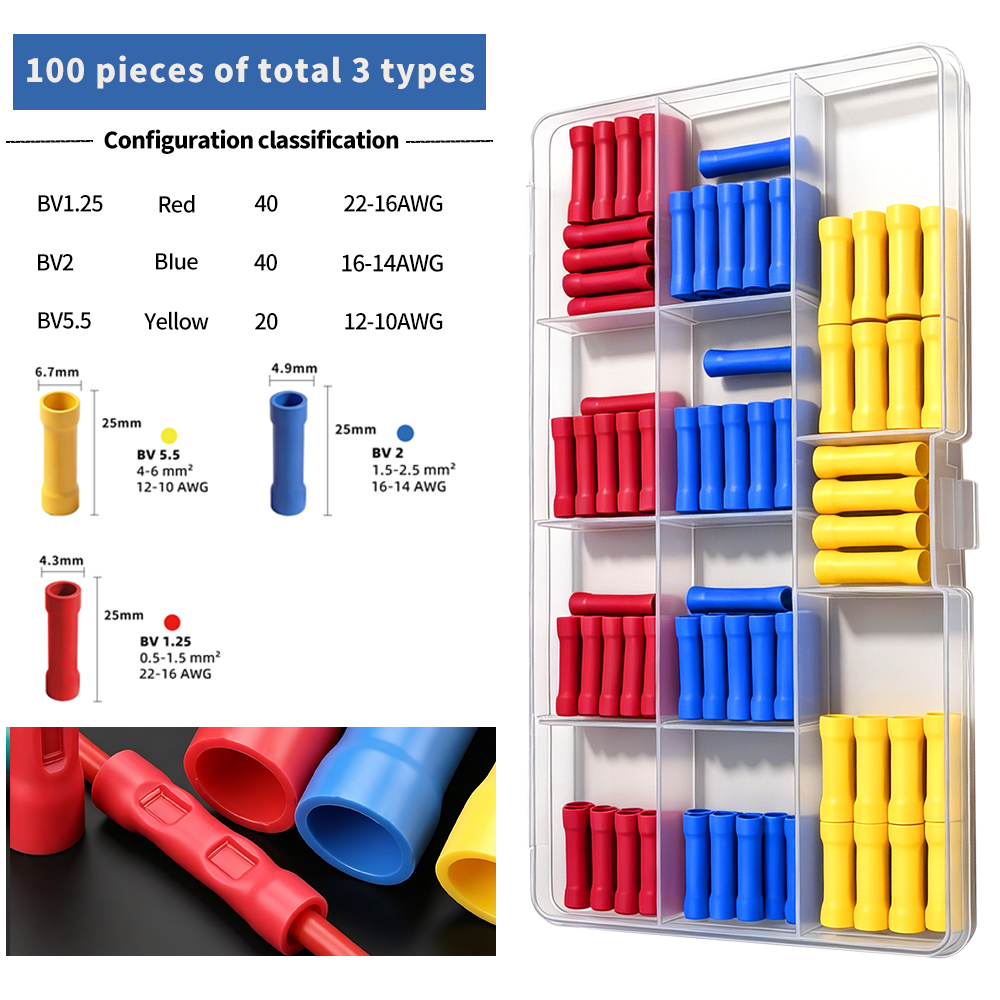
- Standard items(common red/blue/yellow insulated terminals): MOQ can be as low as a few thousand pieces per size, often mixable in one carton.
- Boxed retail kits(like our 370PCS heat shrink sets): MOQ is usually by carton — often 100–500 sets.
- Custom items(your logo, your color, custom packaging): expect a higher MOQ because the factory must tool and set up a dedicated run.
Don’t be shy about stating your volume. If you’re starting small, many suppliers — us included — will work with a reasonable first order in exchange for repeat business. Honesty builds better quotes than exaggeration.
Q5: How does OEM/ODM customization actually work?
Two levels:
- OEM (your brand on our product):we keep the standard product and print your logo on the terminal or packaging, use your box design, and ship with your paperwork. Minimums are lower and lead time is short. Most of our distributor customers start here.
- ODM (design around your spec):you give us the drawing or requirements — wire range, insulation color, current rating, special shapes — and we design the tooling and production. Because our molds are made in-house, we control cost and timeline — typically a few weeks for simpler parts.
Ask the factory whether they make their own molds. A factory that designs and builds its own tooling (as we do) responds to design changes faster and owns its quality — a factory that outsources molds hands the control to a third party.
Q6: What quality checks should I ask about?
Good factories inspect at three points, and will talk about it openly:
- Incoming material:copper and brass composition, plating thickness of purchased wire or strip. We use C11000 copper at 99.9% purity and verify plating thickness (e.g., 20 microns on our SC lugs).
- In-process:stamping, crimping, and molding checks during production, including dimensions and visual inspection.
- Final inspection:sampling per batch — pull force, contact resistance (our insulated terminals test under 0.5 mΩ at 20 A), salt spray hours for waterproof products (1,000+ hours on our heat shrink range), and packaging/quantity verification.
Ask for the test records of your specific batch, not just generic marketing numbers. A factory that can pull the report for your production date is a factory with real QC.
Q7: Payment, lead time and shipping — what’s normal?
- Payment:for new relationships, a 30% deposit with the balance before shipment (T/T) is standard. Many factories now accept trade assurance or letter of credit for larger orders. Be suspicious of anyone demanding 100% up front.
- Lead time:stock items ship in about 7–15 days; production orders run 15–30 days depending on quantity and whether new tooling is needed. Custom tooling adds a few weeks.
- Shipping:most terminal factories are near Ningbo or Shanghai ports. FOB Ningbo is the common term; your forwarder handles sea freight and customs. For small first orders, air freight or express is acceptable to validate the product before committing to a container.
Q8: What are the red flags when choosing a terminal supplier?
- No samples, or samples that differ from bulk quality.
- Vague answers about material, plating, or test data.
- Prices dramatically below market — cheap terminals fail, and the cost of failure lands on you, not the factory.
- No export experience with your market’s requirements.
A good supplier relationship is one where you can ask “how do you guarantee this batch” and get a concrete answer. That’s the standard we hold ourselves to — and the one you should hold any factory to.