



Reducing Labor Costs in Wire Harness Assembly: The ROI of T-Tap & Quick Splice Connectors
The Profitability Gap: Where Does Your Assembly Time Go?
In a B2B wire harness factory or a high-volume automotive aftermarket shop, time is the ultimate currency. If you analyze your labor overhead, you’ll find that a significant portion is dedicated to "splicing"—tapping into existing power or signal lines to add sensors, GPS trackers, or lighting.
The traditional "strip, twist, solder, tape" method is a quadruple-threat to your margins: it's slow, requires highly skilled labor, is inconsistent, and carries a high risk of damaging the main wire core. In a production environment where you might be making 500 taps a day, these inefficiencies translate into thousands of dollars in wasted labor hours every month.
Q: How can we speed up wire tapping without compromising on safety or conductivity?
The most effective solution we provide to our global OEM partners is the T-Tap Quick Splice Connector. These connectors are designed around the principle of Insulation Displacement Technology (IDT). Instead of removing the insulation, the connector features a precision-engineered metal blade—usually a high-conductivity brass alloy—that cuts through the plastic and makes a stable, high-pressure connection with the internal conductor.
The ROI Math: 30 Seconds vs. 3 Minutes
Let's look at the hard data. A skilled technician takes roughly 180 seconds to perform a traditional splice correctly (strip, join, solder/crimp, heat shrink). With a Gaopeng Electric T-Tap, the process is streamlined into three effortless steps:
- Placement: Place the main wire in the run slot of the connector.
- Crimping: Snap the connector shut using a pair of standard pliers.
- Connection: Plug in the male spade terminal attached to your new wire.
Total time: ~25-30 seconds.
That is an 86% reduction in labor time for that specific task. If your harness has 20 tap points, you just saved nearly an hour of labor per unit. When scaled across a production run of 1,000 units, the T-Tap pays for itself ten times over just in saved labor hours, even though the unit price of the component is slightly higher than a standard butt connector or a piece of electrical tape.
Addressing the Reliability Concerns: Crimp vs. Solder
Some engineers worry that quick splices might work loose under vibration. This is a valid concern for "off-the-shelf" hobbyist parts. However, at Gaopeng Electric, we’ve optimized our T-Taps with a unique Dual-Lock Mechanism. Once the connector is snapped shut, it requires a tool to reopen.
Furthermore, we use High-Resilience Phosphor Bronze for our contacts. Unlike standard brass, this material has "memory"—it maintains a constant spring pressure against the wire, compensating for thermal expansion and vehicle vibration. This makes it a far more reliable choice for long-term automotive use than a poorly executed solder joint which can become brittle and crack.
The Ergonomics of Quality: Protecting Your Workforce
Repetitive Strain Injury (RSI) is a real concern in wire harness shops. Constant wire stripping leads to hand fatigue and wrist strain, which inevitably leads to sloppy work and "nicked" wire cores later in the shift. T-Taps eliminate the repetitive stripping motion entirely.
Our nylon shells are also "no-crack" rated. We use a high-impact nylon 6/6 that won't become brittle and snap during the high-speed snap-fit assembly process. This ensures that the assembly line keeps moving without the frustration of broken components.
Strategic Sourcing for OEMs: Visual QC
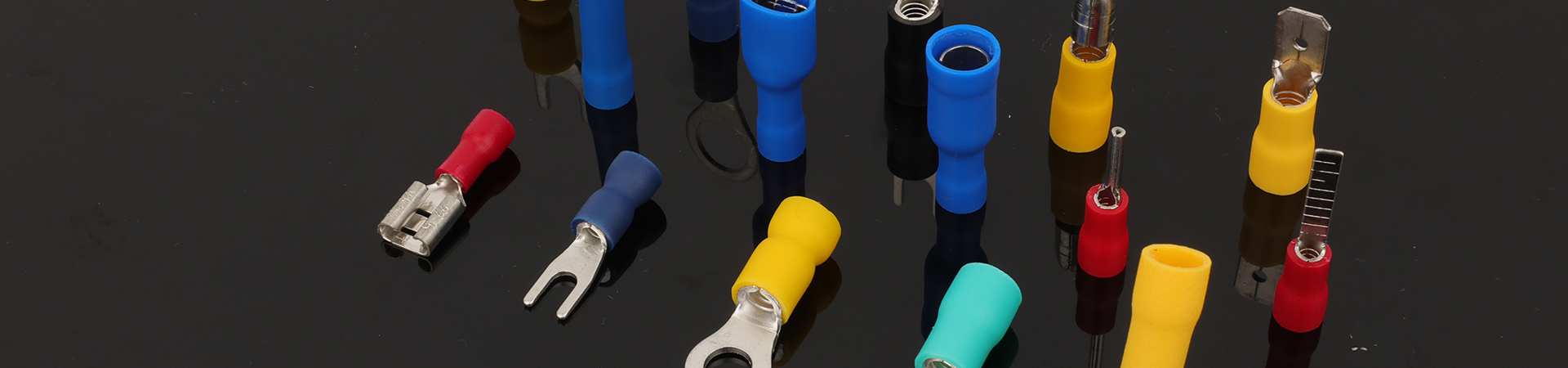
When you source T-Taps in bulk from Gaopeng, we provide a color-coded system that aligns with international standards:
- Red: 22-18 AWG
- Blue: 16-14 AWG
- Yellow: 12-10 AWG
This allows for instant visual quality control. A supervisor can walk down the assembly line and immediately see if a worker has used the wrong gauge connector for a wire, preventing costly rework later in the testing phase.