
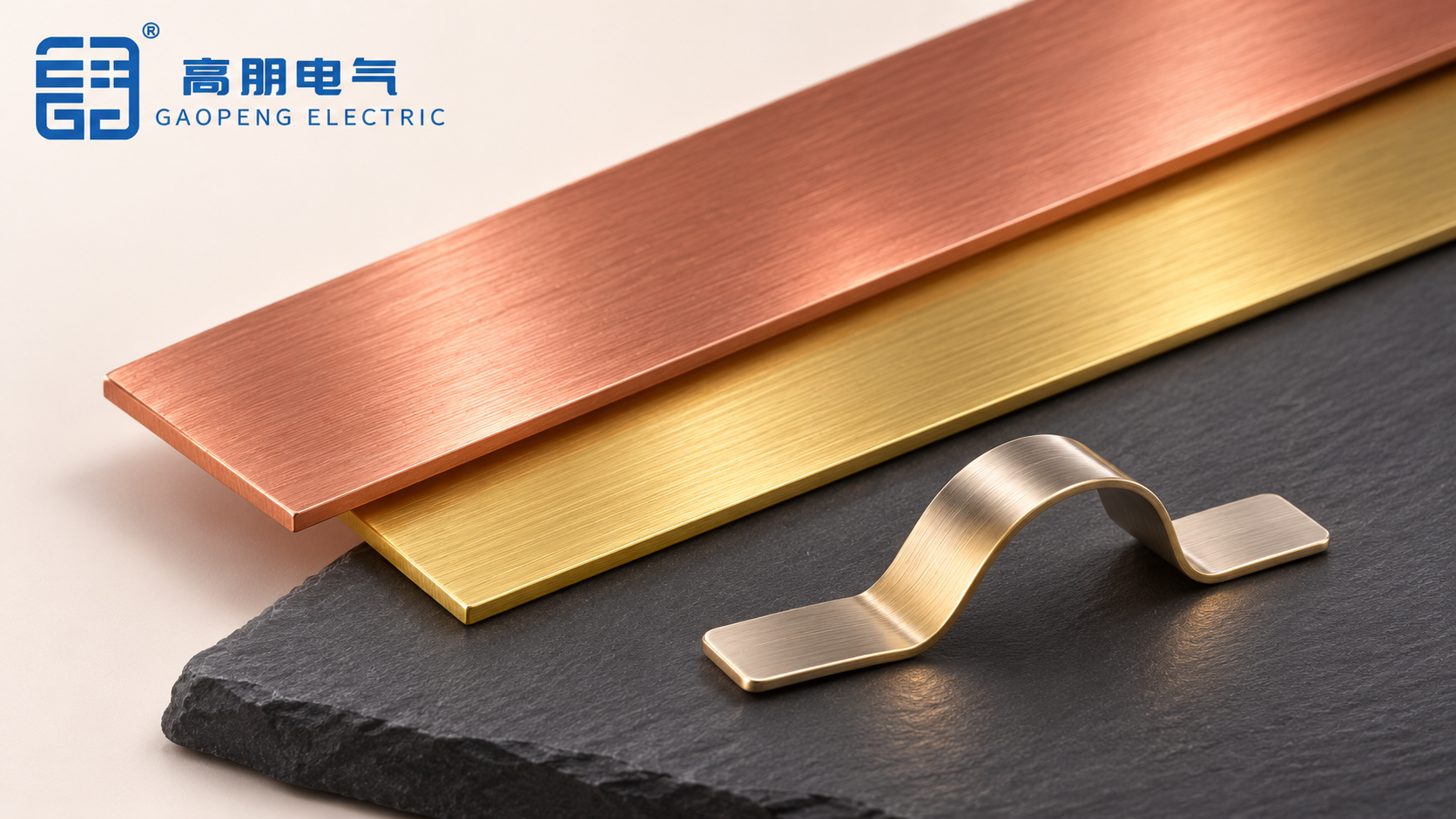
In a copper vs brass comparison, copper generally favors electrical conductivity, while a specified brass can offer useful forming, machining or mechanical properties. The right material depends on what the component must do. A conductive lug and a spring contact have different requirements even when both sit inside the same electrical assembly.
Brass is a copper-zinc alloy family, not another name for pure copper. Its exact grade and condition matter. A yellow surface, a familiar part shape or a supplier’s broad “copper alloy” description cannot establish the properties of the delivered component.
Copper vs brass: compare the function before the material name
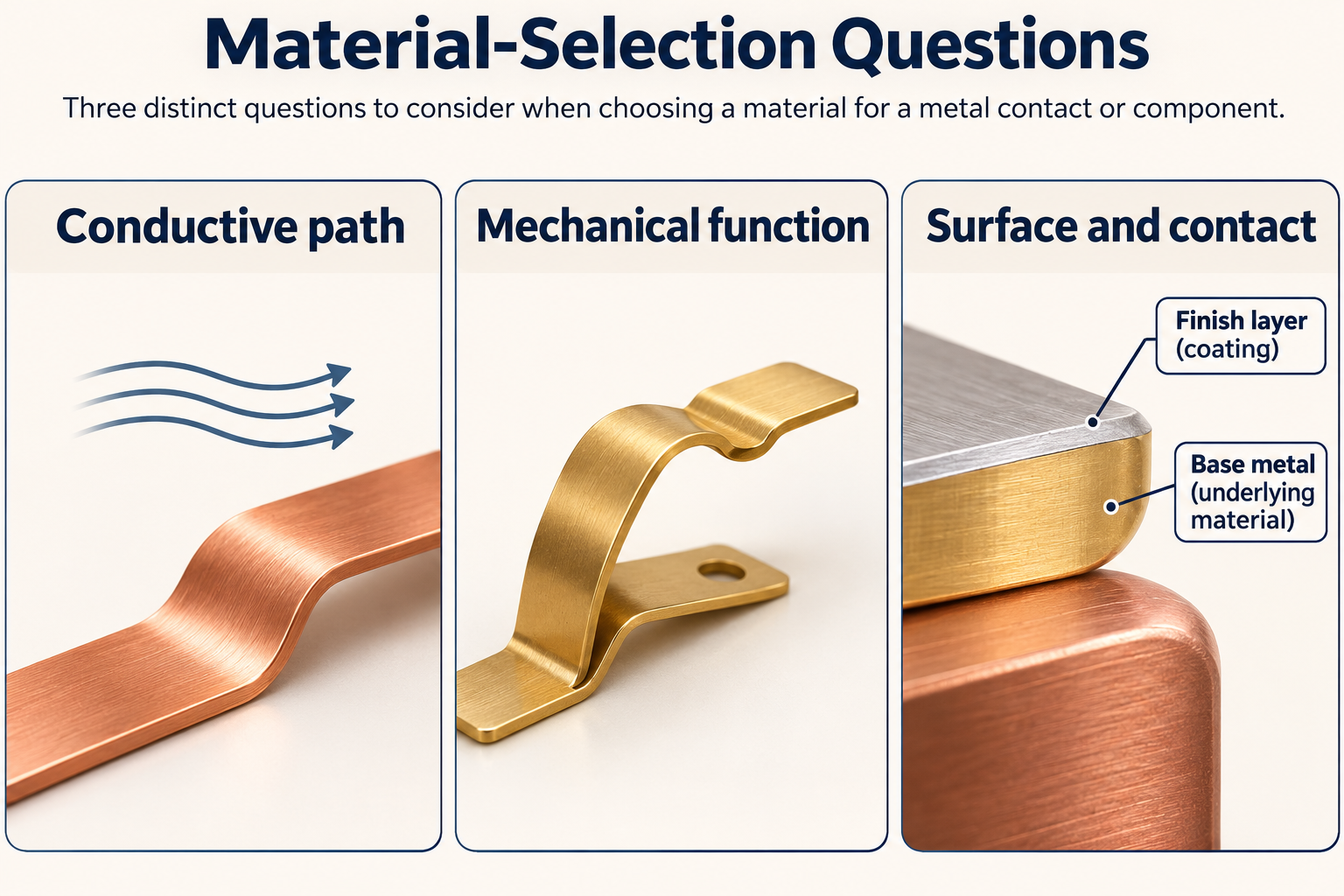
Start with the component’s job, then compare defined materials. The following matrix gives qualitative selection questions. It does not rank every copper and brass grade or replace a material specification.
| Decision | Copper consideration | Brass consideration | What the buyer needs |
|---|---|---|---|
| Current-carrying path | High conductivity is a common reason for selection. | Conductivity varies with alloy; geometry may compensate for a lower value. | Exact grade and the component’s electrical requirements |
| Forming or machining | Grade, temper and process influence the result. | Suitable grades can offer useful manufacturing and mechanical characteristics. | Specified material condition and manufacturing requirement |
| Elastic contact function | Conductivity alone does not establish spring behavior. | A broad brass label does not establish the required spring properties. | Force, geometry and material-condition requirements for the contact |
| Surface and environment | Base metal and any coating must be identified. | Alloy and coating must suit the intended exposure. | Finish specification and application conditions |
A property comparison becomes useful only when both proposals describe the same function and dimensional constraints. Otherwise, a “better material” may simply be a different part.
Bulk conductivity does not rate the complete connection
Conductivity describes how the material carries current. A completed electrical contact also depends on its geometry, mating surfaces and mechanical conditions. The amount of real metallic contact and the condition of surface films affect the interface.
This is why a silver-colored finish cannot answer the copper-versus-brass question. The surface and the underlying metal are separate parts of the specification. A coated component may look different from its base metal, and a visually similar replacement may use a different alloy.
For a substitution review, compare the base grade, condition, finish and complete component requirements together. Do not approve an alternative solely because both parts contain copper or because one material has a higher conductivity value in a general reference table.
Copper vs bronze is a separate material comparison
Bronze is another copper-alloy family. Common bronze descriptions refer to copper-tin alloys, while other named bronze families have different alloying systems. A bronze part therefore should not be treated as brass simply because the color or application appears similar.
The practical rule is to preserve the actual designation. If a drawing specifies a particular bronze or brass, ask for that grade and condition. Replacing it with the word “copper” removes information that may be essential to the component’s mechanical or contact function.
Use four questions to review a proposed material change
What is the dominant function? Identify whether the part primarily conducts current, clamps another component, maintains an elastic contact or combines several duties. Record the requirements that must remain satisfied after the change.
Which grade and condition are being offered? A quote should resolve the material description needed by the order. If the drawing names a grade and temper, a quotation saying only “brass” has left a specification gap. The same applies to a requirement for a defined copper grade.
What happens to geometry and finish? A material change can require a different section or component design. Review the actual proposed part instead of assuming identical dimensions preserve identical performance. Keep the coating requirement visible, including where it applies on the contact surfaces.
Which record connects the material to the delivery? Specify the material evidence required for the purchase, then connect it to the part and lot. A generic document for an unrelated sample does not answer a delivery-specific material requirement.
Carry the decision into the actual terminal order
For a tubular copper-lug requirement, Gaopeng’s SC cable-lug range is a relevant product family to review. Select it using the required conductor and mounting dimensions, then confirm the specified material, finish and application documentation. Do not infer an exact purity or temper from the catalog family name.
If a buyer is comparing a copper lug with a brass alternative, the useful question is whether the proposed component satisfies the same connection requirements. A universal price, strength or corrosion ranking cannot settle that decision without defined grades, conditions and geometries.
For repeat orders, keep the approved material description and full part reference together. Require proposed changes to identify what differs in material, finish or design. This makes the next quotation comparable with the approved component rather than merely similar in appearance.