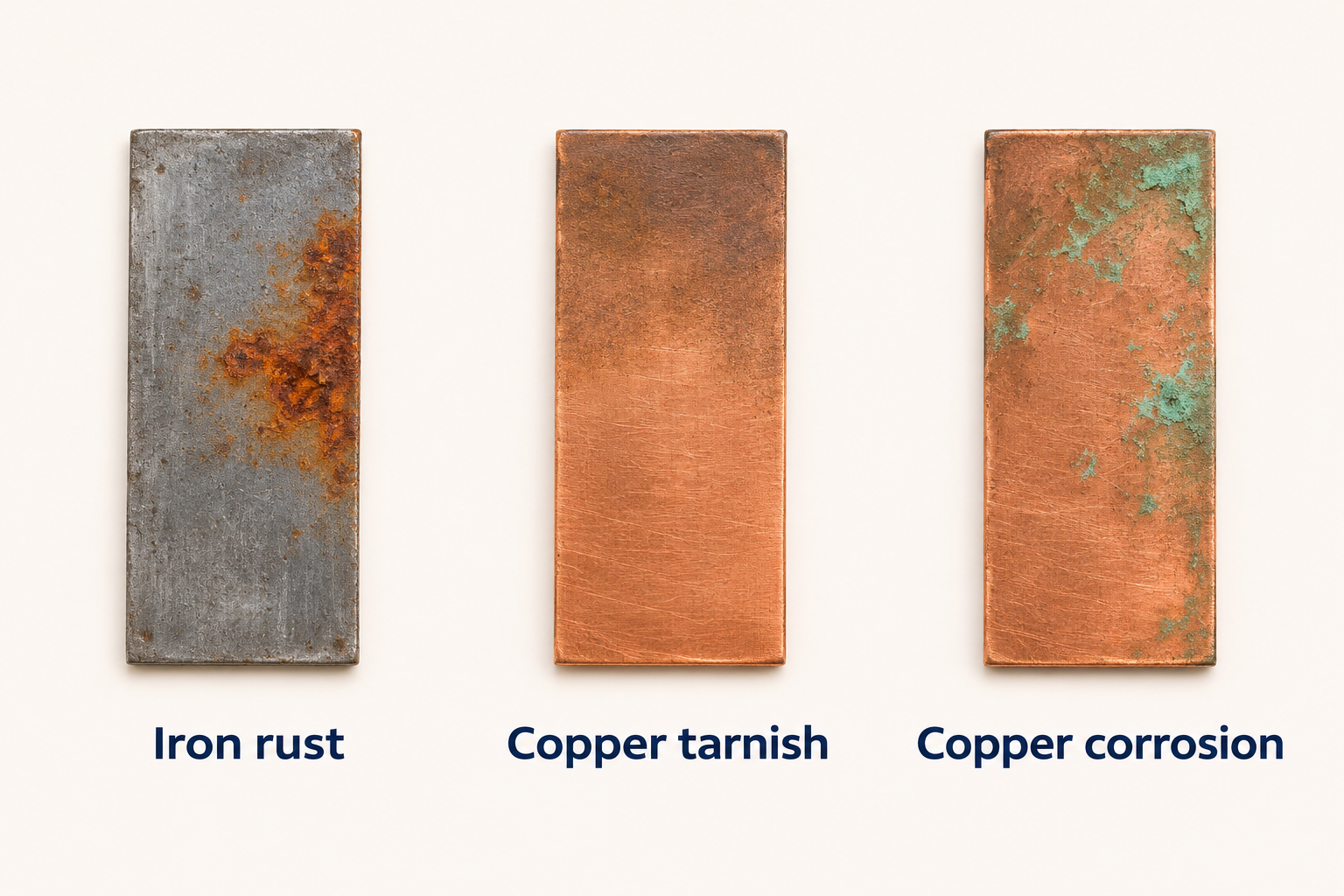
Copper does not rust in the way iron does, but it can oxidize, tarnish and corrode. For an electrical part, “does copper rust” is only part of the material question. Rust describes iron corrosion products. A copper surface that becomes brown, black or green is undergoing a different change, and its color alone does not tell you whether an electrical connection remains acceptable.
That distinction matters when inspecting a copper lug, a conductor end or a plated terminal. The exposed surface and the current-carrying contact interface have different jobs. A surface film that changes the appearance of a metal object is not, by itself, a test of an electrical joint.
Does copper rust, or is the surface changing another way?
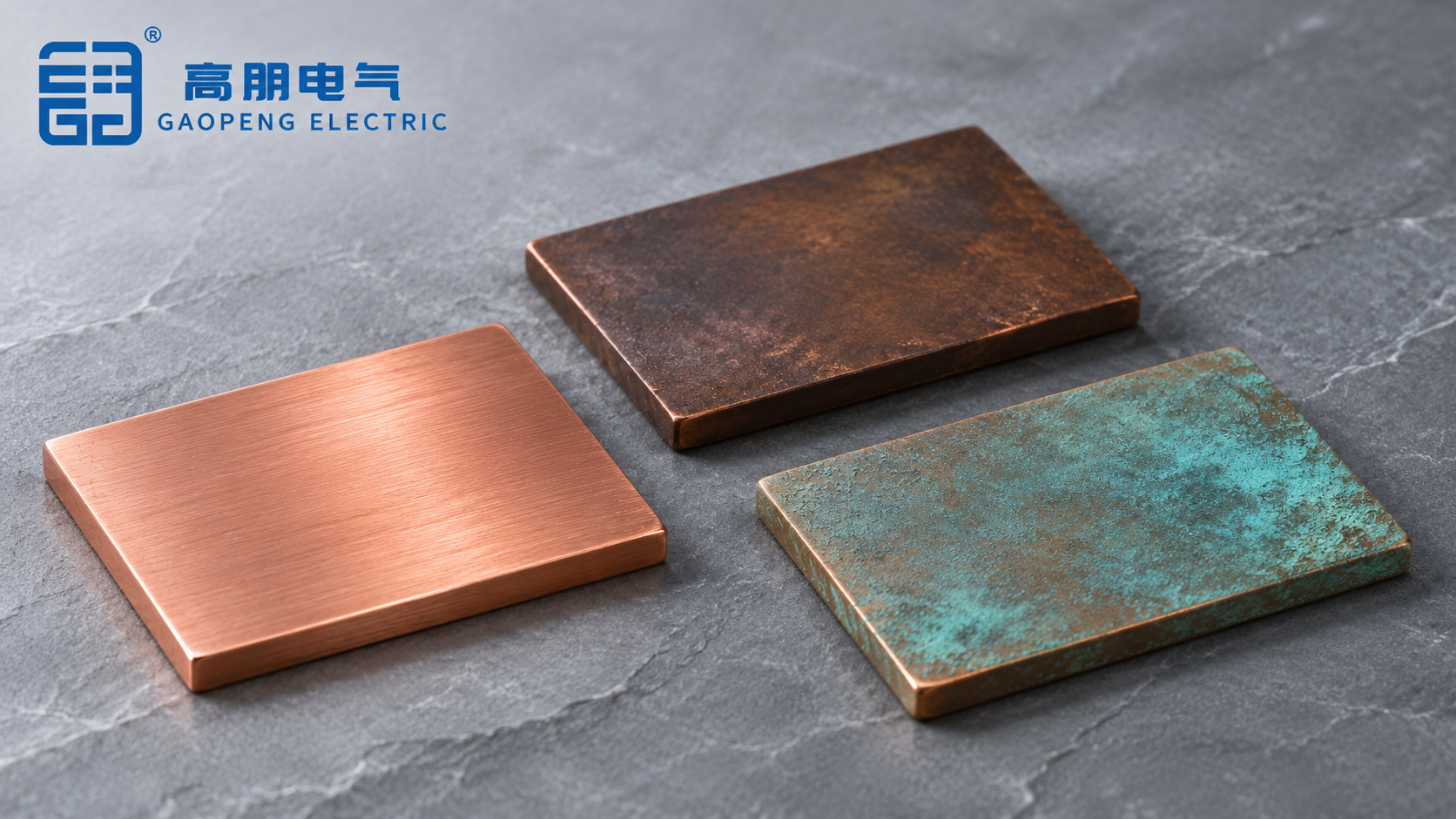
Use “corrosion” for the broader reaction between a metal and its environment. Copper and its alloys can develop several surface products. The familiar green appearance is not iron rust, and not every dark copper surface has the same chemical cause.
The following observations help describe a part consistently. They are starting points for investigation, not a color-based acceptance standard.
| Observation | What it can indicate | What still needs checking |
|---|---|---|
| Brown or darkened copper | Tarnishing or other surface-film formation | Material, exposure and whether the changed area is an electrical contact |
| Green or blue-green deposits | Copper-containing corrosion products | Moisture or contaminant source, local damage and application-specific acceptance |
| Orange-red deposits on an assembly | Possible corrosion of an iron-containing part or contamination | Which component produced the deposit; do not assign it to the copper automatically |
| Bright silver-colored surface | A coating or a different base material may be present | The specified base metal and finish; brightness does not establish a material grade |
Why a small contact area changes the question
An electrical connection carries current through the places where the mating surfaces actually contact each other. Oxide films and corrosion products can reduce that metallic contact area and increase contact resistance. Surface appearance alone cannot establish the resistance or the condition of the connection.
This is why an architectural patina and a terminal contact film should not receive the same acceptance decision. One concerns a visible exposed finish. The other may affect the interface through which the current must pass. The location and function of the changed surface matter as much as its color.
Nor does the word “copper” guarantee a good joint. The conductor, terminal, contact surfaces and assembly conditions must work together. An attractive part can be incorrectly specified; a discolored part needs assessment against its actual requirements rather than an automatic diagnosis from a photograph.
Environment and construction explain more than age alone
Corrosion behavior depends on the environment and the materials present. Moisture, contaminants and contact with another metal can change the conditions at a surface. A sheltered indoor component and a moisture-exposed assembly therefore cannot be assigned one universal corrosion rate.
For a recurring problem, record where the change occurs. Deposits at a cable entry suggest a different investigation from a mark on an exposed palm or an adjacent steel fastener. Note whether the condition is localized, whether several parts share it and whether the exposure changed.
Keep those observations separate from conclusions. “Green deposit near the cable entry” is useful information. “The lug has failed because it is green” claims more than that observation can establish. Material identification and electrical or mechanical acceptance need the appropriate records and checks.
What to do with a suspect copper connection
A suspect electrical connection needs an application-specific inspection, not a cosmetic cleaning experiment. Any physical work on electrical equipment belongs within the applicable isolation and maintenance procedure. A photograph can document a condition without proving that the component is safe to retain.
The inspection record should connect the part identity, location, exposure and observed change to the equipment requirements. Where performance must be assessed, use the specified inspection or test method and acceptance criteria. Do not substitute a clean-looking surface for that result.
A household polish or acid-cleaning method developed for decorative copper is not automatically suitable for an electrical terminal. It may also obscure the original condition. Follow the component and equipment instructions when deciding whether cleaning, retermination or replacement is appropriate.
Specify the replacement beyond the word copper
If replacement is required, carry the original electrical and mechanical requirements into the new order. For a tubular copper lug, specify conductor cross-section and construction, mounting-hole dimensions, palm clearance, required finish and the relevant crimp-tooling instructions.
Gaopeng’s SC copper cable-lug range lists conductor and mounting dimensions separately. Use the complete product reference when requesting a match. Neither the product’s color nor a neighboring catalog size confirms compatibility with the equipment.
For recurring supply, identify the material and finish documentation required by the order and connect it to the delivered part or lot. This gives the buyer a repeatable specification while the maintenance team resolves the original exposure or connection issue.