Leave Your Message
With the changeaged throws in changebraille throws the electrical industry, the push-in electrical connection has become an even -more-important consideration toward attaining an efficient, smooth-and-fast, safe working system. These quick but relatively effective connections find themselves in a peculiar position where simplicity and perfection meet-the very criterion toward broad application in a multitude of sectors. While understanding push-in electrical connections' advantages and applications is thus essential for engineers and designers intent on improving productivity and safety within electrical installations.
Founded in 2016 in Wenzhou city of Zhejiang Province, Yueqing Gaopeng Electric Co., Ltd. has a principal business in the design, development, and production of various terminals and connectors. With production reaching billions per year and exports to Asia, Europe, America, and Africa, Gaopeng has leveraged its competence to provide innovative solutions, such as advanced Push In Electrical Connections. This blog, therefore, will explore these unique connections' competitive advantages and applications across industries and how they make a positive impact on electrical installations.
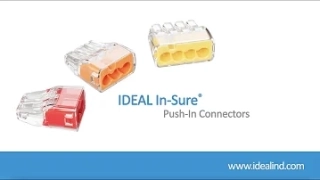
Push In electrical connections have emerged as a revolutionary solution in the domain of electrical installations, mostly attributed to their user-friendliness and high efficiency. The connections use a spring clamp mechanism allowing the easy insertion of wires without any tooling. The innovation greatly reduces the installation time, making it very attractive in quick-paced environments that necessitate fast setup. Recent advances in Push In technology have opened the path for industrial application in a wide spectrum of devices, including energy meters requiring small yet reliable connections. Newer designs for push-in connections, having the least width requirements, can fit into confined spaces while guaranteeing stable electric performance. As the industry strives to overcome the challenges of standardization and competitiveness, Push In connections appear to be establishing themselves as a superior alternative to conventional screw terminals, thus changing the very definition of electrical connectivity.
Push In electrical connections are a new way of approaching wiring and connectivity. Unlike the traditional methods that require tools and a lot of time for installation, Push In technology provides a straight path to efficient working. With this technology, wires can be pushed directly into the connection, where they remain tightly held for reliable electrical performance without any extraneous hardware.
The other advantages of Push In technology pertain to functionality. Push In technology protects against installations where loose connections create opportunities for electrical failure. The smaller footprint is also very helpful with space management—ideal for applications in modern tech-driven environments. This very simplification will find a lot of advantage as industries move towards automation and IoT applications, where reliable and fast connectivity is a matter of operational success.
Push-in electrical connections have unique advantages for residential wiring; considering how technology is influencing modern living and energy management, they offer simple means for faster installations and efficient maintenance for the individual looking to bolster electrical projects against an ever-increasingly fast-paced society. With the development of smart home technologies, ease of installation can encourage clients to adopt innovations that improve living conditions.
Push-in connections can also contribute toward energy efficiency as they talk about renewable energy. With respect to community solar projects that attempt to alleviate access to sustainable energy for all, reliable electrical connections become essential in ensuring systems can take the burden of any increased energy consumption while ensuring maximum usability: this is in perfect tandem with the greener push. The evolution of effective wiring solutions for the tech-driven world will play an important role in the evolution of residential energy consumption.
In the commercial sector, push-type electrical connections are emerging onto the scene, because of their own set of advantages. These connections afford quicker installation procedures for wiring setups, resulting in consequent savings in time and labor. By dispensing with old-fashioned tools for connecting wires, like screwdrivers or Crimping Tools, push-type connections become ideal for the user, especially in fast-paced commercial environments.
Furthermore, the push-in connector reliability enhances the power system efficiency. Their secure and reliable connection reduces occurrences of loose wiring, which can result in costly equipment failures or safety hazards. As companies strive for greater efficiency, the adoption of push-in connectors in commercial systems meets this demand for efficiency and high safety standards. Thus, a whole new approach to electrical connectivity is changing the way commercial spaces manage their electrical boats.
These push-in electrical connections are some of the latest innovations in electrical installations; particularly the cage clamp spectrum. The most astonishing benefit is however derived from the ease of installation and maintenance. These connections allow for quick and simple wiring, making them ideal for applications where time is important for deployment. The innovative designs mean secure connections can be made without the need for complex tools or extensive training; thereby eliminating much of the guesswork that historically has been a part of electrical setups.
The latest arrival of new push-in technology has attracted interest in this industry, especially as it increases efficiency and reliability on electrical jobs. Compact designs with a width of only 72mm are able to take direct measurements, while also enabling diverse functions like current transforming. And as the industry battles with older and much used connection methods that generally lead to a dead tightness, these innovations bring hope for a brighter future with more excellent efficiency in electrical connectivity.
Push In electrical connections are equipped with several safety features that minimize electrical hazards. The design of Push In connections ensures that they are safe and reliable, preventing wires becoming too loose, which could otherwise lead to arcing or short circuits. The increased safety of Push In connections in electrical installations is further strengthened by their capability to carry high currents without causing overheating issues.
Recent trends in the electrical industries show increased emphasis on compliance and safety through advancements like Load Analyzer applications. Platforms like these help reduce risk by corroborating that electrical systems conform to regulatory standards. The provision of free sensors for electrical hazard detection is yet another initiative demonstrating proactive attention focused on safeguarding homes and businesses from possible fires. Consider the obvious inclusion of smart technology into our daily gadgets; if any areas need constant upkeep on safety standards, electrical solutions happen to be one of them.
Innovative push-in electrical connections have distinct advantages over the more common types of connections, such as screw terminals and soldered joints, because this form of connection allows fast, tool-free connection. It has high reliability concerned with applications that are relevant and rapidly increasing, for instance, medical equipment, where accurate and reliable control is essential for devices like imaging equipment and life-support systems.
And, as these applications, like IoT and smart home systems, grow by steady folds, push-in connection technology does not only bond modern device miniaturization but also maintenance ease and replacement. Moreover, as electrical components continue to be increasingly integrated into various sectors, realizing the key advantages of push-in connections will be more important for developing the innovative design and functional future applications.
The most up-to-date and delicate improvement in power technology is currently push-in electrical connections, known for their efficiency and reliability in many other applications. Installation of the power connections is fast and can work efficiently on both residential and commercial energy constructions due to easy plug-ins, particularly in the growing area of self-generation. As more consumers express interest in self-generating electricity, the convenience of the push-in technology allows easy installation for the renewable energy source into homes and businesses.
Such future trends will make push-in connections vitally important for such connections between distributed energy resources and a grid. As operators seek to increase network capabilities to support renewables, the compelling need for strong, adaptable power connections will increase. Not only does this reduce the ease of electrical installations; it advances energy management while laying the groundwork for a more sustainable and efficient national energy economy.
Misconceptions abound with any discussion around push-in electrical connections. A large number of users claim that push-in connections are not as reliable as other types of connections. This is nothing but a pure myth. In fact, push-in connections create a very solid and secure electrical bond and leave the installation process easy yet highly operative.
Another misconception is that push-in connections are only suitable for low-voltage applications. This is inaccurate because push-in technology can manage a whole host of voltages, which are, in fact, fairly widespread in commercial and industrial applications. The very ease with which these types of connections can be installed is evinced in the design. Once these various myths are clarified, we can appreciate the distinct advantages that push-in connections would confer in the modern electrical system.
Push-in electrical connections provide a neat wiring solution that speeds up installation time and improves reliability. The configuration lends itself to quick and easy installation, making it ideal even for domestic and industrial applications. It practically eliminates the possibilities of traditional twisting or soldering; hence makes connections less susceptible to electrical faults-an important aspect of energy distribution systems and renewable energy projects.
On the other hand, proper wire stripping lengths and firm connection installations are vital best practices for the connection. Regular troubleshooting can help in averting future problems. Real time monitoring for the best performance and fast identification of fault is achievable through the help of advanced technology like IoT. As such, since efficient electrical solutions are becoming a priority by numbers, the need to learn and implement these practices is indeed important for the changing dynamics of the future in terms of sustainable energy.
Push In technology is a modern approach to wiring that allows users to insert wires directly into connections without the need for tools, promoting efficiency and reliability.
Unlike traditional methods that require tools and can be time-consuming, Push In technology simplifies the installation process, reducing the time and effort needed to secure connections.
The main advantages include ease of use, increased safety from reduced risk of loose connections, and a compact design that aids in space management.
Loose connections can lead to electrical failures, making a reliable and secure connection essential for preventing accidents and ensuring proper functionality.
The compact design of Push In Connectors allows for more efficient use of space, making them suitable for modern applications where minimizing footprint is important.
No, Push In connections can be installed without specialized tools, making them accessible to users with different levels of expertise.
Push In technology is particularly beneficial in applications involving automation and the Internet of Things (IoT), where reliable and fast connectivity is critical.
It enhances efficiency and reliability in electrical installations, helping to overcome the limitations of conventional connection methods that can hinder progress.
Cage clamp technology is a type of Push In connection design that allows for quick and secure wiring, facilitating easier installation and maintenance.
No, the design of Push In connections is user-friendly and minimizes the need for extensive training, making them easier for users to implement correctly.