Let’s be honest—when you’re buying insulated Terminal Connectors from China, you’re looking for joints that won’t let you down, crimps that stay consistent, and insulation that can handle real working conditions. The cheapest supplier isn’t automatically the best choice, either. You’ll want to compare terminal materials, plating options, wire-size compatibility, insulation temperature ratings, and whether they actually have documented quality checks. And don’t be shy—ask them exactly how samples are tested, how production batches are traced, and what happens if a crimp fails inspection. It’s funny how the little things can bite you. A loose terminal in a control cabinet? That’s the kind of tiny oversight that leads to expensive rework later.
So, quick heads-up: the expert you’re about to hear from isn’t real. We’re using Alex Morgan—a made-up connector-engineering specialist—to make a point, not to pass off some random quote as gospel. His take? “A terminal is only dependable when its metal, insulation, and crimp process work together.” Think of that less as an industry fact and more as our editorial rule of thumb. This brings up a pretty useful question when you’re checking out suppliers: can the manufacturer actually explain how their materials and process fit what you’re trying to do—or are they just leaning on a shiny catalogue?
This guide to China’s best Insulated Terminal Connectors suppliers is meant to help you compare them using practical criteria—not just marketing buzz. Look for clear product specs, sample availability, inspection records, and technical support that actually gets back to you. And here’s the kicker: don’t assume every supplier means the same thing by “quality.” Make sure their stated test methods match what your project really needs. Even the most thorough datasheet can still leave you scratching your head about whether production is actually consistent. Sure, a careful review takes time—and honestly, no checklist is going to catch every single risk. The point is just to make those risks a little easier to see before you commit to buying.

What Insulated Terminal Connectors Are and How They Work
China Best Insulated Terminal Connectors Suppliers
What Insulated Terminal Connectors Are and How They Work
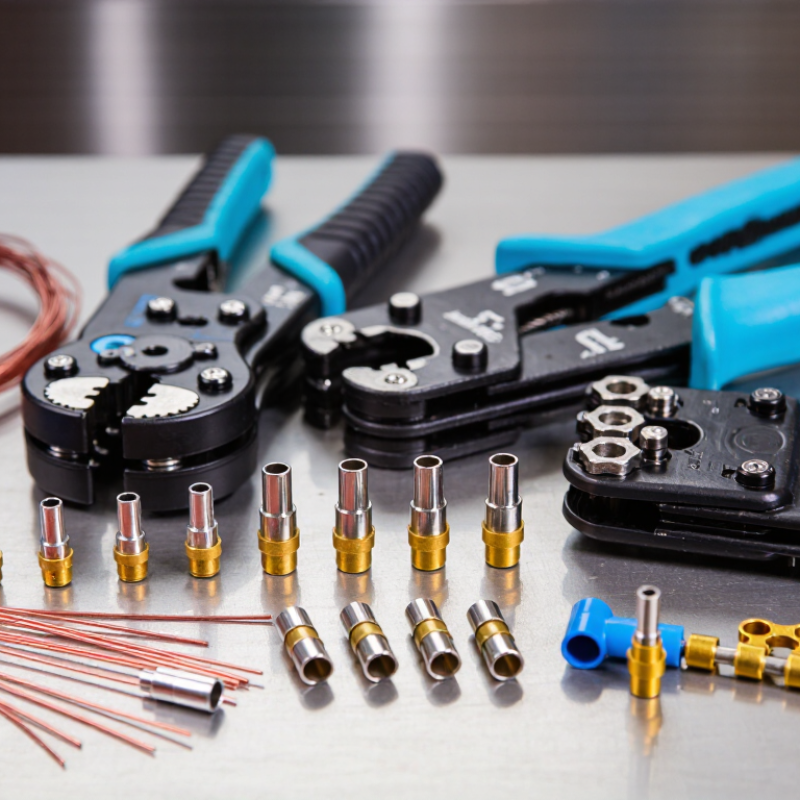
An insulated terminal connector joins a stripped wire to a screw, stud, or other electrical contact. It has two working parts: a conductive metal barrel and an insulating sleeve. The wire enters the barrel, then a correctly sized crimping tool compresses the metal around its strands. This forms the electrical and mechanical connection. The sleeve covers the barrel and helps reduce accidental contact with nearby conductive parts. It does not automatically make a connection waterproof or suitable for every voltage.
The Copper Development Association’s conductivity tables use annealed copper at 100% IACS as a reference at 20°C. That benchmark helps explain why sound metal-to-wire contact matters: resistance at a poor crimp can create unwanted heating. IEC 60228 classifies conductors as classes 1, 2, 5, and 6, reflecting differences in construction and flexibility. A terminal must match the conductor size and type, as well as the stud or screw it will fit. Small details matter.
In practice, a technician checks that no strands are cut, inserts the wire fully, and crimps with the correct die. A light pull check can reveal a loose termination, but it cannot replace suitable inspection or testing. Looks are not proof. An intact-looking sleeve may hide an under-crimped barrel, and a secure crimp may still be mismatched to the application. Temperature, vibration, moisture, and installation space all affect the choice.
Common Types of Insulated Terminal Connectors
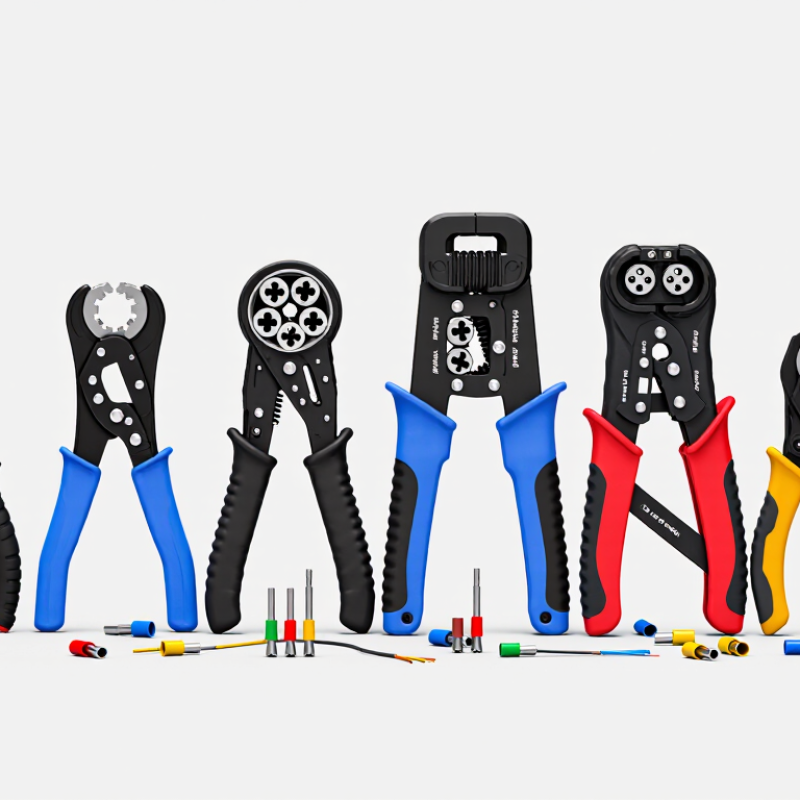
Insulated terminal connectors come in several shapes, each suited to a different connection point. Ring Terminals fit over a stud and stay in place when secured with a nut. Fork terminals slide beneath a screw head, making removal easier during maintenance. Pin terminals gather stranded wire into a narrow tip for terminal blocks. Small details matter.
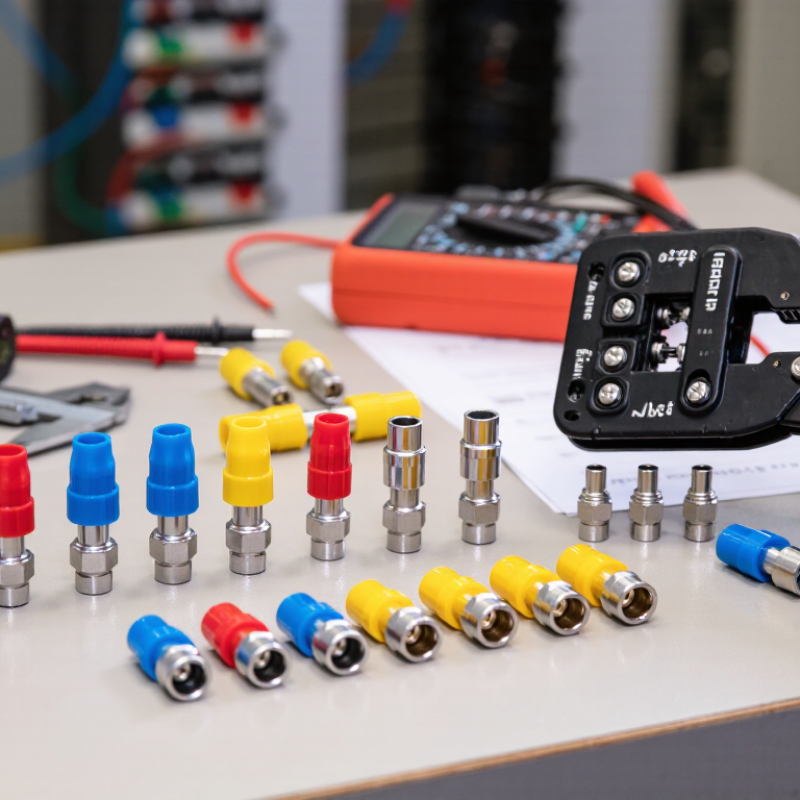
Butt connectors join two wire ends inside a crimped sleeve, often with insulation covering the splice. Male and female quick-disconnect terminals allow circuits to be separated without removing a screw. Bullet connectors offer a similar removable connection in a compact, rounded form. Insulation colors can indicate wire-size ranges, but always check the connector’s printed specifications. Color alone is not a reliable guide.
When selecting High-Quality Insulated Terminal Connectors, match the barrel to the conductor size and the terminal to the equipment’s connection point. A barrel that is too large may crimp poorly; one that is too small can damage strands. Use a compatible crimping tool, then inspect the joint and give the wire a gentle pull. This simple check is easy to overlook. Even a tidy-looking crimp may need closer inspection.
Materials and Features That Affect Connector Performance
Material choice sets the limits of an insulated terminal connector. Copper conducts well, while a tin-plated surface can help resist oxidation during storage and use. The plating does not fix a poor crimp. A loose connection may still heat under load.
Small details matter. Check the conductor size, terminal barrel, and insulation rating against the actual wire and operating conditions. PVC insulation suits many general applications; nylon options may offer better resistance to heat or abrasion, depending on the product specification. Do not judge by appearance alone. A thick sleeve is not proof of higher performance.
For Wholesale Insulated Terminal Connectors, ask suppliers for material details, temperature ratings, and samples for a crimp test. Pull testing and a close look at the finished joint can reveal whether strands are trapped or the barrel is under-crimped. In field work, we have seen installation tools affect results as much as terminal material. That is easy to overlook. Ratings should be checked against the equipment maker’s requirements, and real service conditions may still expose weaknesses that a quick bench test misses.
Key Standards and Quality Checks for Terminal Connectors
China Best Insulated Terminal Connectors Suppliers
Reliable terminal connectors should be assessed against standards that fit their design and intended use. IEC 60352-2 covers solderless crimped connections, while relevant UL 486 requirements may apply to certain wire connectors. Confirm the exact product category, wire range, and current standard edition before comparing supplier claims. A certificate alone is not enough. Ask for test reports matching the connector’s material, size, and insulation type. Small details matter.
Incoming checks can reveal problems early. Inspect copper barrels for burrs, uneven plating, and visible corrosion. Measure barrel dimensions and insulation thickness against the drawing. Then crimp samples using the specified tool and wire gauge; check crimp height and pull strength. The joint should hold firmly without cutting strands. Check the fit. Verify voltage and temperature ratings, and review heat-aging or vibration results when the application requires them. Keep batch records and traceability documents for later review. A polished sample may not represent every production lot, so repeat checks on delivered goods. Supplier quality is not only paperwork; it is consistent performance under the conditions your assembly will face.
Industries and Applications Served by Insulated Terminals
Insulated terminal connectors support reliable wire terminations across automotive, appliance, HVAC, and industrial control applications. In a vehicle, they may connect lighting wires exposed to vibration and temperature changes. In a control cabinet, they help organize conductors around relays, sensors, and motor starters. HVAC systems use them in serviceable connections near fans, compressors, and control boards. Details matter. A terminal suited to a dry cabinet may not be appropriate near moisture, oil, or repeated movement.
Choosing Custom Insulated Terminal Connectors starts with the conductor size, material, operating current, and installation environment. The connector barrel must match the wire, while the insulation must tolerate expected heat and handling. Color coding can help identify sizes, but conventions vary; verify specifications rather than relying on color alone. Use a compatible crimping tool and inspect the finished connection for secure compression and damaged insulation. Not always. A clean appearance does not prove a sound crimp, so sample pull checks can reveal problems. Real installations also expose a practical weakness: cramped spaces make consistent tool access difficult, and that deserves attention during design.
How to Evaluate Insulated Terminal Connector Suppliers in China
China Best Insulated Terminal Connectors Suppliers
How to Evaluate Insulated Terminal Connector Suppliers in China
Choosing an insulated terminal connector supplier takes more than comparing catalog prices. Start with the details that affect installation: conductor range, terminal material, insulation type, and operating temperature. Ask for technical data sheets and confirm that listed dimensions match the samples. Small differences matter.
Test samples with the wire and crimping tools your team actually uses. Check whether the conductor enters cleanly, the insulation stays in place, and the crimp holds under an appropriate pull test. A polished sample alone is not enough; ask how production batches are inspected and whether test records can be linked to specific lots. No checklist catches everything.
Reliable suppliers answer technical questions clearly and explain how they handle changes in materials or specifications. Ask about lead times, minimum order quantities, packaging, and how defects are documented. Request recent inspection records, but review them rather than accepting them at face value. A factory visit or live production walkthrough can help you understand process control, though it cannot replace sample testing. Communication can still be uneven. Note that, and agree on written specifications before placing a larger order.
Steps for Sourcing and Verifying a Chinese Supplier
China Insulated Terminal Connectors sourcing starts with a clear specification: wire size, conductor material, insulation type, temperature rating, and required crimp performance. Send the same drawing and test criteria to each supplier. Then compare quotations, production capacity, and traceability—not just unit price. Ask for a current business license, quality-system certificate, and test reports that identify the exact terminal model. A certificate alone proves little if its scope does not match the product.
Demand is growing with electrification. The International Energy Agency’s Global EV Outlook 2024 reports nearly 14 million electric cars sold in 2023, about 18% of global car sales. That figure is not a terminal-market forecast, but it highlights why dependable electrical connections matter. Request samples from a normal production batch. Check insulation fit, crimp consistency, and pull-out strength using agreed test methods. Verify reports with the issuing laboratory, and, where practical, inspect the crimping process and batch records. A polished factory tour is not enough; paperwork can look tidy while process control varies.
Tips: Specify acceptance limits before sampling. Keep approved samples for comparison, and record the lot number. Small details matter. If a supplier resists sharing test methods or traceability records, pause and ask why. Not every low quote is risky, but it deserves closer checking.
China Best Insulated Terminal Connectors Suppliers – Steps for Sourcing and Verifying a Chinese Supplier
| Sourcing Step | What to Check | Evidence to Request | Practical Verification Method |
|---|---|---|---|
| 1. Define the application | Connector type, conductor size, wire class, operating environment, voltage and current requirements, and installation method. | Product specification sheet, drawings, conductor-size range, and written confirmation of intended use. | Compare the proposed terminal with the equipment design and applicable electrical requirements. Do not select a connector based on appearance alone. |
| 2. Confirm product construction | Terminal base material, plating, insulation material, barrel design, and dimensional tolerances. | Material declarations, dimensional drawings, plating details, and insulation temperature-rating documentation. | Check that the offered materials and dimensions match the purchase specification. Copper or copper-alloy conductors and tin plating are common options, but suitability depends on the application. |
| 3. Review standards and compliance | Whether the product is tested or assessed to standards relevant to its connector type and intended market. | Test reports, certificates where applicable, report numbers, issuing-body details, and the exact product models or families covered. | Verify report scope, validity, and issuing-body details independently. Standards such as IEC 61210 or UL 310 may be relevant to certain quick-connect terminals; applicability depends on product design and market. |
| 4. Check environmental declarations | Substance restrictions and any customer-specific material requirements. | Current RoHS and REACH declarations, supporting test results when required, and material composition information. | Confirm that declarations identify the supplied product or material family and match the required revision or market. A declaration is not, by itself, proof of independent product certification. |
| 5. Verify the supplier entity | Legal business identity, registered business scope, manufacturing location, and whether production is performed in-house or subcontracted. | Business registration information, factory address, production-flow description, and a list of outsourced processes. | Cross-check the legal entity and address using official records where available. Compare the verified entity with the quotation, contract, invoice, and payment beneficiary. |
| 6. Assess manufacturing capability | Stamping, barrel forming, plating, insulation molding, crimping, inspection, and lot-traceability capability. | Process-flow chart, equipment list, quality-control plan, sample inspection records, and factory-audit responses. | Use a remote or on-site audit to confirm that claimed processes and inspection controls are present. Identify which processes are subcontracted and how they are controlled. |
| 7. Request and inspect samples | Dimensions, fit, insulation condition, terminal finish, and compatibility with the specified wire and tooling. | Representative samples, sample inspection report, and declared production lot or sample date. | Measure critical dimensions and test samples using the intended wire and approved crimping tool. Record observations and obtain written approval before production. |
| 8. Validate electrical and mechanical performance | Crimp quality, retention, contact performance, and any temperature or environmental requirements for the application. | Test method, test conditions, results, acceptance limits, and laboratory details where external testing is used. | Agree acceptance criteria before testing. Pull-force and electrical tests should use the applicable product standard or a documented buyer-approved method; avoid applying one universal limit to every terminal type. |
| 9. Approve the production specification | Part numbers, drawings, approved materials, tolerances, packaging, labeling, and change-control requirements. | Signed specification, approved sample record, purchase order, and written process-change notification terms. | Make the approved drawing and sample reference part of the purchase documentation. Require written approval before changes to material, tooling, process, or production site. |
| 10. Control the order and shipment | Quantity, lead time, inspection plan, packaging, shipping terms, and responsibility for freight, insurance, and customs tasks. | Pro forma invoice, order confirmation, packing details, inspection records, and agreed Incoterms® 2020 rule and named place. | Ensure the contract states the exact delivery term and location. Arrange pre-shipment inspection when the order risk or product criticality justifies it. |
| 11. Inspect incoming lots | Quantity, dimensions, finish, insulation condition, packaging, lot identification, and conformance to the approved sample. | Certificate of conformity, batch or lot records, packing list, and inspection report. | Use a documented sampling plan appropriate to order size and risk. Quarantine nonconforming goods and record lot numbers before approving use. |
| 12. Maintain supplier performance records | Delivery performance, defect trends, corrective actions, traceability, and responsiveness to technical issues. | Nonconformance reports, corrective-action responses, updated compliance documents, and periodic review records. | Review performance at a defined interval and reassess the supplier when there are repeated defects, major process changes, or changes to the product specification. |
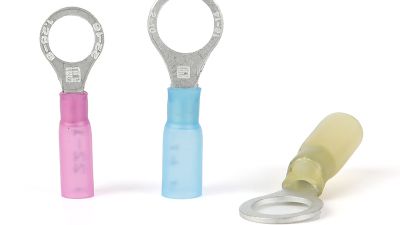
Choosing Heat Shrink Waterproof Ring Terminals for Secure, Reliable Electrical Connections
Choosing heat shrink waterproof ring terminals starts with matching the terminal to the wire gauge and the stud or bolt size. A properly sized ring sits flat against the connection point, while a compatible barrel grips the stripped conductor securely. Copper terminals offer good electrical conductivity, making them a practical choice for dependable connections. Before installation, check that the wire is fully inserted and that the crimp is firm and even; a correctly made crimp helps limit loosening and unwanted resistance.
For added moisture protection, look for terminals with PE heat-shrink tubing and a 3:1 shrinkage ratio. The tubing contracts around the wire insulation and terminal barrel when heated, helping seal the joint and protect the connection from water and damp conditions. Use a suitable controlled heat source and apply heat evenly until the tubing conforms to the connection, taking care not to scorch the insulation. A waterproof design is especially useful where wiring may encounter splashes or humidity, but the terminal should still be selected for the installation’s wire size, fastening hardware, and operating environment.
FAQS
Check the standard that matches the connector’s design and intended use. Confirm its product category, wire range, and current edition.
Request technical data sheets and test reports for the exact material, size, and insulation type. A certificate alone is not enough.
Check copper barrels for burrs, uneven plating, and visible corrosion. Measure barrel dimensions and insulation thickness against the drawing.
Use your actual wire gauge and crimping tool. Check crimp height, strand condition, and pull strength. Check the fit.
Verify voltage and temperature ratings. Review heat-aging or vibration results when the assembly’s operating conditions require them.
Ask how batches are inspected and whether records link to specific lots. Repeat checks on delivered goods; one sample may not represent every batch.
Agree in writing on specifications, lead times, minimum order quantities, packaging, and defect documentation. Small details matter.
No. A visit or live walkthrough can show process controls, but it cannot replace testing with your own wire and tools. Communication may still be uneven.
Conclusion
Insulated Terminal Connectors provide a protected, reliable way to join electrical wires to equipment and circuits. Their insulating sleeves help reduce the risk of accidental contact, while the metal terminal supports a secure electrical connection. Common options include ring, spade, fork, pin, and butt connectors, each suited to different wiring layouts and installation needs. Connector performance depends on factors such as conductor material, insulation type, terminal thickness, temperature tolerance, and resistance to vibration or moisture.
When choosing connectors, buyers should consider applicable product standards, consistent dimensions, secure crimps, insulation integrity, and clear quality-control records. These terminals are used across applications such as industrial equipment, vehicles, appliances, and building systems. To evaluate suppliers in China, compare their technical capabilities, production processes, testing methods, communication, and delivery arrangements. Request samples and relevant documentation, verify specifications against actual products, and confirm order requirements before purchasing. A structured sourcing process can help identify a supplier whose products match the application and expected quality level.