Leave Your Message
 When it comes to keeping electrical connections safe and reliable, picking the right Insulated Terminals is super important. These terminals do a lot more than you might think—they help prevent short circuits and keep things from accidentally shorting out. Plus, they help your electrical systems last longer and work efficiently. At Yueqing Gaopeng Electric Co., Ltd., we're really passionate about providing high-quality components for your projects. Since we kicked things off in 2016, we've been based in Wenzhou, Zhejiang Province, and we focus on designing, developing, and making a whole variety of terminals and connectors. We’re talking billions of these things each year, reaching markets all over Asia, Europe, America, and Africa! In this blog, we’ll dive into some solid tips for choosing the best insulated terminals that meet your needs, and we’ll also explore some other types that might just fit the bill for your specific applications.
So, when you're picking out insulated terminals for your project, there are some key features you really need to pay attention to. These can seriously impact how things perform and, of course, safety. You’ll want to look for terminals that have great insulation properties — they should be able to handle high temperatures and voltage levels without breaking a sweat. For example, thermoplastic insulation is a great choice; it’s durable and flexible, which is super important when you’re dealing with high-current applications. Recent industry reports even point out that having the right insulation can really cut down on the risk of electrical shorts and boost the overall reliability of your system.
Here's a quick tip: always check the certifications and ratings of those insulated terminals. If they’re compliant with standards like UL or IEC, you can feel a lot better about their quality and safety. And don’t forget to think about the design of the terminal too! Whether you go for crimped or screw-fit terminals can really influence how easy they are to install and how well your connectors perform.
Another thing to keep in mind is how well the terminals will match up with the cables and connectors you’re using. As we’re all looking for more efficient and high-performance electrical systems these days, it’s super important to match the insulated terminals to your specific setup. Research shows that mismatched connections can lead to higher resistance, more heat generation, and even system failures down the line. So, make it a point to prioritize terminals that not only fit nicely but are also designed to handle the current ratings of your application. It’ll save you a lot of headaches in the long run!
| Feature | Description | Importance | Common Applications |
|---|---|---|---|
| Material | Choose from copper, aluminum, or brass for conductivity and durability. | High | Wiring in electronic appliances, automotive harnesses. |
| Insulation Type | PVC, nylon, or heat-shrink for environmental protection. | Medium | Electrical circuits, outdoor wiring. |
| Temperature Rating | Select terminals rated for appropriate temperature ranges. | High | High-temperature environments. |
| Current Rating | Evaluate the maximum current capacity needed for the application. | High | Industrial equipment, power distribution. |
| Size and Compatibility | Ensure proper gauge sizes are compatible with connectors and cables. | Medium | Consumer electronics, appliances. |
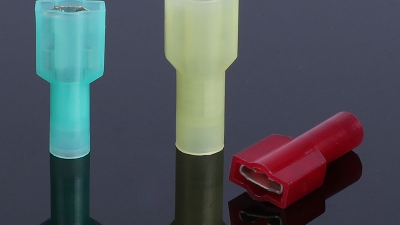
When embarking on electrical projects, selecting the right components is crucial, particularly when it comes to connectors. Among various types, nylon fully insulated female connectors stand out for their durability and safety features. According to industry studies, the use of insulated connectors can significantly reduce the risk of electrical shorts and improve the longevity of connections. Gaopeng’s nylon connectors, such as models FDFNY1.25-250, MDFNY2-250, and MDFNY5.5-250, exemplify the quality needed for reliable performance in various environments.
The construction material of connectors plays a key role in their effectiveness. Brass, known for its excellent conductivity and resistance to corrosion, is the foundation of Gaopeng's products. The nylon insulation provides an added layer of protection, which is essential in maintaining the integrity of the electrical connection. Reports show that connectors with robust insulation can withstand higher thermal and mechanical stress, thereby extending their lifespan in applications ranging from automotive to industrial equipment.
Another significant advantage of Gaopeng's connectors is their quick disconnect feature. This design allows for easy connections and disconnections without compromising the safety and integrity of the circuit. Industry experts suggest that connectors that facilitate rapid changes can save significant time during installations and maintenance. By choosing the right nylon fully insulated female connectors, like those from Gaopeng, you ensure that your electrical projects not only meet industry standards but also demonstrate enhanced efficiency and reliability.
: Insulated terminals are used to create secure electrical connections between wires while providing protection against short circuits and environmental factors.
The main types of insulated terminals include butt terminals, fork terminals, and ring terminals, each suited for specific applications and connection methods.
Butt terminals are designed for joining two wires end-to-end, ensuring a reliable connection that is less likely to fail under stress.
Fork terminals allow for easy attachment and detachment, making them convenient for applications where components need to be frequently replaced or adjusted.
Ring terminals provide a stable electrical path with a reliable connection to a screw or bolt, offering resistance against vibration.
High-quality insulated terminals enhance safety by preventing short circuits and electrical shocks, increase the longevity and durability of electrical systems, and reduce maintenance issues.
Common insulation materials include nylon, which offers superior heat and chemical resistance, and PVC, which is cost-effective for general applications.
Insulated terminals minimize the risk of electrical failures, protect against physical damage and moisture, and help prevent voltage drops and overheating due to loose connections.
Consider the type of insulation material, the voltage and current ratings, and ensure a snug fit to maintain reliable connections.
Exceeding the specified temperature range can compromise the protective qualities of the insulated terminals, potentially leading to failures in the electrical system.