The global market for Electrical Connectors is set to grow quite a bit in the next few years, thanks to tech advances and a rising demand from a bunch of different industries. I read somewhere—ResearchAndMarkets, I think—that back in 2020, this market was worth around $60 billion. And by 2025, experts say it might hit about $88 billion, growing at roughly 7% each year. A lot of this growth is tied to sectors like automotive, telecom, and consumer gadgets, where having solid, reliable electrical connections isn’t just a bonus—it’s a must.
Looking ahead to 2025, I think we’re going to see some clear trends. For one, things are getting smaller—miniaturization is huge right now. Plus, with the rise of the Internet of Things, we’re demanding more connectivity than ever before. And let’s not forget the shift toward renewable energy sources, which is shaking things up. For example, electric vehicles are becoming more popular, and they need connectors that can handle high voltages and tough environmental conditions. Also, as AI and smart systems become part of our daily lives, connectors need to perform flawlessly and adapt easily so everything can communicate smoothly and transfer energy efficiently. All these trends just go to show that investing in the latest connector tech is more important than ever to keep up with the fast-changing world of electronics and energy.

Key Innovations in Electrical Connector Designs for 2025
The electrical connectors market is poised for significant innovation in 2025, driven by advancements in technology and the increasing demand for efficient and reliable connections across various industries. Key innovations in electrical connector designs are expected to focus on enhancing performance while reducing size and weight. For instance, the integration of nanotechnology in connector materials is projected to improve conductivity and ensure better performance in compact applications, which are critical in sectors such as aerospace and telecommunications. According to a report from the International Electrotechnical Commission, the market for miniature connectors is expected to grow by over 15% annually, reflecting a shift towards more efficient designs.
Another emerging trend lies in the development of smarT connectors, which incorporate sensors and connectivity features for real-time monitoring and data transmission. These connectors are set to revolutionize industries like automotive and IoT (Internet of Things), where precise data collection and communication are paramount. A study by ResearchAndMarkets predicted a substantial increase in the smart connectors market, with growth estimates reaching $2.5 billion by 2025. The demand for connectivity solutions that can withstand harsh environments will also lead to the evolution of ruggedized connectors, designed to meet stringent industry standards for durability and reliability, thereby expanding their applications in industrial machinery and defense systems.
Impact of IoT on Electrical Connector Development Trends
The Internet of Things (IoT) is significantly reshaping the landscape of electrical connector development. As IoT devices proliferate, the demand for connectors that can support increased data transfer rates and power requirements is surging. These connectors need to accommodate various standards and protocols, ensuring seamless communication between numerous interconnected devices. This trend necessitates innovative designs that enhance reliability and durability while meeting the compact spatial requirements of modern electronics.
Moreover, the rise of IoT is driving manufacturers to prioritize features such as miniaturization and integration. As devices become smaller and more complex, connectors must adapt to fit within shrinking form factors without compromising performance. The emphasis on smart technology also highlights the importance of connectors that can integrate sensing capabilities, enabling real-time monitoring and feedback. As IoT applications expand into sectors like healthcare, automotive, and smart home technology, the development of robust, efficient electrical connectors will play a crucial role in realizing the full potential of interconnected systems.
The Rise of Eco-Friendly Materials in Electrical Connectors
The electrical connector industry is on the brink of a significant transformation as sustainability becomes a key focus. With an increasing awareness of environmental issues, the trend toward eco-friendly materials is gaining momentum. According to a report by MarketsandMarkets, the global market for green materials in electrical connectors is projected to reach $8.4 billion by 2025, reflecting a compound annual growth rate (CAGR) of 6.2%. This shift is fueled by advancements in materials science, leading to the development of biodegradable plastics and recyclable metals that reduce environmental impact without compromising performance.
Incorporating eco-friendly materials can also address the growing consumer demand for sustainable products. Research from Smithers Pira suggests that 72% of consumers prefer brands that prioritize sustainability. As connectors made from recycled or bio-based materials become more prevalent, manufacturers can not only meet regulatory requirements but also enhance their brand reputation. The use of such materials is critical in applications ranging from renewable energy systems to electric vehicles, where sustainable practices are increasingly being prioritized.
**Tips:** When selecting connectors for environmentally-focused projects, consider suppliers that emphasize sustainable manufacturing practices. Additionally, look for certifications that indicate compliance with eco-friendly material standards. Lastly, collaborating with suppliers who invest in research and development for green technologies can provide your projects with a competitive edge in the market.
Top Trends in Electrical Connectors to Watch in 2025 - The Rise of Eco-Friendly Materials in Electrical Connectors
| Trend | Description | Impact | Material Examples |
| Biodegradable Materials | Use of materials that decompose naturally, reducing environmental impact. | Lower carbon footprint and waste reduction in connector products. | Starch-based polymers, bioplastics. |
| Recycled Materials | Incorporation of recycled metals and plastics in connector manufacturing. | Conserves resources and decreases pollution from new material extraction. | Recycled aluminum, reclaimed plastics. |
| Energy Efficiency | Development of connectors that minimize energy loss and enhance performance. | Improved appliance efficiency and lower energy costs for consumers. | Conductive polymers, low-resistance alloys. |
| Modular Designs | Flexible designs that allow for easy upgrades and customization. | Reduces waste and allows for longer lifespan of products. | Interchangeable components and connectors. |
| Smart Connectors | Integration of IoT technology into connector systems. | Enhanced monitoring and management of electrical consumption. | Sensors, wireless communication modules. |
Emerging Standards for High-Speed Electrical Connections
As we look ahead to 2025, one of the most significant trends in the realm of electrical connectors is the emergence of new standards for high-speed electrical connections. The rapid advance of technology, particularly in fields such as telecommunications, data transfer, and automotive applications, necessitates connectors that can handle increased data rates while maintaining reliability and performance. Industry stakeholders are focusing on optimizing connector design to support high-speed transmission, ensuring that both signal integrity and thermal management are addressed effectively.
Key developments include the adoption of modular connector systems that offer scalability and flexibility for various applications. Emerging standards are likely to include robust specifications around form factors, pin configurations, and materials. These advancements will not only facilitate faster data transfer but also improve interoperability between devices, reducing latency and enhancing overall system performance. As industries demand higher bandwidth and lower power consumption, the evolution of these standards will play a crucial role in shaping the future of high-speed electrical connectivity.
Technological Advancements in Connector Manufacturing Processes
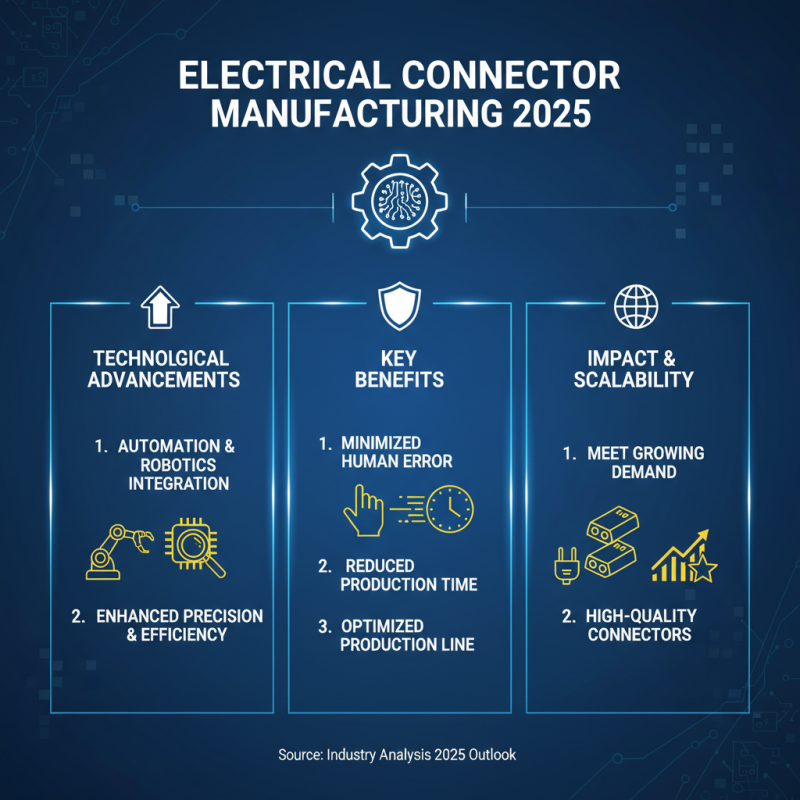
As we look toward 2025, the landscape of electrical connector manufacturing is poised for significant transformation driven by technological advancements. One of the most notable trends is the integration of automation and robotics into the manufacturing processes. By employing automated systems, manufacturers can enhance precision and efficiency, minimizing human error and reducing production time. This shift not only optimizes the production line but also allows for greater scalability, enabling companies to meet the growing demand for high-quality connectors in various applications.
Moreover, advancements in materials science are playing a critical role in reshaping connector design and functionality. The introduction of new, lightweight materials that maintain durability is set to improve the performance of connectors in high-stress environments. Innovations such as 3D printing are also enabling more complex geometries and custom designs that were previously unattainable with traditional manufacturing methods. This customization capability ensures that connectors can be tailored to specific industry needs, driving further innovations in sectors like automotive, aerospace, and telecommunications. Overall, the advancements in manufacturing processes are creating a more adaptable and efficient landscape for electrical connectors, paving the way for enhanced reliability and performance in the future.
Trends in Modular and Versatile Connector Solutions
Modular and versatile connector solutions are becoming increasingly pivotal in the evolving landscape of electrical connections. As industries transition towards more complex systems driven by automation and IoT, the demand for adaptable connection interfaces rises. Modular connectors enable users to customize their setups according to specific needs, promoting scalability and simplifying maintenance. This shift towards modularity not only enhances flexibility but also reduces downtime during upgrades or repairs, allowing companies to stay competitive in a rapidly changing market.
Furthermore, the versatility of these connector solutions expands their range across various applications, aligning with the diverse requirements of sectors such as telecommunications, automotive, and renewable energy. By accommodating a wide array of pin configurations and materials, these connectors can adapt to different environmental conditions and operational demands. As companies strive for sustainable and efficient practices, the shift towards modular and versatile solutions will likely play a crucial role in driving innovation and enabling easier integration of new technologies in both existing and future systems.
Top Trends in Electrical Connectors to Watch in 2025
This chart illustrates the projected growth in the adoption of modular and versatile connector solutions, highlighting key trends over the next few years.
Market Demand and Growth Areas for Electrical Connectors in 2025
As we look toward 2025, the market demand for electrical connectors is expected to witness significant growth, driven by advancements in technology and a surge in the adoption of electrification across various industries. The increasing reliance on automation and smart technologies in sectors such as automotive, telecommunications, and renewable energy is transforming the landscape for electrical connectors. This demand is not only fueled by the proliferation of electric and hybrid vehicles but also by the expansion of IoT devices, requiring more robust and versatile connector solutions to ensure reliable performance in complex environments.
Furthermore, sustainability is playing a crucial role in shaping the electrical connector market. With a growing emphasis on environmentally friendly practices, manufacturers are focusing on creating connectors that meet stringent eco-regulations. Innovations aimed at improving energy efficiency and reducing material waste are becoming essential components in product development. This shift not only caters to consumer preferences for sustainable products but also aligns with global initiatives to combat climate change, positioning companies to thrive in this evolving market. As we approach 2025, stakeholders in the electrical connector sector will need to continuously innovate and adapt to the changing demands to capture growth opportunities effectively.
FAQS
: The shift is driven by increasing awareness of environmental issues and consumer demand for sustainable products, alongside advancements in materials science that allow for the use of biodegradable and recyclable materials.
The global market for green materials in electrical connectors is projected to reach $8.4 billion by 2025, with a compound annual growth rate (CAGR) of 6.2%.
By using eco-friendly materials, manufacturers can meet regulatory requirements, enhance brand reputation, and respond to consumer preferences for sustainable products.
Sustainability is increasingly prioritized in these applications, making the use of eco-friendly materials critical for performance and compliance in the industry.
Automation and robotics are enhancing precision and efficiency, while advancements in materials science and 3D printing are enabling more complex and customized designs.
By integrating automated systems into manufacturing, manufacturers can optimize production lines for enhanced scalability to meet increasing demand.
New lightweight materials improve the performance of connectors in high-stress environments while maintaining durability.
Innovations such as 3D printing allow for more complex geometries and custom designs tailored to specific industry needs.
Projects should consider suppliers who emphasize sustainable manufacturing practices, comply with eco-friendly standards, and invest in research for green technologies.
Conclusion
The upcoming trends in electrical connectors for 2025 highlight significant innovations shaping the industry. Key advancements in design emphasize enhanced functionality and compatibility, driven by the growing impact of the Internet of Things (IoT) on connector development. Additionally, the surge in eco-friendly materials reflects a rising commitment to sustainability in electrical connectors. The emergence of new standards for high-speed connections and the push towards modular, versatile solutions further indicate a dynamic market poised for growth.
Technological advancements in manufacturing processes are expected to streamline production, increase efficiency, and reduce costs. As market demand shifts, understanding these trends becomes essential for stakeholders in the electrical connector sector, ensuring they are well-equipped to meet the evolving needs of various applications by 2025.